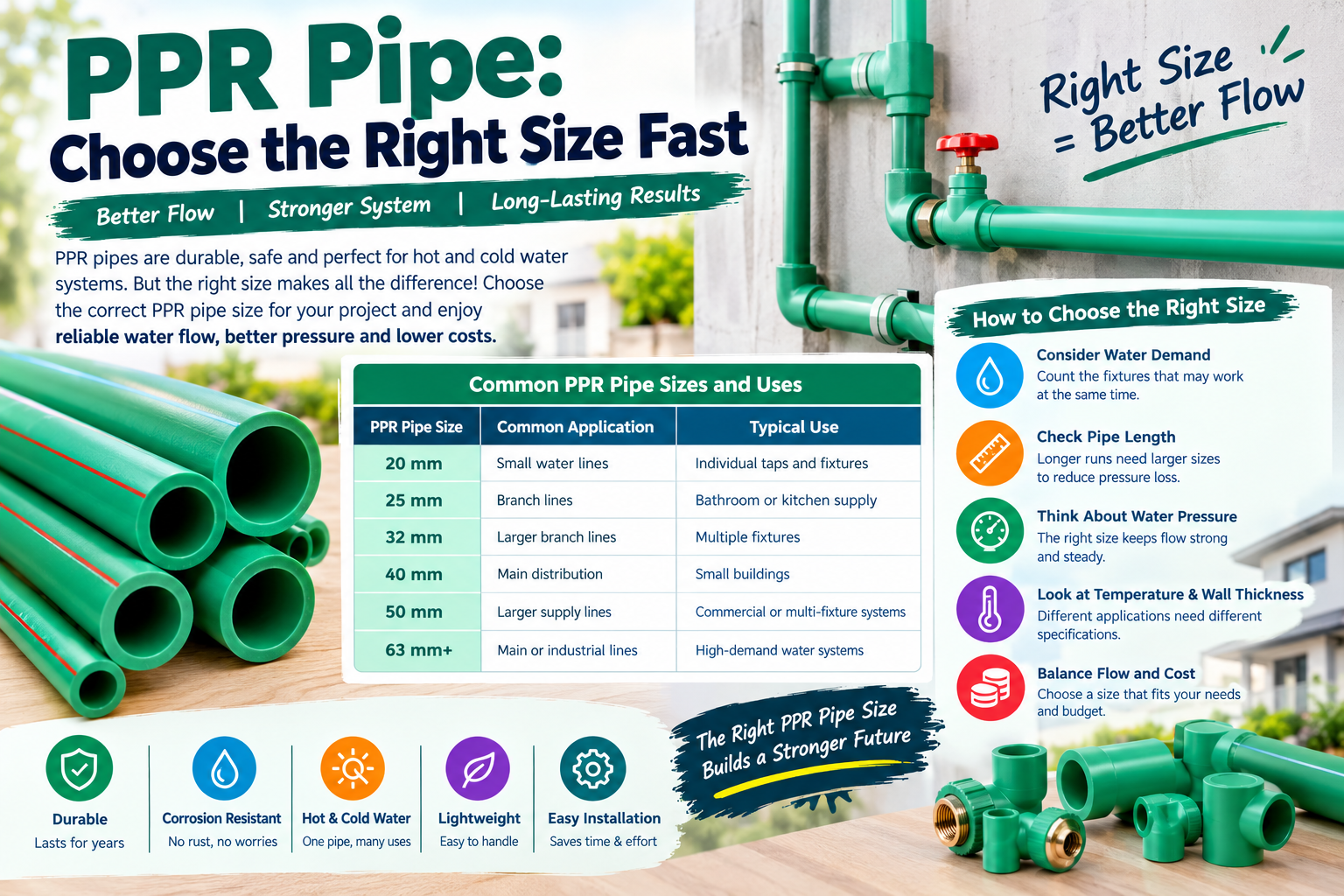
PPR pipe matters more than most people expect when you plan a water supply. PPR (polypropylene random copolymer) pipes are popular for hot and cold water because they are lightweight, long-lasting and resistant to corrosion. But picking a pipe by looks alone can lead to weak water flow, pressure problems and wasted money.
Once you understand how PPR pipe sizes work, choosing the right one for a home, shop or factory gets much easier. The answer depends on water demand, pipe length, pressure, fittings and how many fixtures share the line.
PPR Pipe Size Basics
PPR pipes are usually named by their outside diameter in millimeters. Common sizes include 20 mm, 25 mm, 32 mm, 40 mm, 50 mm, 63 mm and 75 mm, with larger sizes available for bigger projects.
The right size depends on the job. A small pipe can serve a single tap, but a line that feeds several bathrooms and a kitchen needs something larger.
Common PPR Pipe Sizes
This table gives a quick overview of common sizes and where they are normally used. Real requirements depend on your system design and local plumbing rules.
| PPR Pipe Size | Typical Use | Best For |
| 20 mm | Short branch lines | Individual taps and fixtures |
| 25 mm | Branch lines | Bathroom or kitchen supply |
| 32 mm | Larger branch lines | Several fixtures on one line |
| 40 mm | Main distribution | Small buildings |
| 50 mm | Larger supply lines | Apartments and small commercial buildings |
| 63 mm | Main supply lines | Multi-story buildings |
| 75 mm | Main supply lines | Larger commercial systems |
| 90 mm | Heavy-duty mains | Hotels, schools and large complexes |
| 110 mm | Main and industrial lines | High-demand water systems |
How to Choose the Right PPR Pipe Size
Start by working out how much water your system needs. A house with a few fixtures has very different needs from a large building with dozens of bathrooms.
Consider Water Demand
Count the fixtures that might run at the same time: sinks, showers, toilets, washing machines and other outlets all add to the total.
If several fixtures are likely to run together, a larger supply pipe helps keep the flow steady. Sizing a line for one outlet only causes trouble when everything is used at once.
Check the Pipe Length
Long pipe runs lose more pressure than short ones. If the water has to travel a long way, sizing matters even more.
A good plan also counts the bends, valves and fittings along the route, since each one slows the flow a little.
PPR Pipe Size and Water Pressure
A pipe that is too small for the flow you need creates resistance, and the fixtures farthest away feel it first.
A bigger pipe carries more water with less friction, but bigger is not always better. Oversizing raises material costs and does little for a small installation.
Balance Flow and Cost
The goal is a sensible balance between water demand, pressure, pipe length and budget. For anything beyond a simple job, a plumber or designer should calculate the expected flow and pressure instead of guessing.
On bigger projects, follow your local plumbing code and the manufacturer’s specifications.
Understanding PPR Pipe Wall Thickness
PPR pipes come in different wall thicknesses. Two pipes with the same outside diameter can therefore have different inside diameters and pressure ratings.
Pressure Ratings and SDR
You will often see pressure classes such as PN10, PN16 and PN20, or SDR values. These numbers describe how much pressure a pipe can handle and how thick its walls are.
Hot-water lines usually need a higher rating than cold-water lines. Pipes rated PN20 are commonly chosen for hot water, but temperature, operating pressure and installation conditions should always be considered together.
Check the manufacturer’s technical data before you buy pipe for a specific job.
PPR Pipe Size for Home Plumbing
In a typical house, smaller PPR sizes serve individual fixtures and branch connections, while larger sizes carry water along the main lines.
Bathroom and Kitchen Lines
A bathroom might have a shower, a sink and a toilet. A kitchen has its own connections too.
The right size depends on how many of these will run at the same time, not just on how many rooms you have. A well-planned system gives steady flow without wasting pipe.
PPR Pipe Size for Larger Buildings
Apartments, schools, hotels and factories use far more water than a home.
For these projects, sizing often needs detailed calculations that take in peak flow, fixture units, pressure, height, pipe length and pump performance.
Plan the Main Line First
Work out what the main supply line needs before you size the smaller branches. Each branch can then be sized for the fixtures it serves.
This keeps the system organized and lowers the risk of weak flow at busy outlets.
Mistakes to Avoid When Choosing a PPR Pipe Size
The most common mistake is buying a pipe because it is cheap or easy to find. A low price at the start does not always mean a good system.
Another mistake is forgetting about fittings. Elbows, tees and valves all add resistance to the flow.
Finally, do not mix products that are not meant to go together or use fittings that do not match your pipe.
Measure Before You Buy
Before buying anything, sketch a simple plumbing layout. Measure the approximate pipe lengths and mark where the fixtures, valves, tanks and pumps will go.
This cuts waste and makes installation quicker.
Why Correct Sizing Matters
The right size improves water delivery and keeps your system working well for years. It also saves you from replacing undersized pipe later.
PPR resists corrosion and works for both hot and cold water, but the material cannot fix a poor design. Good sizing is what makes the system perform.
Final Thoughts
Choosing the right PPR pipe size is not difficult once you know the basics. Look at water demand, pipe length, pressure, temperature, fittings and the number of fixtures that may run together.
Smaller sizes suit individual connections, while larger diameters are better for main lines and high-demand systems. Always check the manufacturer’s specifications and your local plumbing standards before you install.
For a simple home project, basic sizing information may be enough. For larger or high-pressure systems, professional calculations are the safer choice.
Frequently Asked Questions About PPR Pipe Size
What is the most common PPR pipe size?
20 mm and 25 mm are the most common sizes for small residential water connections, though it varies by project.
How do I choose a PPR pipe size?
Consider water demand, pressure, pipe length, fittings, temperature and the number of fixtures on the line.
Are larger PPR pipes always better?
No. Oversized pipes raise costs and give little benefit on a low-demand system.
Can PPR pipes be used for hot water?
Yes. PPR is widely used for hot and cold water, but the pipe needs the right temperature and pressure rating.
Does PPR pipe thickness matter?
Yes. Wall thickness affects the inside diameter and the pressure rating, so check the manufacturer’s specifications.