
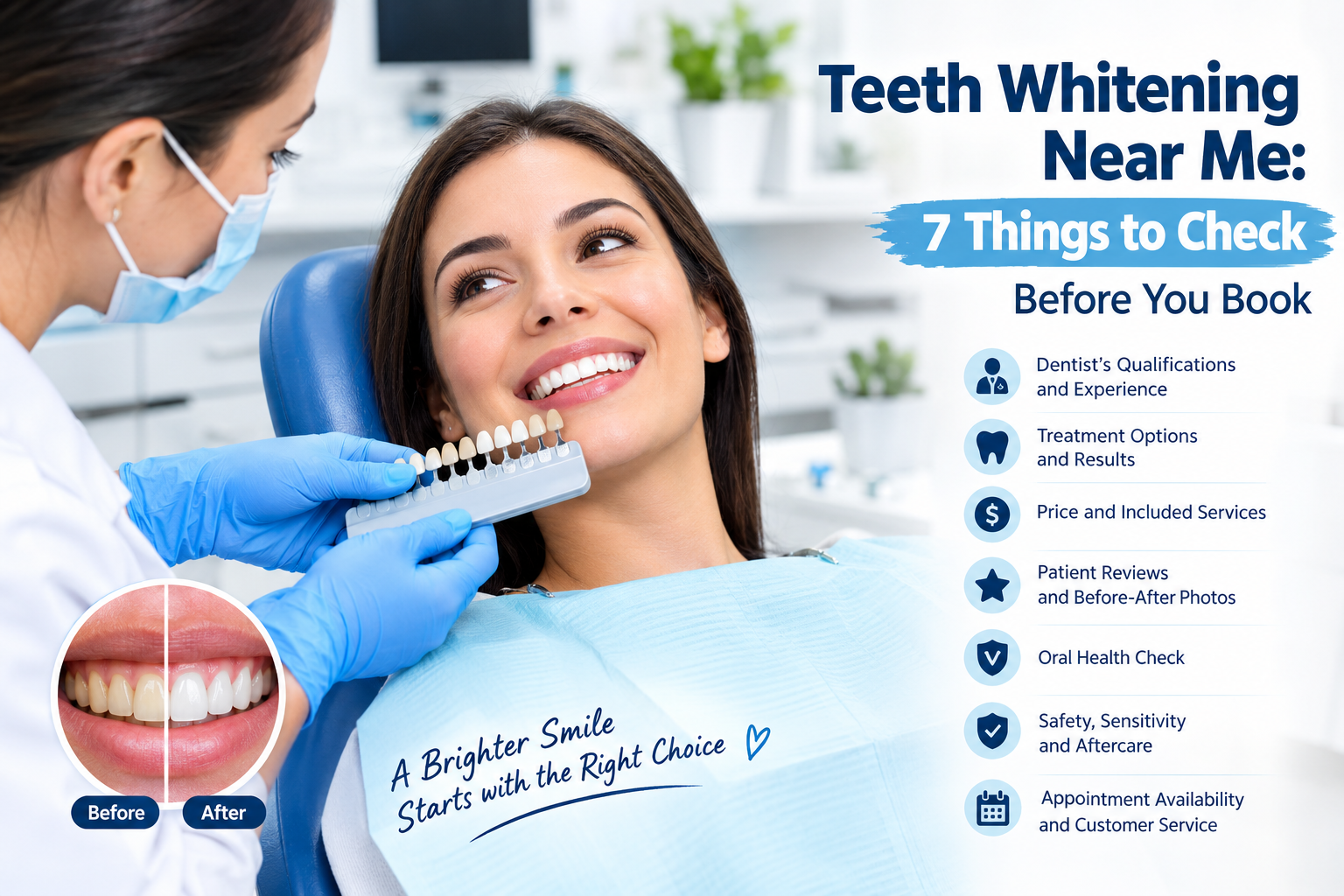
Teeth whitening near me is a search many people run when they notice yellow stains or dull-looking teeth. Picking the right clinic takes more than comparing prices or grabbing the nearest appointment, though. The results depend on your oral health, the type of discoloration and the treatment you choose.
Some clinics offer in-office whitening, while others give you custom take-home kits to use under a dentist’s supervision. Knowing the difference helps you choose more safely. Check these seven things before you book, and you will be able to compare clinics, understand the costs and pick a treatment that suits your smile.
1. Check the Dentist’s Qualifications and Experience
Start with who will actually perform or supervise your treatment. A qualified dentist can look at your oral health, explain your options and spot problems before whitening begins.
Why Experience Matters
Bleaching agents can cause sensitivity or irritate your gums if they are used incorrectly. An experienced dentist knows how to choose the right treatment and protect the soft tissue around your teeth.
Before you book, check whether the clinic:
- Employs licensed dental professionals.
- Has experience with different whitening methods.
- Reviews your dental history before treatment.
- Explains the expected results and possible side effects.
- Gives clear aftercare instructions.
Patient reviews also show how a clinic communicates and runs its appointments. Look for steady feedback about cleanliness, professionalism and patient comfort, and do not lean on one glowing review.
2. Understand the Whitening Treatments Available
Not every procedure works the same way. A good clinic explains your options and recommends one that fits your teeth and your expectations.
In-Office Professional Whitening
The dentist applies a professional bleaching product, usually hydrogen peroxide or carbamide peroxide, and protects your gums throughout.
Many people see a noticeable change after a single visit, though results vary. Some need extra treatment to reach the shade they want.
Dentist-Supervised Take-Home Whitening
Your dentist can provide custom-fitted trays and whitening gel to use at home. Depending on the product and the schedule you are given, it takes several days or weeks.
This approach is flexible and lets you whiten gradually with professional guidance.
Over-the-Counter Products
Whitening strips, toothpastes and other store-bought products can help with some surface stains. Their effect varies, and they may not match professional bleaching.
Ask each clinic which treatment it offers, how long it takes and whether it suits your teeth.
3. Compare Prices and What Is Included
Cost matters, but the lowest advertised price is not always the best value.
Some clinics advertise a basic session and then charge extra for the consultation, the dental exam, custom trays or follow-up visits. Others include everything in one package.
What to Ask About Pricing
Ask for a written estimate before you confirm, and have the clinic explain exactly what the price covers.
Check for:
- Initial exam fees.
- The whitening procedure and materials.
- Gum protection and sensitivity care.
- Take-home products, if any.
- Follow-up visits and extra sessions.
This table compares common options. Actual costs depend on your country, city, clinic and treatment.
| Whitening Option | Typical Treatment Time | Important Consideration |
| In-office whitening | Usually one appointment | Faster visible results for many patients |
| Custom take-home trays | Several days to weeks | Gradual whitening with dental guidance |
| Whitening strips | Several days to weeks | Results depend on the product and the staining |
| Whitening toothpaste | Ongoing use | Mainly lifts surface stains |
| Light-assisted whitening | One appointment | Ask whether the light adds a real benefit |
| Whitening mouth rinses | Ongoing use | Mild effect at best on surface stains |
| Home remedies like baking soda or lemon | Varies | Can wear down enamel, so ask your dentist first |
A higher price does not guarantee a better result. Look for professional supervision, safety, clear pricing and realistic expectations.
4. Read Patient Reviews and Look at Before-and-After Photos
Online reviews help you narrow your list. They show how patients felt about the appointment, the communication and the overall service.
How to Read Reviews Carefully
Read a range of recent reviews, not just the star rating. Notice whether patients say the dentist explained the procedure, talked about sensitivity and gave useful aftercare advice.
Before-and-after photos help too, but treat them with care. Lighting, camera settings, editing and the starting shade can all change how dramatic a result looks.
Ask whether the photos show real patients and whether the results are typical.
A good practice will not promise that everyone reaches the same shade. Natural teeth respond differently, and results are never fully predictable.
5. Confirm the Clinic Checks Your Oral Health First
A proper whitening visit should begin with a look at your teeth and gums. Whitening is cosmetic, but underlying dental problems can affect both safety and results.
Dental Problems That May Need Attention First
Untreated cavities, inflamed gums, cracked teeth and exposed roots can make whitening uncomfortable. Your dentist may suggest treating them before you start.
If you already have sensitive teeth, mention it before choosing a product.
Bleaching works on natural tooth structure. Crowns, veneers and fillings do not whiten the same way, which can make existing dental work more noticeable afterward. If you have restorations on visible teeth, ask how whitening will affect the overall look of your smile.
Who Needs Individual Advice?
Whitening is not right for everyone. Children, people with certain dental conditions and anyone who is pregnant or breastfeeding should talk to a dental professional about the risks and the right timing before using bleaching products.
A proper assessment tells the dentist whether whitening is suitable or whether another option fits your concerns better.
6. Ask About Safety, Sensitivity and Aftercare
Tooth sensitivity and temporary gum irritation are common side effects of whitening. They usually pass, but how strong they are depends on the product, its concentration and your dental health.
Choose a clinic that explains these risks instead of focusing only on the cosmetic result.
Questions to Ask Before Treatment
Ask how sensitivity will be managed, what protection will be used and what to do if discomfort starts after the appointment.
The clinic may suggest a desensitizing toothpaste or adjust the plan to suit you.
You should also get clear instructions for using whitening products at home. Do not combine several bleaching products or use them more often than directed, because overuse can increase sensitivity and irritate your gums.
How to Keep Your Results
Brush twice a day with fluoride toothpaste, clean between your teeth and keep up with regular checkups.
Coffee, tea, red wine and tobacco can stain teeth again. Cutting back helps your results last, though you do not need to avoid every staining food and drink. Follow your dentist’s advice about eating, drinking and using whitening products after treatment.
7. Check Appointment Availability and Customer Service
A convenient clinic makes the whole experience easier. Good appointment times, clear communication and helpful staff all matter.
Find a Clinic That Fits Your Schedule
Check the location, opening hours, parking and appointment availability. If you want whitening before a wedding, interview, graduation or other event, ask how far ahead to book.
Do not leave it to the last minute. Some people have temporary sensitivity, and the final shade can take a little time to settle.
Judge the Communication Before You Book
Notice how the clinic answers your questions about cost, treatment choices, risks and expected results. The staff should give clear answers and should not push you toward services you do not need.
A good practice respects your budget, explains your options and lets you decide in your own time. Before you confirm, ask about cancellation policies, whether a consultation is required and whether a follow-up visit is recommended.
A Quick Checklist Before You Book
Use this list to compare clinics and make your final call.
- Confirm the dentist’s qualifications and experience.
- Compare treatment options and realistic results.
- Ask for a complete price estimate.
- Read recent patient reviews.
- Make sure your oral health is checked first.
- Ask about sensitivity, safety and aftercare.
- Check availability and clinic policies.
Keeping these points in mind helps you avoid rushed decisions and choose a provider who cares about your dental health as much as your smile.
Frequently Asked Questions About Teeth Whitening Near Me
How long does professional teeth whitening take?
An in-office session often takes around 30 to 90 minutes, depending on the treatment. Dentist-supervised home whitening usually takes several days to weeks.
Is professional teeth whitening safe?
It is generally considered safe when suitable products are used correctly under dental guidance. Temporary sensitivity and gum irritation can happen.
How long do whitening results last?
Results can last several months or longer, depending on your habits, oral hygiene and the type of treatment. Staining foods and tobacco can shorten the effect.
Does teeth whitening work on crowns and veneers?
No. Whitening products generally change the shade of natural teeth but do not bleach crowns, veneers or fillings.
How do I choose the best teeth whitening clinic near me?
Check qualifications, treatment options, clear pricing, patient reviews, safety procedures and aftercare support before you decide.
Final Thoughts
Finding the right teeth whitening near me takes more than picking a clinic with eye-catching ads or a discount. Look at the dentist’s qualifications, the treatments on offer, the total cost, patient feedback, your oral health, the safety measures and how convenient the appointments are Professional whitening can give many people a brighter smile, but the best approach depends on your own teeth. A good dentist explains what is realistic, talks through the side effects and recommends a suitable treatment instead of promising perfect results.