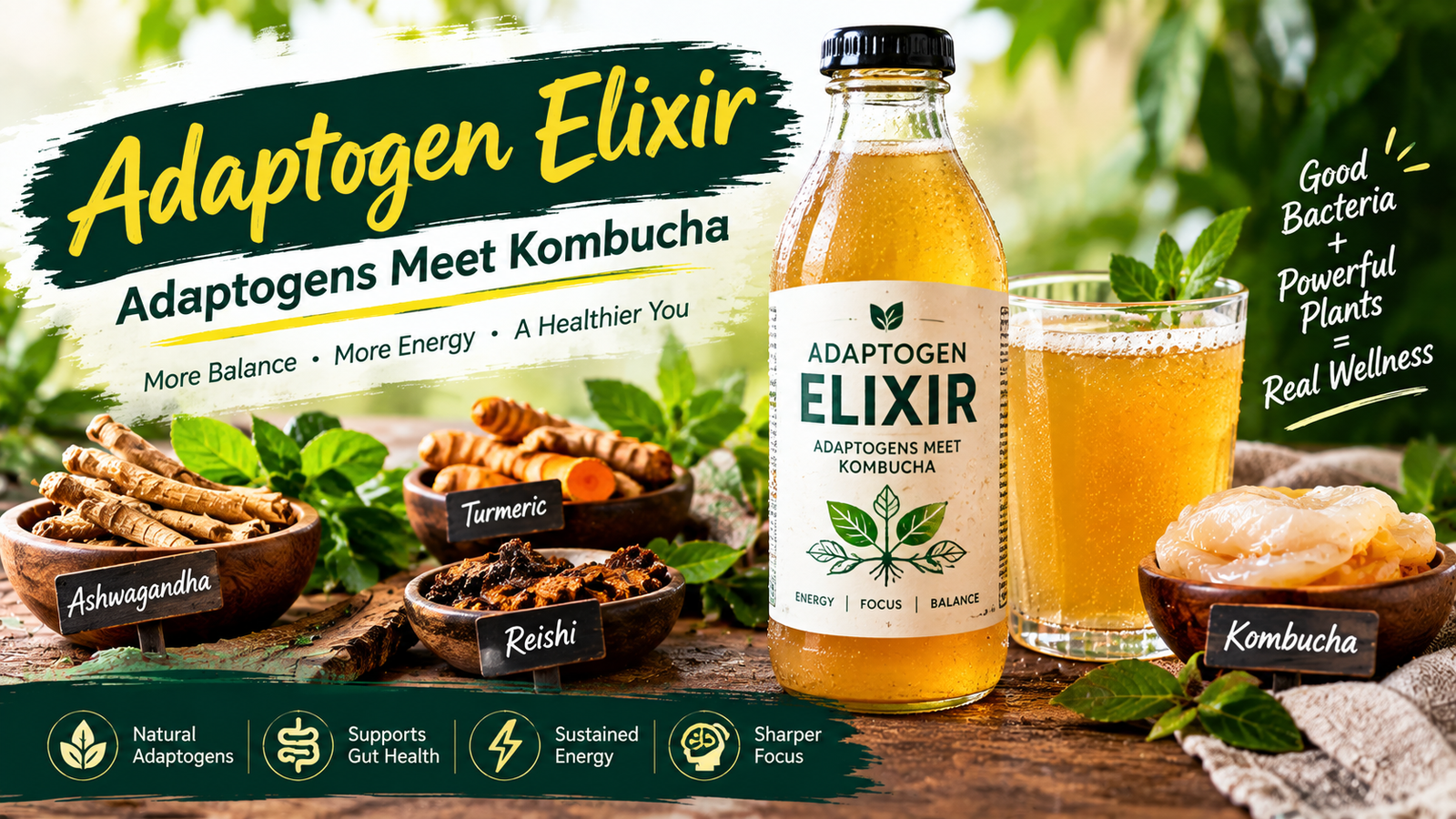
An adaptogen elixir blending adaptogens and kombucha has become a popular pick for anyone looking to combine two wellness trends into a single drink. Kombucha already has a loyal following for its tangy flavor and fermented probiotics, while adaptogens — herbs and mushrooms traditionally used to help the body handle stress — bring their own reputation for balance and resilience. Together, they form a drink that’s as much about ritual as it is about taste.
This guide walks through what an adaptogen elixir actually is, which adaptogens commonly show up in kombucha blends, how to make one at home, and what to keep in mind before adding it to a regular routine.
What Is an Adaptogen Elixir?
At its core, an adaptogen elixir is kombucha infused with one or more adaptogenic ingredients — plants or fungi believed to support the body’s response to physical or mental stress. The base is still fermented tea, carrying its natural fizz and tang, but the addition of adaptogens gives the drink a different character and a different reputation among wellness-focused drinkers.
Why Kombucha Works as a Base
Kombucha’s naturally fermented profile makes it a flexible carrier for other ingredients. Its acidity and effervescence balance out the earthy, sometimes bitter notes that come with many adaptogenic herbs, and the fermentation process itself fits neatly into a broader “functional beverage” trend that already values live cultures and natural ingredients.
The Appeal of Combining the Two
Pairing adaptogens with kombucha isn’t just about flavor — it’s about bundling two wellness ideas into one drink. For people already drinking kombucha regularly, adding adaptogens is a simple way to make that habit feel a bit more purposeful without introducing an entirely new product into their routine.
Common Adaptogens Used in Kombucha Blends
Several adaptogens show up regularly in commercial and homemade elixirs, each bringing its own flavor and reputation.
Ashwagandha
Ashwagandha is one of the most recognized adaptogens, often associated with calm and stress resilience in traditional use. Its earthy, slightly bitter flavor blends well with kombucha’s tang.
Reishi Mushroom
Reishi is a mushroom long used in traditional practices, often linked to relaxation and general wellness. It has a woody, slightly bitter taste that pairs naturally with fermented drinks.
Rhodiola
Rhodiola is another commonly used adaptogen, associated in traditional use with energy and mental clarity. It has a milder flavor than ashwagandha or reishi, making it an easy addition for those new to adaptogenic drinks.
How to Make an Adaptogen Elixir at Home
Making an adaptogen kombucha blend at home is fairly simple once you have brewed or store-bought kombucha as a base.
| Step | What to Do | Why It Matters |
|---|---|---|
| Choose a base | Pick plain, unflavored kombucha | Keeps the adaptogen flavor from getting lost |
| Select adaptogens | Choose one or two, not several at once | Easier to notice effects and adjust taste |
| Use quality extracts | Powders or tinctures from a trusted source | Ensures consistency and purity |
| Mix gradually | Start with a small amount, taste as you go | Prevents an overly bitter or strong batch |
| Store properly | Keep refrigerated and consume within a few days | Maintains freshness and flavor balance |
| Label your blend | Note ingredients and amounts used | Makes it easy to repeat a batch you like |
Flavor Pairings Worth Trying
Adaptogens can taste earthy or bitter on their own, so pairing them with complementary flavors makes the elixir more enjoyable. Ginger and lemon work well with ashwagandha, cutting through its earthiness with brightness. Reishi pairs nicely with cacao or cinnamon, which soften its woodsy notes. Rhodiola blends easily with berries or citrus, since its milder flavor doesn’t need much to balance it out.
What to Keep in Mind Before Trying One
Adaptogens are widely used in traditional wellness practices, but scientific research on their effects in humans is still developing, and results can vary from person to person. It’s worth treating an adaptogen elixir as a wellness experiment rather than a guaranteed remedy.
Anyone who is pregnant, nursing, managing a health condition, or taking medication should talk to a doctor before adding adaptogens to their diet, since some can interact with medications or aren’t well studied for certain groups. Starting with a small amount and paying attention to how your body responds is a sensible approach with any new ingredient.
Frequently Asked Questions
What is an adaptogen elixir?
It’s kombucha blended with one or more adaptogenic herbs or mushrooms, combining fermented tea with traditional stress-support ingredients.
Which adaptogens are most common in kombucha blends?
Ashwagandha, reishi mushroom, and rhodiola are among the most frequently used.
Can I make an adaptogen elixir at home?
Yes — combining plain kombucha with a quality adaptogen powder or tincture is a straightforward way to start.
Are adaptogen elixirs backed by scientific research?
Research is still developing, and effects can vary by person, so it’s best treated as a wellness addition rather than a proven remedy.
Is it safe to drink an adaptogen elixir every day?
It depends on the individual and the specific adaptogen. Checking with a doctor is a good idea, especially for anyone pregnant, nursing, or on medication.
Final Thoughts
An adaptogen elixir brings together two wellness trends that clearly appeal to a lot of people for similar reasons: natural ingredients, a sense of ritual, and a drink that feels like it’s doing something good. Whether it’s ashwagandha, reishi, or rhodiola stirred into a glass of kombucha, the combination offers an easy way to experiment with adaptogens without much fuss.
As with most wellness trends, moderation and a little research go a long way. Starting simple, paying attention to how your body responds, and checking with a healthcare provider when needed will help you get the most out of this increasingly popular blend.