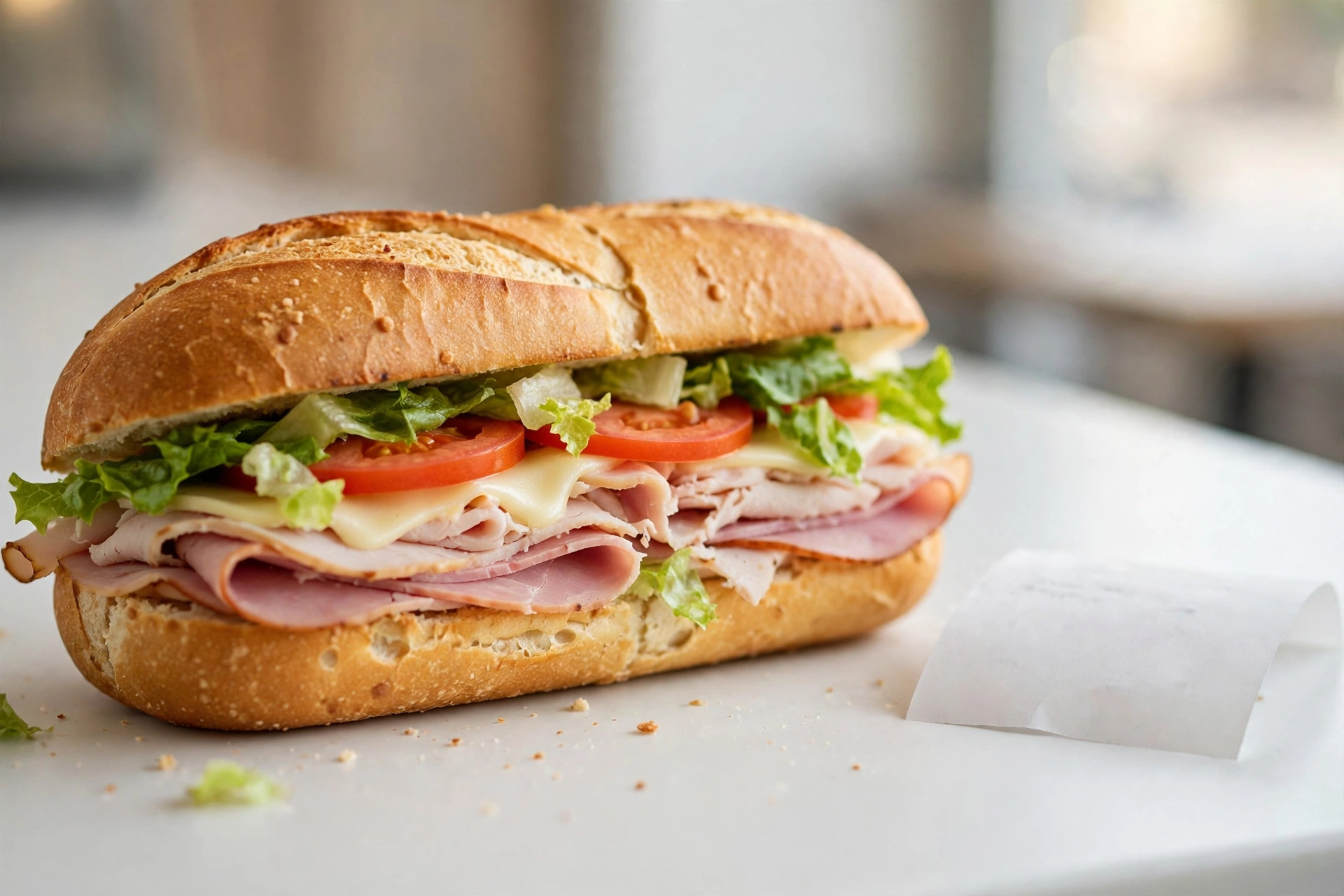
Open the Jimmy John’s app, build your usual sandwich, and the total can stop you cold. A regular 8-inch sub that cost about five dollars a decade ago now runs seven to twelve dollars at many locations, and a Giant can push toward thirty. It is no surprise that why is Jimmy John’s so expensive has become one of the most-searched questions about the chain.
The short answer is that Jimmy John’s is not really selling you the same product as a budget sub shop. It is selling you bread baked in the store every few hours, meat sliced by hand that day, and a sandwich at your door in about fifteen minutes. All three of those things cost money, and the bill lands on the menu board.
That does not mean every price on the menu is fair, or that you should just accept it. Some Jimmy John’s sandwiches are genuinely poor value, and some of the sticker shock comes from add-ons, delivery fees, and franchise pricing that has nothing to do with quality. This guide works through the real reasons, with 2026 prices, an honest comparison against Subway and Jersey Mike’s, and the cheapest ways to order.
One honest note up front: Jimmy John’s does not publish a single national price list. Every price in this guide is reported at some locations and varies — confirm locally before you order.
How Much Does Jimmy John’s Cost in 2026?
Before asking why Jimmy John’s is so expensive, it helps to pin down what “expensive” actually means in 2026. Prices are set by each franchise location, so the same sandwich can cost a dollar or two more in a big city than in a small town, and delivery prices are often higher than pickup prices. The ranges below come from menu trackers that checked real store listings in 2026.
| Jimmy John’s item (2026) | Reported price range |
|---|---|
| Originals, regular 8-inch (Pepe, Big John, Turkey Tom) | Roughly $7–$9 |
| Favorites and clubs, regular 8-inch | Roughly $10–$12 |
| Little John (smaller sandwich) | Roughly $4.69–$6.99 |
| Giant 16-inch Originals | Roughly $14.49–$20.09 |
| Wraps and toasted sandwiches | Roughly $10–$13 |
| J.J. Gargantuan, regular | Roughly $19 and up |
| Plain Slims (one meat, no vegetables) | From roughly $3.50 |
Another tracker that averages listings across the country puts regular 8-inch subs at $7.49–$11.49, which lines up with the same picture: a basic Jimmy John’s sandwich is a seven-to-nine-dollar lunch, a loaded favorite is ten to twelve, and the big sizes climb fast. Sides and drinks are sold separately, usually $1.50–$2.50 each, which can add nearly a third to the cost of a meal.
So the complaint is real, but it is also specific. A Little John or a Plain Slim is still cheap fast food. It is the regular favorites, the Giants, and the Gargantuan where the prices start to look startling — and those are the sandwiches this guide explains.
1. The Bread Is Baked In-Store Every Four Hours
The single biggest cost driver at Jimmy John’s is the bread, and it is also the thing regulars praise most. Every Jimmy John’s bakes its French bread in the store throughout the day, roughly every four hours, from the chain’s own recipe. The bread contains no preservatives, which is why it tastes the way it does — and why it goes stale fast.
Jimmy John’s enforces a strict freshness rule on that bread: once a loaf passes its prime window, usually around four hours after baking, it is pulled from the sandwich line. It is not served the next day, and it is not held over. Surplus loaves are sold off cheap as day-old bread, usually for about fifty cents, but the sandwich you pay full price for is always made on a fresh bake.
That policy is expensive in three ways. First, the store pays for an oven, a baker’s labor, and baking cycles all day instead of taking delivery of pre-baked rolls. Second, it pays for waste: every loaf pulled early is a loaf that cannot be sold at full price. Third, it pays for caution: staff would rather bake a little too much than run out at lunch, so some bread is always lost.
Compare that with a chain that ships frozen or par-baked bread to stores, and the cost gap is obvious. Jimmy John’s chose the expensive way to do bread on purpose — its former chief marketing officer said in 2018 that baking bread every four hours is the one part of the process the chain deliberately slows down for — and the menu price carries that choice.
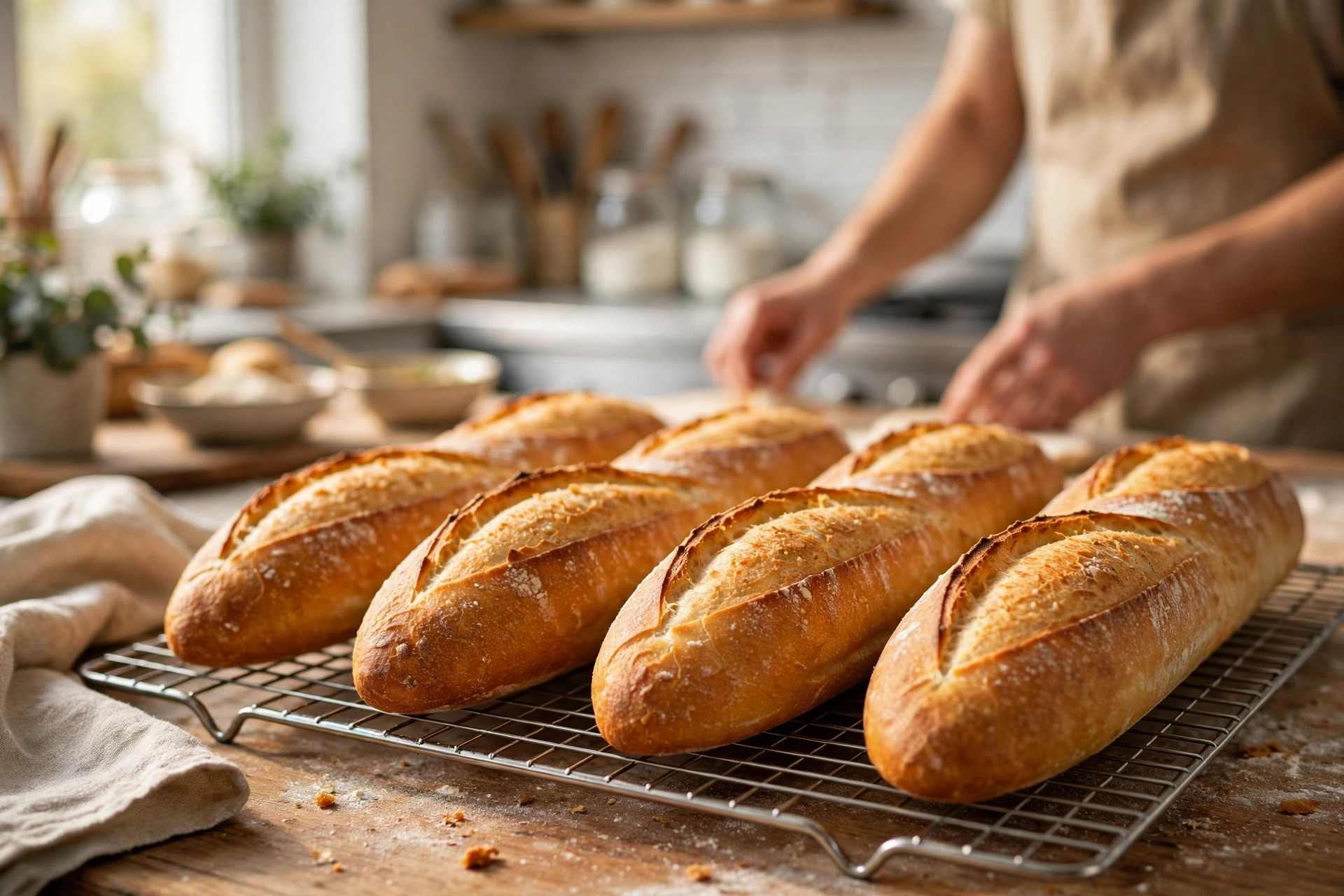
Whether the bread is worth the premium is a matter of taste. Plenty of customers say it is the best part of the sandwich. Plenty of others say a sub is a sub, and they would rather pay less for bread that was baked somewhere else. Both views are fair — but the bread is the first honest reason the price is what it is.
2. The Meat Is Hand-Sliced Every Day
The second cost driver is the meat. Jimmy John’s hand-slices its meats in the store every day, rather than buying pre-sliced meat in sealed packs. Its former chief marketing officer described the chain’s meats as all-natural and hand-sliced daily, and said the chain sources locally purchased vegetables that are also hand-sliced in the store.
Hand-slicing costs more than pre-sliced meat in labor, equipment, and waste. A slicer has to be staffed, cleaned, and maintained. Sliced meat has a short shelf life, so the store cannot slice a week’s worth on Monday. And skilled prep work is simply more expensive than opening a bag.
It is also the reason a Jimmy John’s sandwich tastes different from a gas-station sub. Pre-sliced deli meat is often pumped with water and preservatives so it survives shipping and storage. Meat sliced that morning is looser, fresher, and more perishable — and perishable is always pricier.
That said, hand-slicing is not a magic shield against criticism. Customers regularly complain that some sandwiches arrive light on filling — one viral complaint counted three pieces of meat, three tomatoes, and a pinch of lettuce on a fourteen-dollar Turkey Tom. Fresh meat that is skimpy still feels like a bad deal, and portion size is where Jimmy John’s most often loses the value argument.
3. Freaky Fast Delivery Is a Labor Cost
“Freaky Fast” is not a slogan at Jimmy John’s; it is the business model. The chain promises sandwiches made in under thirty seconds and delivered in about fifteen to twenty minutes, and it does the delivering itself, with its own drivers, instead of handing orders to a third-party app.
That speed is staffed, not automated. Stores keep delivery drivers on the clock even when orders are slow, keep the menu short so sandwiches can be assembled in seconds, and keep delivery zones deliberately tight so drivers can make the round trip fast. One store case study found that 85–90% of its business was delivery to nearby business accounts — the whole operation is built around feeding offices quickly.
The numbers show why the model costs money. Jimmy John’s own figures put its average delivery at about eighteen minutes, against roughly fifty minutes for the big third-party delivery apps, and its delivery fee at around two dollars against roughly eight dollars in fees on those apps. Somebody has to pay for drivers, fuel, and insurance, and at Jimmy John’s that somebody is the menu price rather than a separate checkout fee.
There is a catch for the customer, though: delivery is also where the hidden costs pile up. Jimmy John’s warns on its own ordering pages that delivery menu prices may be higher than in-store prices, and that fees can apply. Third-party listings have shown delivery fees plus a service fee of around fifteen percent. So the sandwich that costs eight dollars at the counter can easily cost eleven or twelve dollars by the time it reaches your desk — and that is before a tip.
4. Every Store Sets Its Own Prices
Jimmy John’s is a franchise system — around 2,600-plus locations in the US, almost all of them owned by individual franchisees — and each franchisee sets their own prices. There is no national price sheet to check, which is why the same Turkey Tom can cost two dollars more in one city than another.
Franchise pricing follows local costs. A store in a high-rent downtown neighborhood pays more for its lease than a store in a small town. A store in a state with a higher minimum wage pays more for every sandwich maker and driver. Local taxes, utilities, and supply costs all vary. The franchisee passes those costs on, because the alternative is losing money on every order.
Menu trackers estimate that urban locations in expensive markets like New York or San Francisco run ten to fifteen percent higher than the national average. That is why two customers can have completely different arguments about Jimmy John’s prices and both be right: the person paying seven dollars for a Pepe in a small town and the person paying eleven dollars for the same sandwich in a city are eating at the same chain.
Franchise pricing also explains why prices can jump suddenly. When a franchisee’s rent, labor, or food costs rise, the menu board is the only lever they have. There is no head office absorbing the increase.
5. Inflation Hit Sandwiches Hard
Some of the sticker shock is not a Jimmy John’s problem at all — it is an everything problem. Food, labor, rent, and fuel have all risen sharply since 2020, and a sandwich shop feels every one of those increases at once. But Jimmy John’s customers have noticed the climb more than most, because the chain’s prices were famously low for so long.
A long-time employee told reporters that in eleven years working at Jimmy John’s, the price of a sandwich doubled in their area. Customers remember the old menu boards: subs for $4.95, clubs for $5.95, and slims for about three dollars. The Vito — the chain’s Italian sub, covered in our Jimmy John’s Vito sandwich guide — reportedly sold for $2.75 when it first hit the menu. In the 2020s, customers have reported paying around sixteen dollars with tax for a Vito at some locations.
The J.J. Gargantuan tells the same story in miniature. In the early 2000s, customers report buying the giant six-meat sandwich for $6.75. Today it is listed at nineteen dollars and up at many locations, and customers say it approaches thirty dollars in some markets — and as much as seventy dollars once extra toppings are added. That is not a small annual increase; it is a transformation of what the sandwich costs.
The Club Lulu shows how the same inflation lands on a regular favorite. One Redditor posted a receipt showing nearly fourteen dollars including tax for a single Club Lulu, and asked when prices got so unreasonable. Other customers report paying nearly eleven dollars for a regular Club Lulu, and close to twenty dollars once chips and a drink are added. For a cold sandwich, that is a lot of money — and it is the meal, not just the sandwich, that people are reacting to.
None of this makes Jimmy John’s unusual. Every sandwich chain raised prices over the same period. What makes it sting at Jimmy John’s is the memory of how cheap it used to be, and the simplicity of the product: a cold sandwich on French bread invites the question “what am I actually paying for?” in a way a loaded burrito or a hot pressed sandwich does not.
6. The Extras Add Up Fast
The menu price is rarely the final price. Jimmy John’s charges for premium additions, and those charges stack up quickly on a sandwich that already starts at eight or nine dollars.
Adding avocado costs roughly $1.50–$2.00 per scoop — nearly twenty percent on top of a basic sandwich. Extra meat, cheese, or bacon typically adds $1.50–$3.00 per item. A second slice of cheese on a veggie sub took one customer’s total from $7.80 to $9.25, and that was a sandwich with no meat at all.
Then come the sides. Chips, a pickle, a cookie, and a drink are all sold separately, usually $1.50–$2.50 each. A sandwich, chips, and a drink can add thirty percent to the bill. The meal that felt like an eight-dollar lunch becomes a twelve- or thirteen-dollar lunch before you notice.
The Giant size works the same way in reverse: it looks expensive because it is two sandwiches’ worth of food. A Giant Turkey Tom has been reported at almost thirty dollars in some stores, which sounds outrageous until you remember it is sixteen inches of sandwich — the equivalent of two regulars. The Giant is usually slightly cheaper than buying two regular sandwiches, by about five to seven percent, but it is still a big number on a receipt.
The lesson is simple: the cheapest Jimmy John’s order is the sandwich exactly as it comes. Every change you make to it costs money, and the chain is not shy about charging for the good stuff.
7. Delivery Costs More Than Pickup
How you order matters almost as much as what you order. Pickup is the cheapest way to eat Jimmy John’s. Delivery is the most expensive — and most customers order delivery, because that is what the chain is built for.
Delivery menu prices are often higher than the prices on the in-store menu board, and Jimmy John’s says so itself on its ordering pages. On top of the higher menu prices, delivery orders can carry a delivery fee and a service fee. Third-party listings have shown a small delivery fee plus a service fee of about fifteen percent, capped at around $7.50. A sandwich that costs eight dollars in the store can cost ten or eleven dollars delivered, before any tip.
That is still cheaper than ordering the same sandwich through a third-party delivery app, where fees average around eight dollars per order. Jimmy John’s in-house delivery is genuinely the better deal of the two. But “cheaper than DoorDash” is a low bar, and it does not make the delivered price feel cheap.
If the price is bothering you, pickup is the single easiest saving available. Walk in, order at the counter, and the sandwich is usually in your hands in under a minute — the thirty-second sandwich is real, and it is the one part of the Freaky Fast promise that costs you nothing extra.
Jimmy John’s vs Subway vs Jersey Mike’s vs Firehouse Subs
Expensive is relative, so here is how Jimmy John’s actually compares with the other big sub chains on a comparable sandwich.
| Chain | Comparable 8-inch sub | What you get for the money |
|---|---|---|
| Jimmy John’s | Roughly $7–$9 (Originals), $10–$12 (Favorites) | Bread baked in-store, hand-sliced meat, ~15-minute delivery |
| Subway | Usually a little less than Jimmy John’s | More bread and topping choices, slower delivery, pre-sliced meat |
| Jersey Mike’s | Close to Jimmy John’s | Sliced-to-order meat, similar premium positioning |
| Firehouse Subs | Usually a little more than Jimmy John’s | Hot subs, steamed meats, larger portions |
The comparison is honest, and it is not a blowout in any direction. Jimmy John’s generally runs a bit above Subway, close to Jersey Mike’s, and slightly below Firehouse Subs on a comparable sandwich. The trade-off customers cite most often is speed and freshness: you pay a little more than Subway, and in exchange you get a sandwich in minutes and meat that was sliced that day.
Where Subway wins is choice and customization. Subway lets you build your own sandwich from a long list of breads, proteins, and toppings at no extra charge for most vegetables. Jimmy John’s menu is deliberately short — the chain’s founder started with four sandwiches, and the narrow menu has never really gone away — so you are paying for someone else’s recipe, made fast, rather than for your own creation.
Where Firehouse wins is heat and heft. A hot, steamed-meat sub with melted cheese is a different meal from a cold Jimmy John’s sandwich, and many customers feel the extra dollar or two buys more food. And where Jersey Mike’s wins is the middle ground: sliced-to-order meat like Jimmy John’s, with more customization and a similar price.
The fair conclusion is that Jimmy John’s is not the most expensive sub chain, and it is not the cheapest. It sits in the premium middle, and whether it is worth it depends on what you value: if speed and fresh bread matter most, it is competitive; if price per ounce matters most, it is not.
Is Jimmy John’s Worth the Price?
After all of that, the honest answer is: sometimes, and it depends on the sandwich.
Jimmy John’s is worth it when you need food fast and you want it to taste fresh. The bread is genuinely good, the vegetables are crisp, and the delivery is faster than any competitor by a wide margin. For an office lunch or a quick pickup on a busy day, the premium buys something real. The Turkey Tom and the Pepe are simple sandwiches done well, and at seven to nine dollars they are fairly priced for what they are.
Jimmy John’s is not worth it when the sandwich is light on filling, when you are paying delivery prices and fees on top of an already premium sandwich, or when the order is a Giant or a Gargantuan at a high-priced location. A thirty-dollar Giant or a twenty-dollar Club Lulu with chips and a drink is a lot of money for a cold sandwich, and customers are right to balk at it. Tasting Table went as far as naming Jimmy John’s one of five US sandwich chains that simply are not worth the money in May 2026 — a harsh verdict, but one that shows how far the value perception has slipped.
The middle path is to treat Jimmy John’s as a sometimes food rather than a daily lunch. At two or three times a week, the prices add up to real money. Once in a while, for the bread and the speed, it is a fair trade.
And if you want to try something different on your next visit, the limited-time Jimmy John’s pickle sandwich — the Picklewich, a sub built inside a giant dill pickle instead of bread — is the most fun the menu has offered in years, and it costs roughly the same as a regular sub.
How to Pay Less at Jimmy John’s
You do not have to stop eating at Jimmy John’s to spend less there. These are the savings that actually work, drawn from the menu and from what regulars report.
Order a Little John. The Little John is a smaller version of the regular sandwich, launched in 2019, and it runs roughly $4.69–$6.99. If a regular sandwich is too much food anyway, the Little John is the best value on the board. Our Little John guide covers the full lineup and prices.
Use the Plain Slims trick. A Plain Slim is a single meat and cheese on the in-store baked bread, with no vegetables or dressing, and it is the cheapest sandwich on the menu, from roughly $3.50. The vegetables are free additions — so order a Slim, add lettuce, tomato, onion, and mayo yourself, and you have effectively rebuilt an Original for meaningfully less money. It is the most efficient order on the board, and the chain does not advertise it.
Pick up instead of ordering delivery. Pickup avoids the higher delivery menu prices, the delivery fee, and the service fee. On a single sandwich, that can save two to four dollars.
Join Freaky Fast Rewards and check the app. Jimmy John’s runs short promotions rather than permanent discounts, and the app is where they appear. In early November 2026, for example, the app ran a buy-one-get-one-free offer for rewards members. The rewards program also runs achievement badges and member offers that regulars can stack. It is the only consistent way to lower what you spend over a year.
Share a Giant instead of buying two regulars. A Giant is sixteen inches — two regular sandwiches in one — and it usually costs a little less than two regulars bought separately. Split it with someone and the per-person price drops below a regular sandwich.
Buy the day-old bread. If you love the bread, loaves that were pulled from the line are sold for about fifty cents. It is the same bread, baked the same day or the day before, and it makes excellent garlic bread or French toast at home.
Skip the extras. Avocado, extra cheese, and extra meat are the fastest way to turn an eight-dollar sandwich into a twelve-dollar one. Order the sandwich as it comes, and add the free vegetables instead.
Check the Hunter’s Club and the other favorites before defaulting to the most expensive one. The Hunter’s Club and the other club sandwiches vary in price, and the cheaper favorites are often just as filling. And if you want the full picture before ordering, our Jimmy John’s menu with prices guide lists the whole 2026 menu in one place.
Why Is Jimmy John’s So Expensive? FAQs
Why is Jimmy John’s so expensive compared to Subway?
Jimmy John’s costs more than Subway mainly because it bakes bread in-store every four hours, hand-slices its meat daily, and runs its own fast delivery fleet. Subway uses pre-sliced meat and a wider, slower menu, which keeps its costs lower. Jimmy John’s generally runs a bit above Subway on a comparable sandwich, and close to Jersey Mike’s.
How much is a regular sandwich at Jimmy John’s in 2026?
A regular 8-inch Original sandwich runs roughly $7–$9 in 2026, and a regular Favorite or club runs roughly $10–$12, according to menu trackers that checked real store listings. Prices vary by franchise location, and delivery prices are often higher than pickup prices. Jimmy John’s does not publish a national price list, so confirm locally.
What is the most expensive sandwich at Jimmy John’s?
The J.J. Gargantuan is the most expensive standard sandwich on the menu, at roughly $19 and up for a regular, and approaching $30 in some locations for a Giant. It contains six meats — salami, capocollo, turkey, roast beef, and ham — plus provolone. With extra toppings, customers have reported totals as high as $70.
Is Jimmy John’s worth the money?
It depends on the sandwich and the situation. Jimmy John’s is worth it when you need food fast and want fresh bread and hand-sliced meat — the Turkey Tom and Pepe at $7–$9 are fairly priced. It is poor value when the sandwich is light on filling, when delivery fees stack on top of an already premium price, or when a Giant or Gargantuan costs $20–$30 at a high-priced location.
Why did Jimmy John’s prices go up so much?
Food, labor, rent, and fuel costs all rose sharply, and Jimmy John’s prices rose with them. A long-time employee said the price of a sandwich doubled in their area over eleven years. The Vito reportedly sold for $2.75 when it launched and now costs around $16 with tax in some stores, and the Gargantuan went from $6.75 in the early 2000s to around $19 and up today.
Is Jimmy John’s cheaper if you pick up instead of getting delivery?
Yes. Pickup avoids the higher delivery menu prices, the delivery fee, and the service fee, which can save two to four dollars on a single sandwich. Jimmy John’s warns on its own ordering pages that delivery menu prices may be higher than in-store prices and that fees can apply.
What is the cheapest thing on the Jimmy John’s menu?
The Plain Slims are the cheapest sandwiches, from roughly $3.50 — a single meat and cheese on the in-store baked bread with no vegetables or dressing. The Little John, a smaller sandwich, runs roughly $4.69–$6.99. Adding the free vegetables to a Slim rebuilds most of an Original for less money.
Does Jimmy John’s have coupons or discounts?
Jimmy John’s runs short promotions rather than permanent coupons, and most offers appear in the Freaky Fast Rewards app. In early November 2026 the app ran a buy-one-get-one-free offer for rewards members. Checking the app before ordering is the most reliable way to find a current deal.
Does Jimmy John’s bake its bread fresh in-store?
Yes. Jimmy John’s bakes its French bread in the store throughout the day, roughly every four hours, and pulls any loaf from the sandwich line once it passes its prime window. Surplus loaves are sold as day-old bread for about fifty cents. The bread contains no preservatives, which is why it tastes fresh and goes stale quickly.
Is Jimmy John’s more expensive than Jersey Mike’s?
Not by much. The two chains are priced close together on comparable sandwiches, with Jimmy John’s generally running about the same as Jersey Mike’s and slightly below Firehouse Subs. Jersey Mike’s offers more customization, while Jimmy John’s offers faster delivery and bread baked in-store every few hours.