Is vodka gluten-free? For most people, the answer is generally yes when we’re talking about properly distilled, unflavored vodka. Distillation separates alcohol from a lot of non-volatile substances, gluten proteins included — which means vodka made from wheat, rye, or barley often ends up with no detectable gluten once it’s been properly distilled.
That said, things get more complicated once flavored vodka, additives, or post-distillation ingredients enter the picture. Anyone avoiding gluten because of celiac disease or a gluten sensitivity is better off checking the specific product and manufacturer information rather than trusting the word “vodka” alone.
Understanding the ingredients, the distillation process, and the possibility of cross-contact makes choosing the right drink a lot easier.
Is Vodka Gluten-Free After Distillation?
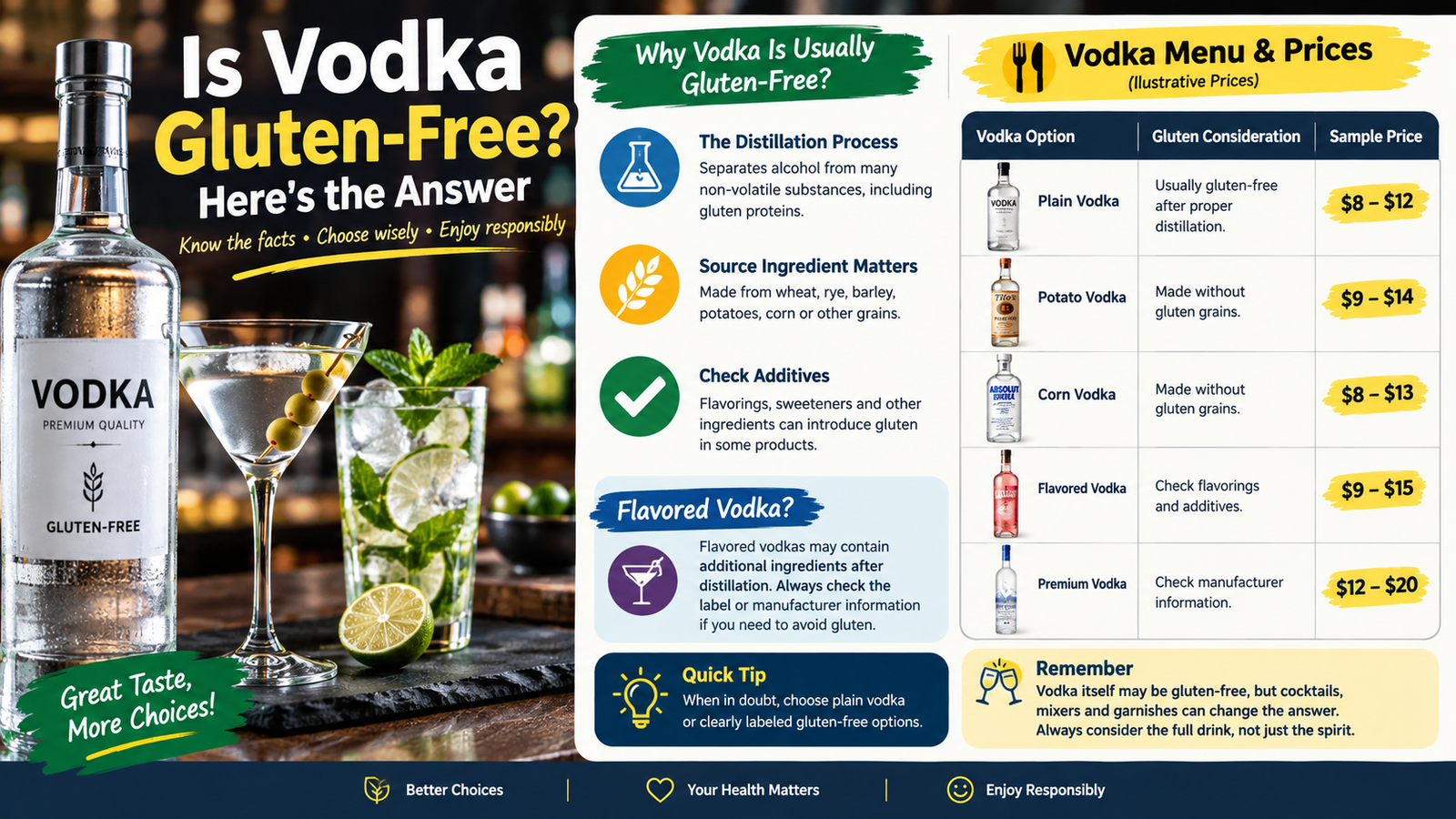
The main reason so many distilled vodkas end up gluten-free comes down to the distillation process itself. Gluten proteins are simply too large and non-volatile to typically pass through distillation along with the ethanol.
Vodka Made From Wheat
Wheat-based vodka trips people up a lot, since wheat obviously contains gluten before distillation. But properly distilled vodka made from wheat is generally considered gluten-free, because distillation removes the protein components actually responsible for gluten reactions.
That distinction matters: the source grain and the finished distilled spirit aren’t nutritionally the same thing.
Vodka Made From Other Ingredients
Vodka can also come from potatoes, corn, grapes, rice, and other agricultural ingredients. Potato and corn vodkas skip gluten-containing grains from the start, which makes them a particularly straightforward choice for anyone who’d rather avoid wheat, rye, or barley entirely.
Even so, the manufacturing process and final ingredient list still matter.
Is Flavored Vodka Gluten-Free?
Plain distilled vodka and flavored vodka shouldn’t automatically be treated as the same thing. Flavored varieties often contain extra ingredients added after distillation is already done.
Check Added Ingredients
Flavorings, sweeteners, colorings, and other additives can all change what’s actually in the bottle. Most commercial products list ingredient or allergen information, though labeling practices vary quite a bit between countries.
If avoiding gluten is medically necessary, checking the manufacturer’s current information is a genuinely useful step rather than an optional one.
Vodka Menu Prices and Gluten Considerations
Prices vary a lot depending on brand, location, bottle size, and venue. The figures below are illustrative menu prices, not universal current prices.
| Vodka Option | Gluten Consideration | Sample Menu Price |
| Plain Vodka | Usually gluten-free after proper distillation | $8–$12 |
| Potato Vodka | Made without gluten grains | $9–$14 |
| Corn Vodka | Made without gluten grains | $8–$13 |
| Flavored Vodka | Check flavorings and additives | $9–$15 |
| Premium Vodka | Check manufacturer information | $12–$20 |
| Rye Vodka | Usually gluten-free after proper distillation | $10–$16 |
| Rice Vodka | Made without gluten grains | $9–$14 |
| Grape Vodka | Made without gluten grains | $11–$17 |
For an actual restaurant, bar, or store menu, these numbers should be swapped out for the venue’s current pricing.
Gluten-Free Vodka and Celiac Disease
People with celiac disease need to be especially careful, since even small amounts of gluten can cause problems for them. Properly distilled spirits are generally regarded as gluten-free, but individual products can still differ because of flavorings, additives, processing methods, or cross-contact.
Read the Label Carefully
Look for manufacturer information about ingredients and gluten status. If the product is flavored or includes additional ingredients, checking the full product information becomes especially important.
When there’s any uncertainty, choosing a clearly labeled product or reaching out to the manufacturer directly gives far more reassurance than guessing based on the spirit category alone.
Vodka Cocktails Can Change the Answer
Plain vodka might be gluten-free, but the finished cocktail is a different matter entirely. Mixers and garnishes can quietly introduce gluten-containing ingredients.
Watch the Mixer
Beer-based mixers, certain flavored syrups, specialty dessert mixes, and some packaged cocktail ingredients may contain gluten, or simply have unclear labeling.
Simple cocktails made with verified gluten-free ingredients keep the ingredient list a lot easier to understand. Anyone with a medical gluten restriction, though, should really look at every ingredient rather than focusing on the vodka alone.
Common Misunderstandings About Gluten-Free Vodka
One common misconception is that any vodka made from wheat automatically contains gluten. The distillation process makes that assumption inaccurate for properly distilled plain vodka.
Another misconception runs the opposite way — that every vodka-based drink is automatically gluten-free. The vodka itself might be fine while the flavoring, mixer, garnish, or some other ingredient isn’t.
Distillation Matters
Distillation is really the biggest factor behind the gluten-free status usually associated with plain distilled spirits. It separates ethanol from the original fermentation mixture and leaves the non-volatile substances behind.
Still, production methods differ across brands, so checking specific product information remains genuinely worthwhile.
How to Choose Vodka When Avoiding Gluten
If avoiding gluten matters to you, start with plain vodka and check the manufacturer’s information. Potato, corn, rice, and grape-based vodkas are appealing options too, since their starting ingredients never contained gluten in the first place.
For flavored products, it’s worth examining the ingredient list more closely. At restaurants or bars, ask about mixers and preparation directly rather than assuming a vodka cocktail shares the same gluten status as plain vodka.
A Practical Checklist
Before choosing a vodka drink, it helps to run through a few quick checks: whether the vodka is plain or flavored, what the manufacturer’s ingredient information says, what the source ingredient actually is, whether mixers or syrups are involved, whether cross-contact is a concern, and whether professional dietary advice is worth seeking for anything medically necessary.
Frequently Asked Questions
Is vodka gluten-free?
Plain, properly distilled vodka is generally considered gluten-free, even when it’s made from gluten-containing grains.
Is wheat vodka gluten-free?
Properly distilled plain wheat vodka is generally considered gluten-free, since gluten proteins don’t typically carry over through distillation.
Is potato vodka gluten-free?
Yes — potatoes don’t naturally contain gluten, so potato-based vodka is generally a gluten-free option.
Can flavored vodka contain gluten?
It depends on the added flavorings and other ingredients, so it’s worth checking the specific product information.
Are vodka cocktails gluten-free?
Not necessarily. Mixers, syrups, garnishes, and other ingredients can all change a cocktail’s gluten status.
Final Thoughts
So, is vodka gluten-free? Generally speaking, plain vodka that’s been properly distilled is considered gluten-free — including many vodkas originally made from wheat, rye, or barley. The distillation process is the key reason why.
The picture gets more complicated once flavored vodka, additives, or mixed drinks come into play. For anyone with celiac disease or significant gluten sensitivity, checking the exact product and every cocktail ingredient is really the safest approach.
The good news is there’s no shortage of options — vodkas made from potatoes, corn, rice, grapes, and other ingredients are all widely available. With careful label-checking and reliable manufacturer information, choosing something suitable can be a lot simpler and a lot more confident than it might first seem.