A cheeseburger is one of the most popular comfort foods out there — a juicy beef patty, melted cheese, a soft bun, and whatever toppings you like piled on top. If you’re tracking daily calories, understanding cheeseburger kcal can help you make smarter choices without giving up your favorite meal entirely. The calorie count shifts quite a bit depending on the patty size, cheese, sauces, bun, and toppings — a simple cheeseburger might land around 300–500 kcal, while a larger restaurant-style burger loaded with extras can easily cross 700 kcal.
Cheeseburger Kcal Depends on Ingredients
The calorie count in a cheeseburger is never really fixed — every ingredient adds to the final number. A small homemade burger with lean beef and one slice of cheese will generally come in lighter than a large fast-food burger piled with sauce.
Beef Patty and Calories
The beef patty is usually the main source of both calories and protein. A bigger or fattier patty naturally adds more calories than a smaller, leaner one, and the cooking method plays a role too — some preparations hold onto more fat than others.
Cheese Adds Flavor and Energy
Cheese brings calcium, protein, and fat to the table, but it also bumps up the total calorie count. One standard slice of cheddar-style cheese adds roughly 70–120 kcal, depending on its size and type.
Bun and Toppings Matter
The bun contributes carbohydrates and calories of its own, and sauces like mayonnaise-based dressings can add a surprising amount of energy in a small serving. Vegetables — lettuce, tomato, onions, pickles — generally add very little in comparison.
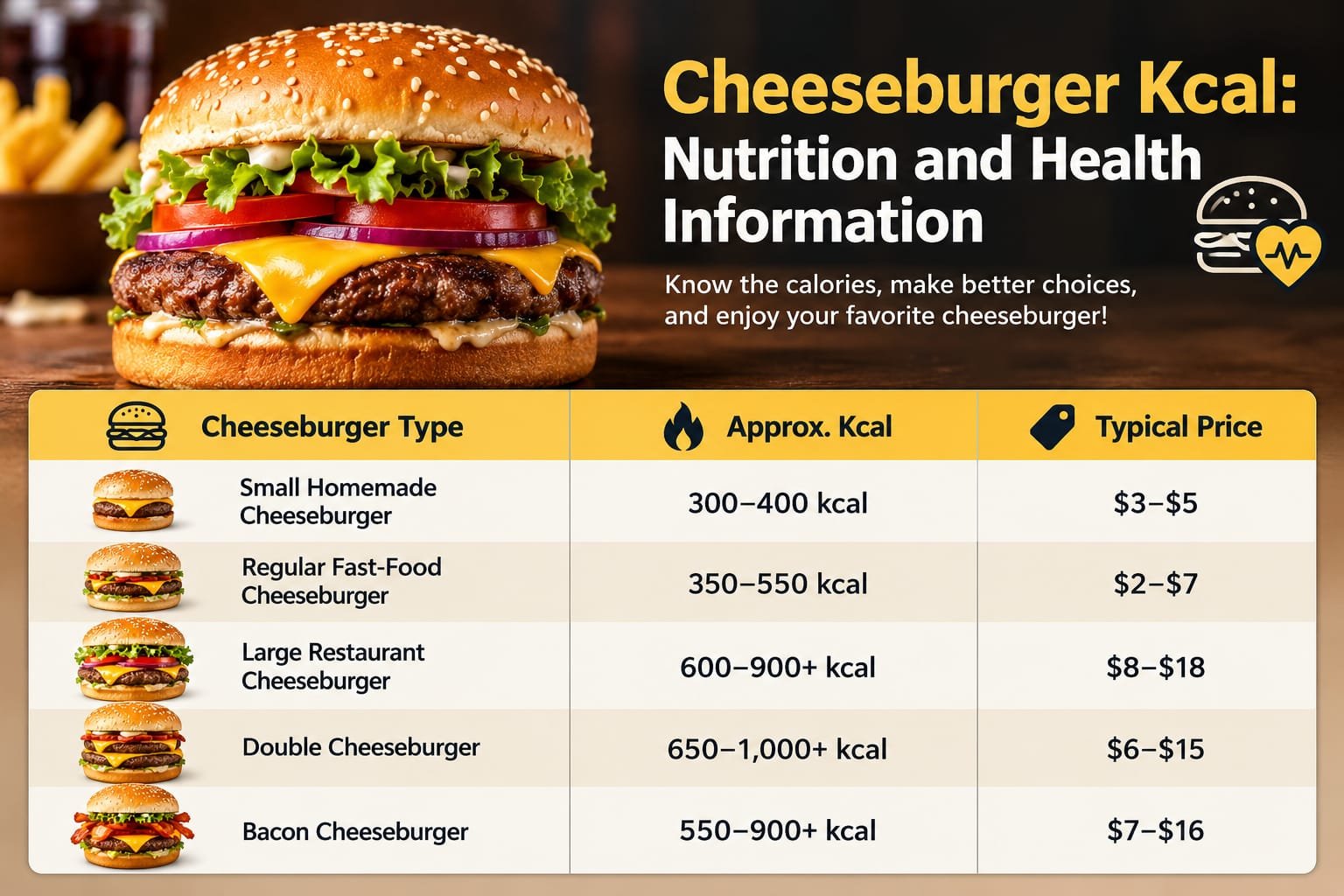
Average Cheeseburger Kcal and Price
These figures are approximate, since portion sizes and recipes vary between restaurants and homemade versions. Prices are illustrative and will differ by location.
| Cheeseburger Type | Approx. Kcal | Typical Price |
| Small Homemade Cheeseburger | 300–400 kcal | $3–$5 |
| Regular Fast-Food Cheeseburger | 350–550 kcal | $2–$7 |
| Large Restaurant Cheeseburger | 600–900+ kcal | $8–$18 |
| Double Cheeseburger | 650–1,000+ kcal | $6–$15 |
| Bacon Cheeseburger | 550–900+ kcal | $7–$16 |
| Mushroom Swiss Cheeseburger | 600–850 kcal | $8–$15 |
| Veggie Cheeseburger | 350–550 kcal | $6–$12 |
| Jalapeño Cheeseburger | 550–900 kcal | $7–$14 |
How to Reduce Cheeseburger Kcal
You don’t need to cut cheeseburgers out of your diet entirely to manage calories — small ingredient changes can make a real difference.
Choose a Smaller Patty
Reducing the patty size is one of the simplest ways to lower the total calorie count, and a smaller portion still delivers satisfying protein while keeping the meal more balanced overall.
Select Leaner Beef
Lean ground beef cuts down on the fat in your burger, though the exact difference depends on the percentage of lean meat and the serving size.
Control Cheese and Sauce
Cheese and sauce are often where the calories sneak in fastest. One thin cheese slice and a moderate amount of sauce still deliver the flavor while trimming the extra calories.
Add More Fresh Vegetables
Lettuce, tomato, cucumber, and onions add texture and volume without adding much in the way of calories — and they bring useful vitamins, minerals, and fiber along with them too.
Cheeseburger Nutrition Beyond Calories
Looking only at cheeseburger kcal doesn’t tell the whole nutritional story. A cheeseburger can provide protein, iron, vitamin B12, and calcium, but some versions can also run high in saturated fat, sodium, and refined carbohydrates.
Protein Content
Beef and cheese both provide protein, which supports muscle maintenance and normal body function. A typical cheeseburger delivers somewhere around 15–40 grams of protein, depending on size and ingredients.
Fat and Saturated Fat
Fat matters for the body, but quantity still counts — fatty beef, cheese, bacon, and creamy sauces can push the total fat content up considerably. Anyone eating cheeseburgers frequently might find leaner ingredients help keep the overall diet more balanced.
Sodium Considerations
Cheeseburgers can carry a fair amount of sodium thanks to processed cheese, seasoned meat, pickles, sauces, and the bun itself. Anyone watching sodium intake should pay close attention to portion size and ingredient choices.
Is a Cheeseburger Healthy?
Whether a cheeseburger fits into a healthy diet really comes down to the overall meal and individual dietary needs. A homemade cheeseburger with lean beef, a whole-grain bun, vegetables, and a moderate amount of cheese looks nutritionally quite different from a large burger served with fries, a sugary drink, and extra sauce.
Balance the Complete Meal
Rather than fixating only on cheeseburger kcal, it helps to look at the entire plate — pairing a burger with a fresh salad, vegetables, or another nutrient-rich side creates a much more balanced meal.
Portion awareness matters too. A single regular cheeseburger can fit into plenty of eating patterns when enjoyed occasionally and balanced out with nutritious food the rest of the day.
Homemade vs. Restaurant Cheeseburgers
Homemade burgers give you far more control over both ingredients and portion size — you can choose lean meat, go lighter on the cheese, add fresh vegetables, and pick a lighter sauce.
Restaurant burgers, on the other hand, often come with larger patties, richer sauces, extra cheese, or oversized buns — which makes their calorie content harder to estimate without checking the official nutrition information.
Tips for Tracking Cheeseburger Kcal
If you’re counting calories, check the restaurant’s official nutrition information whenever it’s available. For homemade burgers, measuring ingredients before cooking and keeping a record makes the numbers far more accurate.
The extras matter too — bacon, extra cheese, mayonnaise, special sauces, and oversized buns can shift the final calorie count significantly, and fries or soft drinks should always be factored in when calculating the calories of a complete meal.
Frequently Asked Questions
How many kcal are in a cheeseburger?
A typical cheeseburger runs around 300–600 kcal, though larger versions can exceed 900 kcal.
Does cheese increase burger calories?
Yes — cheese adds calories, fat, and protein, with the exact amount depending on the type and serving size.
How can I make a lower-calorie cheeseburger?
Use lean beef, a smaller bun, moderate cheese, light sauce, and plenty of fresh vegetables.
Are homemade cheeseburgers easier to control?
Yes — homemade burgers let you control portion sizes, ingredients, sauces, and cooking methods directly.
Are all cheeseburgers the same in calories?
No — cheeseburger kcal varies based on patty size, beef fat content, cheese, bun, sauces, and toppings.
Final Thoughts
Understanding cheeseburger kcal makes calorie tracking a lot easier while still letting you enjoy this classic meal responsibly. A cheeseburger can range from a fairly moderate meal to a genuinely calorie-dense one, depending entirely on its ingredients and portion size. Choosing leaner meat, controlling cheese and sauce, adding vegetables, and picking sensible portions all add up to a more balanced burger.
The most useful approach isn’t judging a cheeseburger by calories alone — protein, fat, sodium, carbohydrates, portion size, and the rest of your daily diet all matter too. With a few thoughtful choices, you can enjoy a flavorful cheeseburger while staying aware of your nutritional goals.