AUS 32 Diesel Exhaust Fluid plays a bigger role than its simplicity suggests. Used alongside Selective Catalytic Reduction (SCR) technology, it helps cut harmful nitrogen oxide emissions from diesel engines — and while the fluid itself is easy enough to handle, getting the storage, handling, and application right really does matter for keeping it effective and your equipment running smoothly.
AUS 32 is essentially a solution of high-purity urea and deionized water, commonly found wherever diesel vehicles, trucks, buses, agricultural equipment, and other SCR-equipped machines operate. Knowing how to store and use it properly goes a long way toward avoiding contamination, unnecessary waste, and system headaches down the line.
Understanding AUS 32 Diesel Exhaust Fluid
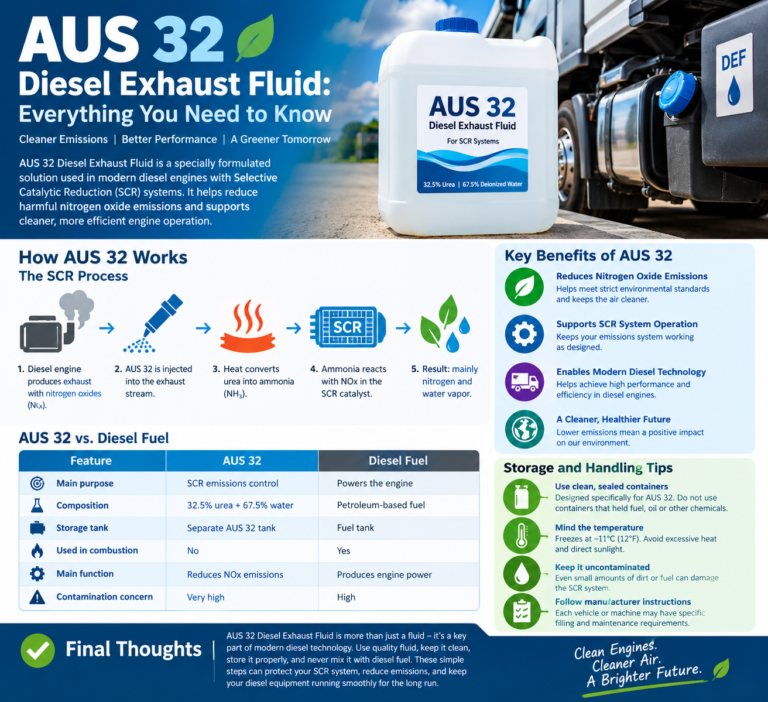
AUS 32 is made up of roughly 32.5% technically pure urea and 67.5% purified water. In markets where the term is more common, it’s often sold under the name Diesel Exhaust Fluid, or DEF.
It’s worth being clear that this fluid never mixes directly with diesel fuel. It sits in its own separate tank and gets injected into the exhaust system, where it helps convert nitrogen oxides into harmless nitrogen and water inside the SCR system.
Why Fluid Quality Matters
Quality isn’t something to cut corners on here, since modern SCR systems contain genuinely sensitive components. Contaminated or substandard fluid can interfere with the whole system, triggering warning messages or, worse, expensive repairs down the road.
That’s exactly why it’s worth choosing AUS 32 that meets recognized quality standards like ISO 22241, and keeping both containers and filling equipment genuinely clean.
Proper AUS 32 Storage
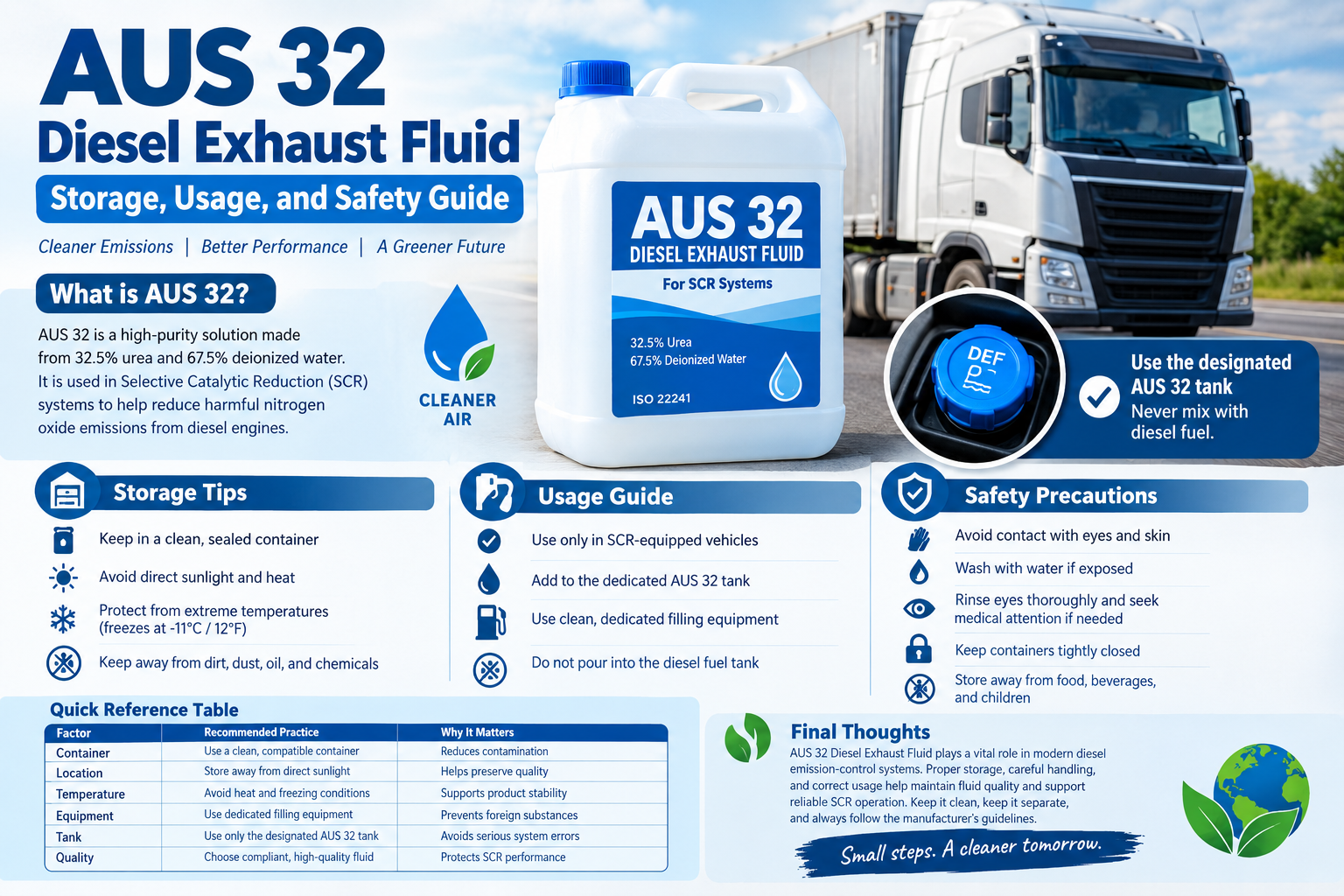
Good storage habits go a long way toward preserving the fluid’s chemical properties. AUS 32 should generally sit in a clean, sealed container, kept away from direct sunlight and temperature extremes.
A cool, well-ventilated spot usually works best. Try to keep containers away from heat sources, engines, heaters, or anywhere that gets heavy, prolonged sun exposure.
Keeping Contamination Out
One of the most important storage rules is simple: keep AUS 32 away from dirt, dust, oil, diesel fuel, other chemicals, or any foreign material that could compromise it.
Never reuse a container that once held fuel, oil, or other chemicals unless it’s been specifically designed and thoroughly cleaned for AUS 32 use. Dedicated storage equipment is really the safer route here.
Watching the Temperature
AUS 32 freezes at around -11°C (12°F). That’s not actually a disaster — the fluid returns to its original concentration once it’s fully thawed — but containers do need enough spare room to handle the expansion that comes with freezing.
High temperatures can shorten its storage life too, so it’s worth sticking to the supplier’s storage guidance and checking the product label before assuming it’s still good.
How to Use AUS 32 Correctly
AUS 32 is built for vehicles and equipment fitted with an SCR system, and it should only ever go into the dedicated AUS 32 or DEF tank.
Never pour AUS 32 into the diesel fuel tank. Fuel and exhaust fluid do completely different jobs, and putting either one into the wrong tank can cause serious, costly problems.
Using Clean Filling Equipment
Stick to clean equipment that’s specifically meant for AUS 32. Funnels, pumps, or containers that have previously touched oil, fuel, grease, or other chemicals can easily introduce contaminants without anyone noticing.
While filling the tank, try to avoid spills near electrical components or other sensitive areas. If something does spill, clean it up according to whatever the vehicle or equipment manufacturer recommends.
AUS 32 Storage and Usage Guide
| Factor | Recommended Practice | Why It Matters |
| Container | Use a clean, compatible container | Reduces contamination |
| Location | Store away from direct sunlight | Helps preserve quality |
| Temperature | Avoid excessive heat and freezing conditions | Supports product stability |
| Equipment | Use dedicated filling equipment | Prevents foreign substances |
| Tank | Use only the designated AUS 32 tank | Avoids serious system errors |
| Quality | Choose compliant, high-quality fluid | Protects SCR performance |
| Spill Cleanup | Clean spills promptly per manufacturer guidance | Protects sensitive components nearby |
| Shelf Life | Check expiration and storage duration | Prevents using degraded fluid |
| Transport | Keep sealed and upright during transport | Reduces leaks and contamination risk |
Safety Tips for Handling AUS 32
AUS 32 doesn’t carry the same classification as conventional fuels, but that doesn’t mean careless handling is fine. It’s still worth avoiding unnecessary contact with eyes and skin, and following whatever safety information is on the product label or Safety Data Sheet (SDS).
If it gets on skin, washing the area with water is a sensible first step. If it reaches the eyes, rinse thoroughly with clean water and seek medical attention if the irritation doesn’t settle down.
Keeping Containers Secure
Containers should stay tightly closed whenever they’re not in active use. Keeping them sealed helps prevent evaporation, dirt getting in, and accidental contamination.
It’s also worth storing the product well away from food, drinks, and anywhere children or unauthorized users might get to it.
Signs That AUS 32 May Need Attention
Poor-quality or contaminated fluid can cause real problems for an SCR system, so warning lights, system messages, or unusual vehicle behavior shouldn’t just be brushed off.
If a vehicle throws up an AUS 32 or SCR warning, it’s worth checking the owner’s manual or getting a qualified technician involved — and definitely avoiding any attempt to bypass or alter the emission-control system yourself.
Checking the fluid level regularly helps avoid unexpected interruptions too. Most modern diesel vehicles will warn you on the dashboard well before the tank actually runs dry.
Choosing the Right AUS 32
Quality should be the top consideration when buying AUS 32. Look for reputable products that clearly state the standards and specifications they meet.
Steer clear of unknown liquids, homemade mixtures, or products meant for unrelated applications. The concentration and purity of AUS 32 genuinely matter for how well the SCR system performs, so a cheaper substitute can end up creating more problems than it solves.
Always follow the vehicle manufacturer’s requirements around fluid specifications, filling procedures, and maintenance intervals.
Frequently Asked Questions
What is AUS 32 used for?
It’s used in SCR systems to help reduce nitrogen oxide emissions from diesel engines.
Can AUS 32 be mixed with diesel fuel?
No — it needs to stay completely separate from diesel fuel and go only into its dedicated fluid tank.
Does AUS 32 expire?
It has a limited storage life that depends on temperature and conditions, so it’s worth following the manufacturer’s shelf-life guidance.
Can AUS 32 freeze?
Yes — it freezes at around -11°C (12°F), and proper thawing brings it back to its normal liquid state.
How should AUS 32 be stored?
Sealed, in a clean, suitable container, away from direct sunlight, contamination, and excessive heat, following the supplier’s storage recommendations.
Final Thoughts
AUS 32 Diesel Exhaust Fluid plays a genuinely valuable role in modern diesel emission-control technology, and getting the storage and handling right isn’t complicated — it just takes a bit of consistency.
Keep it in suitable containers, protect it from contamination and extreme conditions, and always use dedicated filling equipment. And above all, remember that AUS 32 belongs in its own exhaust-fluid tank, never the diesel fuel tank.
A handful of simple precautions here make everyday maintenance easier and help protect some genuinely sophisticated emission-control equipment in the long run.