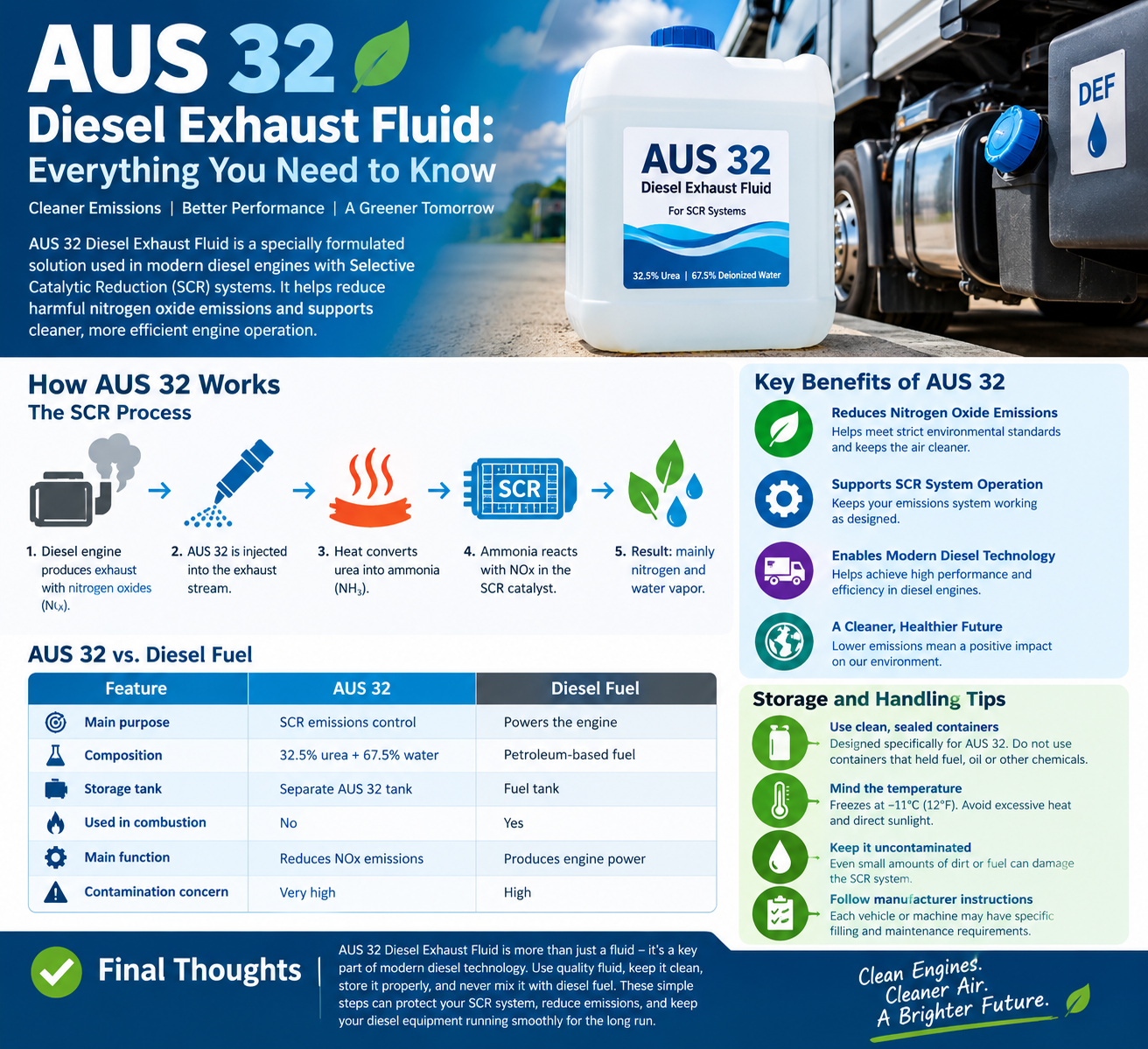
AUS 32 Diesel Exhaust Fluid is the liquid that keeps the emissions system running in many modern diesel vehicles. It is used in engines fitted with Selective Catalytic Reduction (SCR), a technology that cuts harmful nitrogen oxide emissions from the exhaust. You will find it in diesel cars, but also in trucks, buses, farm equipment and construction machinery.
If you drive or manage a diesel vehicle, it helps to know how AUS 32 works, how to store it and how to handle it. A few simple habits can save you from warning lights, repair bills and wasted time.
What Is AUS 32 Diesel Exhaust Fluid?
AUS 32 stands for Aqueous Urea Solution 32.5%. It is a standardized mix of 32.5% high-purity urea and 67.5% deionized water, made only for SCR emission-control systems. In the United States it is sold as DEF, and in Europe it is often marketed as AdBlue. All three names refer to the same type of fluid.
AUS 32 never mixes with diesel fuel. It sits in its own tank and is sprayed into the exhaust stream. Heat turns the urea into ammonia, and the ammonia reacts with nitrogen oxides inside the SCR catalyst. The result is mostly harmless nitrogen and water vapor.
Why the 32.5% Concentration Matters
This ratio is chosen because it works well across a wide range of temperatures. A weaker or stronger mix can confuse the SCR system and may trigger warning messages or reduced engine performance.
That is why homemade mixtures and ordinary agricultural urea should never replace certified AUS 32. Fertilizer urea contains impurities that can damage the system.
How AUS 32 Works in a Diesel Engine
The SCR process happens after combustion. The engine burns diesel as usual, and the emissions system handles AUS 32 separately.
The SCR Process Step by Step
- The diesel engine produces exhaust containing nitrogen oxides.
- Sensors check the exhaust conditions.
- AUS 32 is injected into the exhaust stream.
- Heat turns the urea solution into ammonia.
- The ammonia reacts with nitrogen oxides inside the SCR catalyst.
- The reaction produces mainly nitrogen and water.
This lets modern diesel engines meet strict emission rules without giving up power or efficiency.
Benefits of AUS 32 Diesel Exhaust Fluid
Using the right fluid brings a few clear advantages for any SCR-equipped engine.
Cuts Nitrogen Oxide Emissions
The main job of AUS 32 is to reduce nitrogen oxides, which contribute to smog and poor air quality. Without it, an SCR system cannot do its job.
Keeps the SCR System Working
A vehicle with SCR depends on a steady supply of the correct fluid. Keeping the tank topped up lets the emissions system run the way the manufacturer designed it.
Makes Cleaner Diesel Engines Possible
SCR technology lets manufacturers build efficient diesel engines while still controlling exhaust pollution. AUS 32 is a big reason diesel trucks and equipment can meet today’s standards.
How to Store and Handle AUS 32
Storage matters, because AUS 32 reacts badly to extreme temperatures, contamination and the wrong containers.
Keep it in a clean, sealed container made for AUS 32. Never use a container that once held fuel, oil, antifreeze or any other chemical.
Temperature and Shelf Life
AUS 32 freezes at around −11°C (12°F). Freezing does not normally ruin the fluid, and once it thaws completely it returns to its normal concentration. Most SCR systems also have built-in heaters, so a frozen tank is usually not a problem on the road.
Heat is the bigger enemy. Storing AUS 32 in high temperatures or direct sunlight shortens its shelf life. Keep it somewhere cool and shaded. Stored properly, it generally lasts about a year.
How to Choose Good Quality AUS 32
SCR systems need clean, consistent fluid. Look for products that meet the recognized standard, ISO 22241, and are labeled for SCR use.
Avoid Contamination
Even a small amount of dirt, fuel, oil or another chemical can spoil AUS 32. Contaminated fluid can damage sensitive parts such as the injector, pump and catalyst.
Use clean dispensing equipment and keep the filler neck free of dust and debris.
AUS 32 vs. Diesel Fuel
One common mistake is treating AUS 32 like a fuel additive. It is not fuel, and it must never go into the diesel tank. The reverse is just as bad: diesel in the AUS 32 tank can seriously damage the SCR system.
| Feature | AUS 32 | Diesel Fuel |
| Main purpose | SCR emissions control | Powers the engine |
| Composition | Urea and deionized water | Petroleum-based fuel |
| Storage tank | Separate AUS 32 tank | Fuel tank |
| Used in combustion | No | Yes |
| Main function | Reduces nitrogen oxide emissions | Produces engine power |
| Contamination risk | Very sensitive to any impurity | Sensitive to water and dirt |
| Flammability | Non-flammable | Flammable |
| Freezing point | About −11°C (12°F) | Can gel in very cold weather |
| Appearance and smell | Clear, slight ammonia smell | Light yellow or clear, strong fuel smell |
Keeping the two fluids apart is one of the most important rules for any SCR-equipped diesel.
How to Avoid Common Problems
A few easy habits protect the SCR system and keep you on the road.
Check the Fluid Level Regularly
Most modern vehicles show a warning when AUS 32 runs low. Do not ignore it. In many vehicles, running the tank completely dry can limit engine power or stop the engine from restarting, so refill as soon as you can.
Use Clean Equipment
Only use pumps, funnels and containers meant for AUS 32. Avoid anything that has held fuel or other chemicals.
Follow the Manufacturer’s Instructions
Filling, storage and maintenance rules differ between vehicles and machines. When in doubt, the owner’s manual comes first.
Final Thoughts
AUS 32 Diesel Exhaust Fluid is a key part of modern diesel emission control. Its urea-and-water mix works with SCR technology to cut nitrogen oxide emissions and keep exhaust cleaner.
The rules are simple: buy quality fluid, keep it clean, store it properly and never mix it up with diesel fuel. Those habits protect expensive emission parts and keep your equipment running reliably.
Whether you drive a diesel car, run a commercial truck or manage heavy machinery, knowing the basics of AUS 32 makes routine maintenance easier.
Frequently Asked Questions About AUS 32
Is AUS 32 the same as diesel fuel?
No. AUS 32 is an emissions-control fluid and goes in its own separate tank.
What is AUS 32 made from?
It is 32.5% high-purity urea and 67.5% deionized water.
Can AUS 32 be mixed with diesel?
No. It must never be added to the diesel fuel tank.
Does AUS 32 freeze?
Yes. It freezes at about −11°C (12°F), but freezing does not normally damage the fluid once it thaws.
How should AUS 32 be stored?
Keep it sealed, clean and away from heat and direct sunlight.