
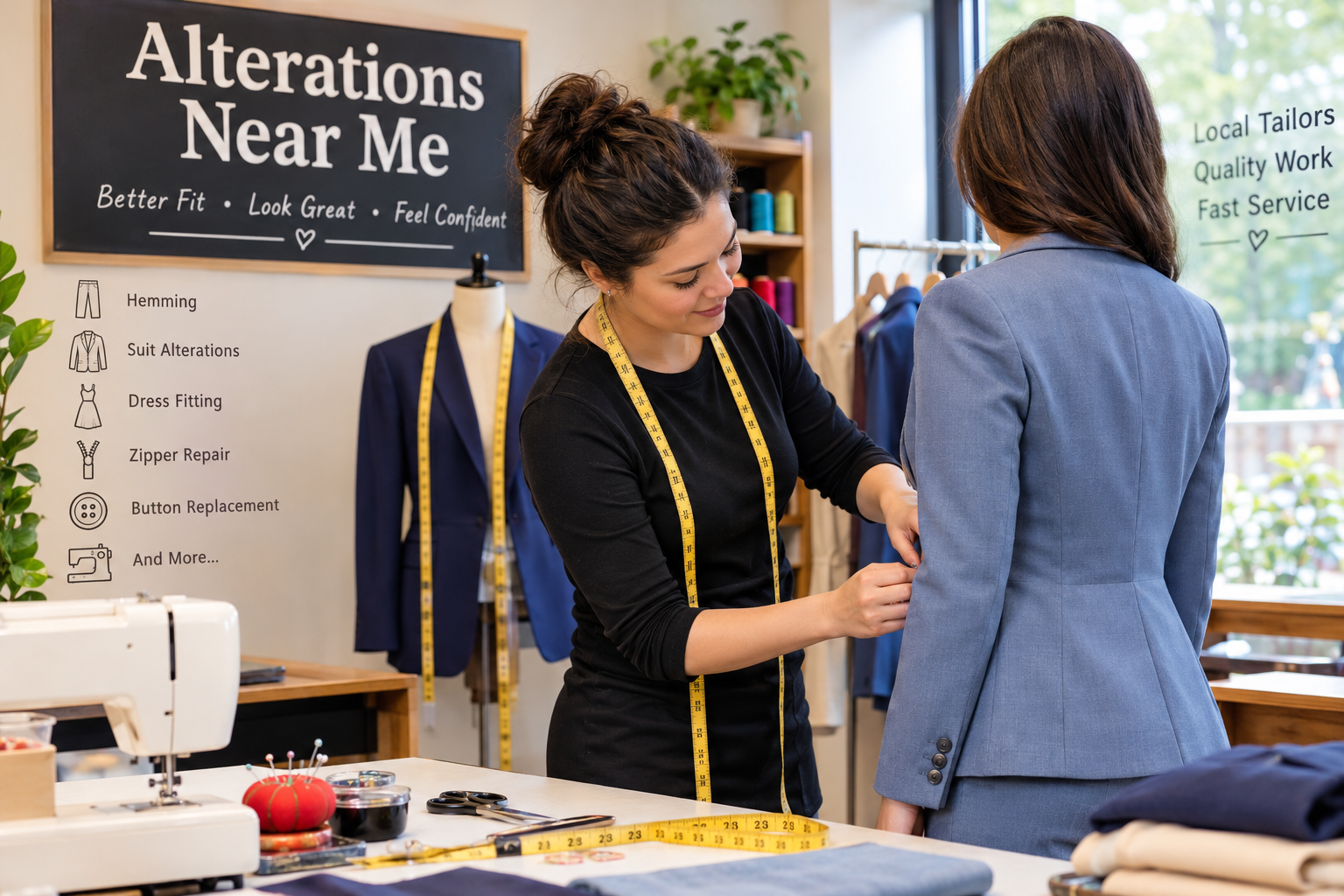
Alterations near me is one of the most useful searches you can run when a favorite outfit almost fits. A skilled tailor can shorten jeans, adjust a suit, fix a torn seam or reshape a dress, and you do not have to buy anything new. It is often the cheapest way to make clothes look and feel right.
Alterations help with everyday wear, work outfits, wedding clothes and special occasions. Not every tailor offers the same services, prices or turnaround times, though. This guide explains how to find a good one nearby, which services to ask about, what affects the price and how to prepare for your appointment.
Why Search for Alterations Near Me?
Searching locally shows you tailors, clothing repair shops and seamstresses close to home. Nearby services save travel time and make fittings and pickups much easier.
Get a Better Fit
Ready-made clothes come in standard sizes, but bodies do not. A shirt may fit your shoulders and still hang loose at the waist. Trousers can have the right waist size and still be too long.
A tailor fixes those details. Small changes, like shorter sleeves or a slimmer waist, make a big difference to how clothing looks.
Save Money on Clothes You Already Own
Replacing a wardrobe is expensive. If a garment is still in good shape, alterations are a practical alternative.
A tailor can fix a loose seam, replace a zipper or adjust a dress that no longer fits. These repairs keep your clothes in use for longer and cut down on unnecessary spending.
Prepare for Special Occasions
Weddings, interviews, graduations and formal dinners all call for clothes that fit well. Book early so the tailor has time to finish the work and, if needed, schedule a final fitting.
Common Clothing Alteration Services
When you compare local shops, check that they offer the service your garment needs.
Hemming Pants, Jeans and Skirts
Hemming is the most common alteration. The tailor shortens or finishes the bottom edge to get the length you want.
It works for jeans, dress pants, skirts, dresses and some sleeves. If you want to keep the original hem on your jeans, ask whether the shop offers that technique.
Dress and Suit Alterations
Formal clothing usually needs more detailed work. A tailor may shorten sleeves, adjust the waist of a jacket, reshape a dress or change the trouser legs.
Suits are harder than basic hemming, because the structure, lining, pockets and shoulders limit what can change. Talk through your expectations before you approve anything.
Zipper, Button and Seam Repairs
Damaged clothes do not always need replacing. A tailor can often fix a broken zipper, sew on missing buttons, strengthen loose seams or mend small tears.
These repairs help most with coats, uniforms, workwear and clothes you wear all the time.
Waist and Size Adjustments
If trousers feel tight or a dress hangs loose, a tailor may be able to adjust the waist or other areas. What is possible depends on how the garment is made and how much extra fabric sits inside the seams.
Some pieces are simple to resize, while others take a lot of work. A fitting appointment shows the best approach.
How to Find the Best Alterations Near Me
The closest shop is not always the best one. Quality, communication, experience and turnaround time all matter.
Check Reviews and Recommendations
Start with online maps, local directories and community groups. Reviews tell you about workmanship, service, pricing and punctuality.
Look for repeated comments about neat stitching, accurate measurements and finished work that is ready on time. A recommendation from a friend or relative is worth a lot too.
Reviews are only one part of the picture. The tailor’s real experience with your type of garment matters just as much.
Ask About Experience
Different garments call for different skills. Someone who hems trousers all day may not be the right person for a wedding dress, a leather jacket or a structured suit.
Explain what you need before you leave anything at the shop. Ask whether the tailor has done similar work and whether the change you want is realistic.
Compare Prices and Turnaround Times
Contact two or three nearby shops if you can. Ask for an estimate and find out when the work will be ready.
The cheapest option is not always the best value. Careful stitching, the right techniques and clear communication help you avoid expensive mistakes.
Confirm the Fitting Process
A good tailor takes accurate measurements and explains how the finished garment should fit. Complicated jobs may need a second fitting.
Wear the shoes you plan to use when you are measured for trousers or dresses, especially if the final length depends on heel height.
Clothing Alteration Costs and Services
The price depends on the type of garment, the fabric, how complex the job is, local labor rates and how fast you need it. Simple repairs usually cost less than work involving lining, structured fabric or several adjustments.
This table shows how complex common jobs tend to be. It does not list prices, because those vary from shop to shop.
| Alteration Service | Typical Complexity | What to Consider |
| Pants hemming | Low | Desired length and original finish |
| Jeans hemming | Low to moderate | Denim thickness and original hem |
| Waist adjustment | Moderate | Available seam allowance |
| Dress alterations | Moderate to high | Fabric, shape and design |
| Suit adjustments | Moderate to high | Jacket structure and lining |
| Zipper replacement | Low to moderate | Zipper type and garment construction |
| Seam or button repair | Low | Damage and replacement materials |
| Sleeve shortening | Moderate | Cuffs, buttons and lining |
| Taking in a shirt or dress | Moderate | Darts, side seams and fabric stretch |
| Coat or leather alterations | High | Specialist tools and thicker material |
Ask for a Clear Estimate
Before you approve any work, ask for the total price. Find out whether it includes materials, fittings and pressing, and whether extra adjustments cost more.
If you have several items, request an itemized estimate. That makes it easier to decide which repairs matter most and stay within your budget.
Questions to Ask Before Choosing a Tailor
A few simple questions prevent confusion and help you decide with confidence.
Can You Finish the Work by My Deadline?
Tell the tailor when you need the garment. Routine alterations can be quick, but complex work may take several days or longer, and rush service can cost extra.
Do not assume a shop offers same-day service without checking first.
Will I Need Another Fitting?
Ask whether the job can be done in one visit. A second fitting is common for formal dresses, suits and anything that needs major resizing.
What Happens If the Fit Is Not Right?
Find out how the shop handles it if the finished garment does not fit as expected. Knowing the policy ahead of time makes it easier to leave something valuable in their hands.
Can You Work With This Fabric?
Silk, chiffon, leather, denim, wool and stretch fabrics all need different handling. A good tailor looks at the material first and explains any limits before starting.
Tips for Getting the Best Alteration Results
A little preparation helps the tailor understand exactly what you want.
- Bring the right shoes: Wear the pair you plan to use with the outfit, especially for trousers and long dresses.
- Explain your preferences: Say whether you like a relaxed, fitted or tailored look.
- Point out problems: Show the tailor where the clothing feels tight, loose, long or uncomfortable.
- Bring reference photos: Pictures help you describe the style, though the result depends on the garment.
- Inspect the work: Check the stitching, closures, length and overall fit before you leave with it.
- Plan ahead: Give yourself extra time for special occasions and complicated jobs.
It also helps to clean garments according to their care labels beforehand, when appropriate. Tell the tailor about delicate fabrics, stains or earlier repairs that could affect the work.
Should You Repair or Replace Your Clothes?
Alterations make sense when a garment is well made, means something to you or needs only a few practical changes.
Shortening a quality coat or repairing a favorite pair of jeans is often cheaper than replacing it. Extensive damage, worn-out fabric or major structural changes can make alterations less practical.
Compare the repair estimate with the cost of a similar replacement, and think about how often you wear the item. An honest tailor will explain your real options instead of promising to fix everything.
Frequently Asked Questions About Alterations Near Me
How do I find alterations near me?
Search online maps or local directories, read customer reviews and compare a few nearby tailoring shops before you choose.
How much do clothing alterations cost?
Prices vary with location, garment, fabric and complexity. Ask your chosen tailor for an estimate.
Can a tailor alter clothes on the same day?
Some shops offer same-day service for simple jobs, but it depends on their workload and the type of alteration.
Can a tailor make clothes smaller?
Yes, many garments can be taken in, depending on their design, construction and available seam allowance.
Should I wash clothes before alterations?
Follow the care label and ask the tailor if you are unsure. Clean clothes are generally better, especially items worn against the skin.
Final Thoughts
Finding a good alterations near me service means clothes that fit comfortably, look sharp and last longer. From simple hemming and zipper repairs to detailed dress and suit work, a skilled tailor can make your wardrobe more useful without replacing everything that is not quite right.
Start by checking local reviews, comparing estimates and asking about the tailor’s experience with your type of garment. Describe the fit you want, confirm the completion date and book a fitting when needed.
With a little research and clear communication, you can find a reliable tailor nearby and give your favorite outfits a fresh start.