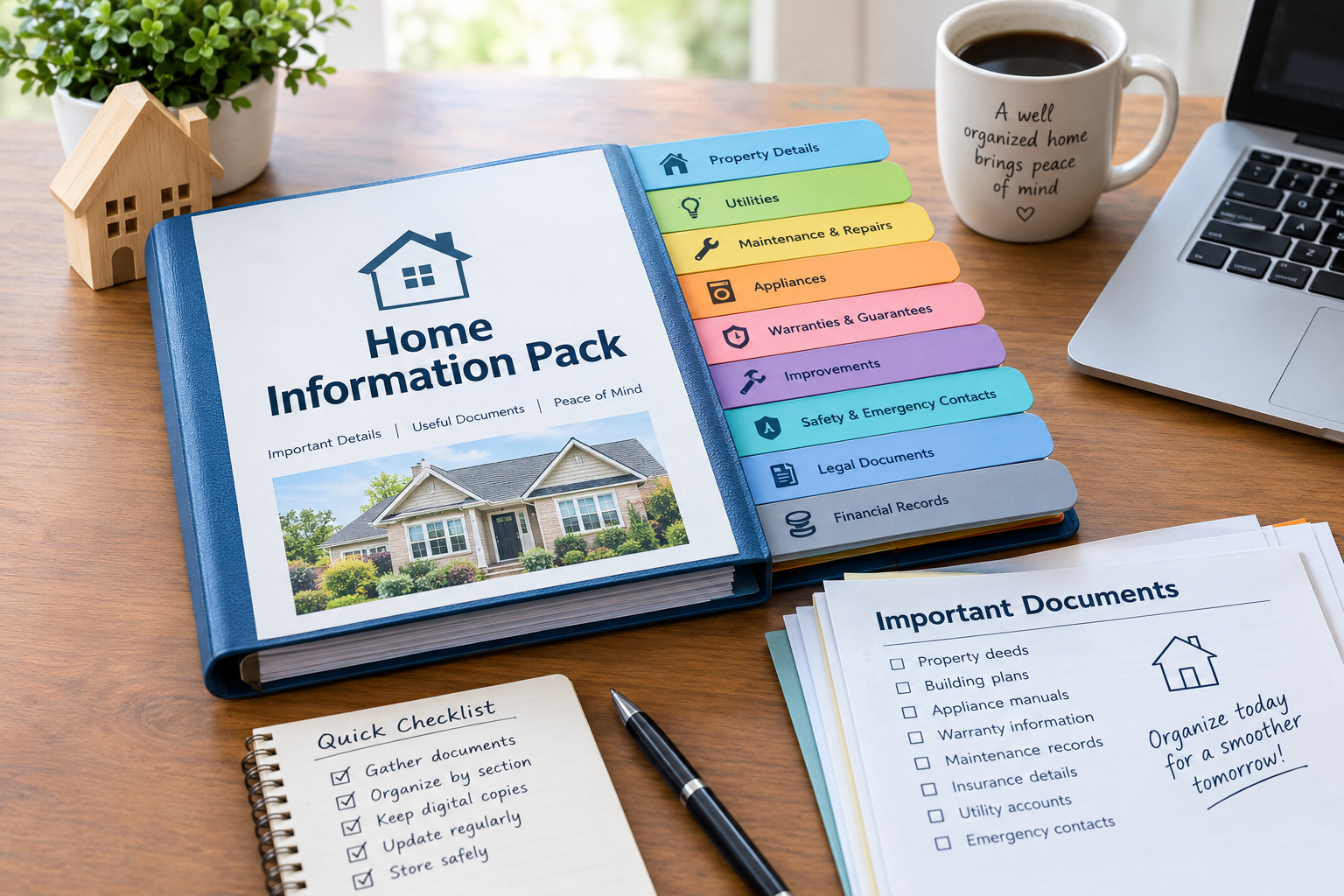
A Home Information Pack is a simple folder, paper or digital, that keeps all the important details about your property in one place. In England and Wales, official Home Information Packs were a legal requirement for home sellers until they were scrapped in 2010. Today the idea still works well as a personal record. Whether you are selling, renting out or just managing your own home, a well-organized pack saves you from digging through drawers, emails and old folders every time a question comes up.
It also makes a good impression. Buyers, tenants, agents and contractors notice when the paperwork is ready.
What Should a Home Information Pack Include?
What goes in depends on the property and why you are making the pack. The aim is to collect reliable information that someone might need to understand, maintain, sell or manage the home.
Property Details
Start with the basics: the full address, property type, approximate age, number of bedrooms and bathrooms, floor area and any parking, garden or storage space. A simple floor plan is a nice extra if you have one.
Clear details at the start make the rest of the pack easier to follow.
Important Documents
Next, add copies of documents that relate to the property. Depending on your situation, these might include:
- Property plans or drawings
- Building work records
- Planning documents
- Guarantees and warranties
- Appliance manuals
- Insurance information
- Energy performance certificates
- Certificates for major installations
- Receipts for big repairs or improvements
Only include documents that are accurate and fine to share, and keep the originals somewhere safe.
How to Create a Home Information Pack
You do not need anything fancy. A clear structure makes the pack easy to use and easy to update.
Step 1: Gather Your Records
Collect paperwork from wherever it is hiding. Check filing cabinets, email accounts, storage boxes, contractor invoices and digital folders. Look for anything linked to construction, repairs, appliances, utilities and improvements.
Do not worry about order at this stage. Gather everything first and sort it later.
Step 2: Sort Everything Into Sections
Split your pack into clear categories such as property details, utilities, maintenance, improvements, appliances, warranties and emergency contacts.
For a bigger pack, add a contents page. Page numbers or digital bookmarks help too.
Step 3: Add Maintenance and Repair Records
Maintenance records are some of the most useful pages in the pack. Note the date of the work, what was done, who did it and where the receipt or warranty is.
For example, if you replaced the boiler, keep the installation paperwork and warranty together. Do the same for the roof, plumbing, electrics, windows and insulation.
Step 4: Keep Digital and Physical Copies
Scan your important documents and save them in clearly named folders so you can reach them when you are away from home. Keep a backup somewhere secure.
Paper copies should be stored away from damp and fire.
Home Information Pack Checklist
Here is a simple structure you can copy for your own pack:
| Section | Useful Information |
| Property Details | Address, rooms, floor plan, key features |
| Utilities | Electricity, gas, water and internet providers |
| Maintenance | Repairs, servicing dates, contractor details |
| Appliances | Manuals, model numbers, warranties |
| Improvements | Renovations, extensions, replacement work |
| Safety | Alarm details, smoke detector checks, emergency contacts |
| Legal Records | Relevant certificates and property documents |
| Financial Records | Major invoices, warranties, service agreements |
| Insurance | Policy details, renewal dates, insurer contacts |
| Energy | Energy performance certificate, meter readings, supplier details |
| Neighbours and Local Contacts | Trusted tradespeople, building manager, local council |
Adjust it to suit your home. A small flat may only need a few pages, while an older or larger property may need a fuller archive.
How to Use a Home Information Pack
A pack is only useful if it stays up to date. After any repair, new appliance or improvement, add the details straight away while you still remember them.
When Selling a Property
An organized pack makes it easier to answer questions from buyers about improvements, maintenance and equipment. Having documents ready also keeps the sale moving. That said, the paperwork required for a sale differs by country and region, so check the rules where your property is located.
When Managing a Rental Property
Landlords and property managers can use the same system to track repairs, warranties, appliance details and servicing. It saves time on routine maintenance and helps contractors see what has already been done.
For Everyday Home Management
Even if you are not selling or renting, the pack is a handy household reference. When something breaks, you can find the model number, warranty or service history in seconds.
Keep Your Pack Accurate and Secure
Review the pack every so often and remove outdated information. If a new appliance replaces an old one, update that section so the records do not contradict each other.
Privacy matters too. Leave out passwords, bank details and other sensitive information. If you plan to share the pack with buyers, agents, contractors or tenants, read through it first and remove anything private.
A secure digital backup protects you if paperwork is lost or damaged.
Common Mistakes to Avoid
The first mistake is collecting documents without organizing them. A folder full of unrelated files is still hard to use.
The second is forgetting to update the pack. Old contractor details, expired warranties and replaced appliances only cause confusion.
Finally, stick to facts. Keep clear records and note the date and source of each document.
Frequently Asked Questions About Home Information Packs
What is a Home Information Pack used for?
It keeps important property information, documents, maintenance records and warranties in one place.
Are Home Information Packs still required in the UK?
No. The official requirement for sellers in England and Wales ended in 2010. You can still create your own pack as a helpful record.
Should I make a digital Home Information Pack?
Yes. A digital copy is easier to access and back up, as long as you store it securely.
How often should I update it?
Update it after major repairs, new appliances, renewed warranties or any important new property document.
Can renters use one?
Yes. Renters can keep details about appliances, utilities, maintenance contacts and agreements in one place.
Should I include sensitive information?
No. Leave out passwords, banking details and anything else that could create a security or privacy risk.
Final Thoughts
A good Home Information Pack turns scattered household paperwork into one easy resource. From property details and repair history to manuals and warranties, having the right information at hand makes owning a home much easier.
Keep the pack organized, accurate, secure and up to date. Start with the documents you already have, set up simple sections and add new records whenever work is done. It is a small effort that pays off the moment you need an answer fast.