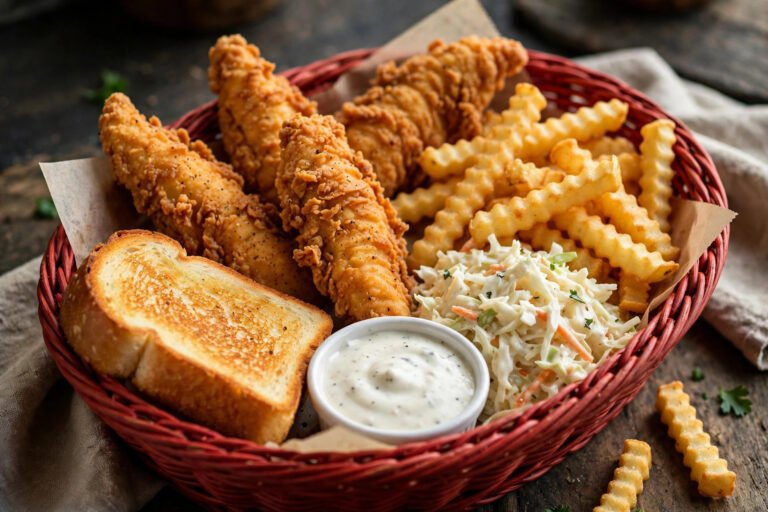
“Is Raising Cane’s halal?” is one of the most searched questions about the chicken-finger chain — and the honest answer matters, because getting it wrong either way isn’t fair to Muslim diners. Here’s the direct answer, backed by research into the company’s sourcing, menu, and official statements: Raising Cane’s is not halal-certified anywhere in the United States. The full picture is a little more nuanced than a yes/no, so this guide breaks down the chicken sourcing, the pork and alcohol question, cross-contamination, the Middle East exception, and how to decide for yourself. Note up front: this article reports facts and common community practice — it does not issue a religious ruling.
The Short Answer: Is Raising Cane’s Halal?
No. Raising Cane’s does not hold halal certification at any US location, from any recognized certifying body — including IFANCA, the American Halal Foundation, and the Islamic Services of America. The company has never claimed its chicken is halal or zabiha, and halal status does not appear in its published ingredient or allergen information.
That said, there are two important nuances:
- No pork or alcohol concerns on the menu. Raising Cane’s serves an all-chicken menu with plant-based sides. There are no pork items and no alcohol served at any location.
- The Middle East is the exception. Raising Cane’s locations in Kuwait, Saudi Arabia, the UAE, Bahrain, and Qatar were built from day one with halal-compliant sourcing — founder Todd Graves personally traveled to the region and inspected chicken providers to meet Islamic standards.
So the real question for most Muslim diners in the US isn’t about pork or alcohol — it’s about how the chicken is slaughtered. That’s where the community divides, and where you’ll need to apply your own standard (more on that below).
What “Halal” and “Zabiha” Actually Mean
A quick, respectful primer for anyone new to the terms:
- Halal (permissible) covers all food allowed under Islamic law. For meat, the key requirements are Islamic slaughter, complete draining of blood, and no cross-contact with haram (forbidden) items like pork or alcohol.
- Zabiha (also spelled dhabiha) is the specific Islamic slaughter method: the animal is slaughtered by a Muslim who invokes God’s name (Bismillah), with a swift cut to the throat severing the carotid arteries, jugular veins, and windpipe, followed by full blood drainage.
Many Muslims treat “halal” and “zabiha” as one standard. Others draw a distinction: anything free of pork and alcohol is “halal,” while meat slaughtered Islamically is “zabiha” — a higher bar. This distinction is exactly why some Muslims will eat at chains like Cane’s and others won’t. Both positions are common in the community; this guide won’t pick one for you.
How Raising Cane’s Sources Its Chicken
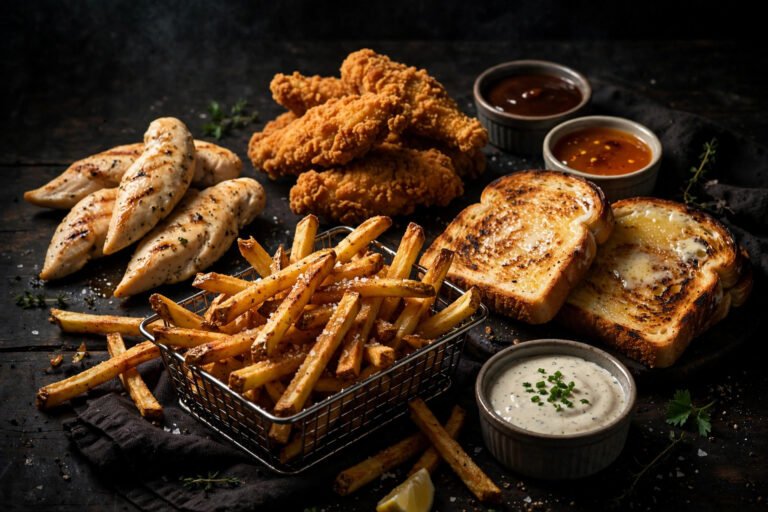
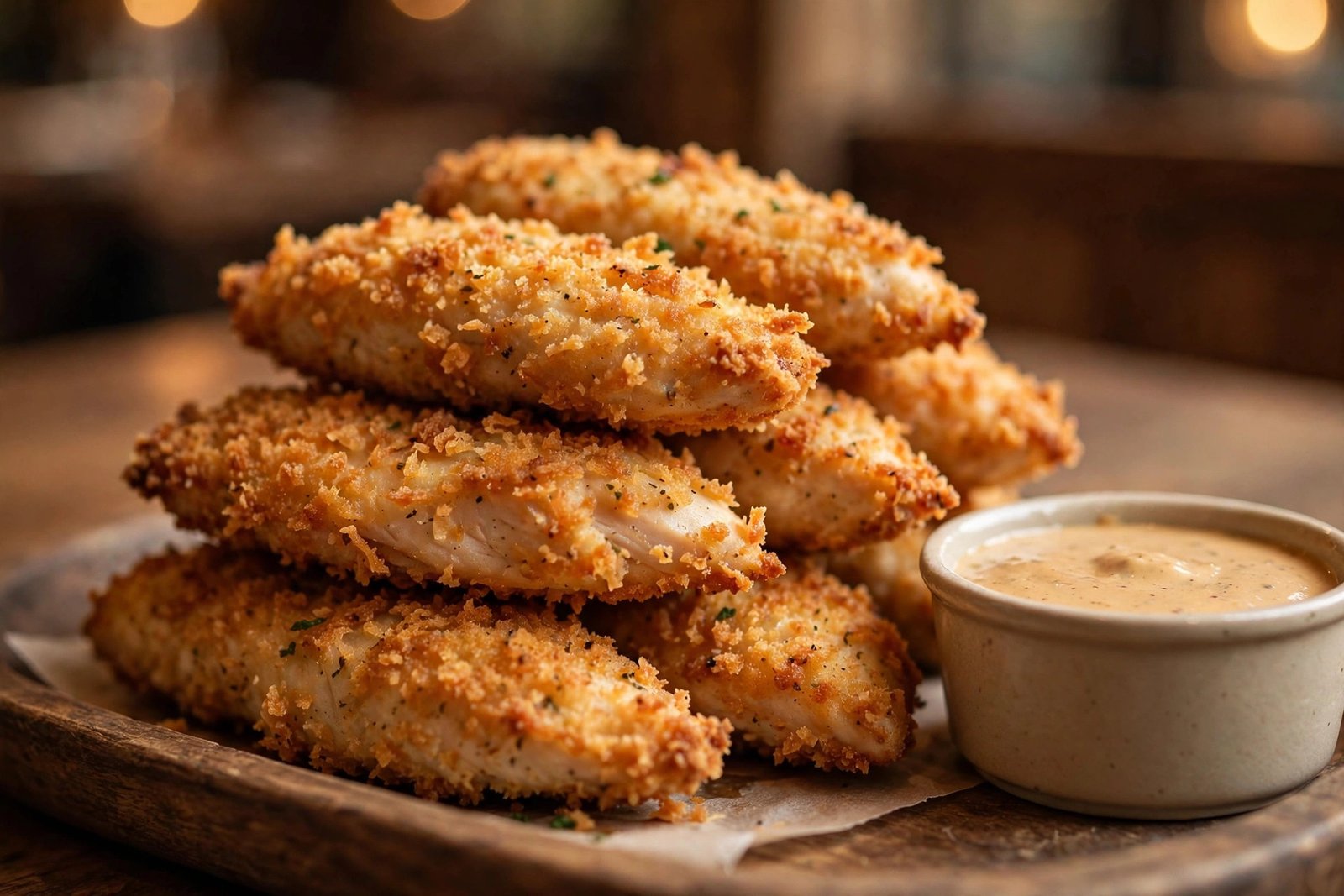
Raising Cane’s built its brand on chicken quality, and the sourcing details are well documented. The chain uses fresh, never-frozen chicken breast tenderloins — marinated for 24 hours, hand-battered by in-store “Certified Bird Specialists,” and cooked to order. That’s genuinely high-quality fast-food chicken.
But quality and halal are different questions. Here’s what the research shows:
- Conventional US suppliers. The chicken comes from large-scale American poultry processors running standard commercial lines — not from halal-certified or zabiha suppliers. No halal certification body lists Raising Cane’s or its US supply chain.
- No published halal claim. Unlike some chains that address the question directly on their websites, Raising Cane’s publishes no halal statement in its official FAQ, ingredient sheets, or allergen and nutrition document.
- No named halal suppliers. The company does not name its poultry suppliers publicly, and third-party claims about “some suppliers being halal” are unverified — they should not be relied on.
- Dairy in the chicken. The official allergen document lists milk as an allergen in the chicken fingers (from the marinade/breading), which is worth knowing regardless of the halal question.
Bottom line: nothing about the chicken’s sourcing suggests zabiha slaughter, and the company has never said otherwise. For diners who require zabiha, that settles it.
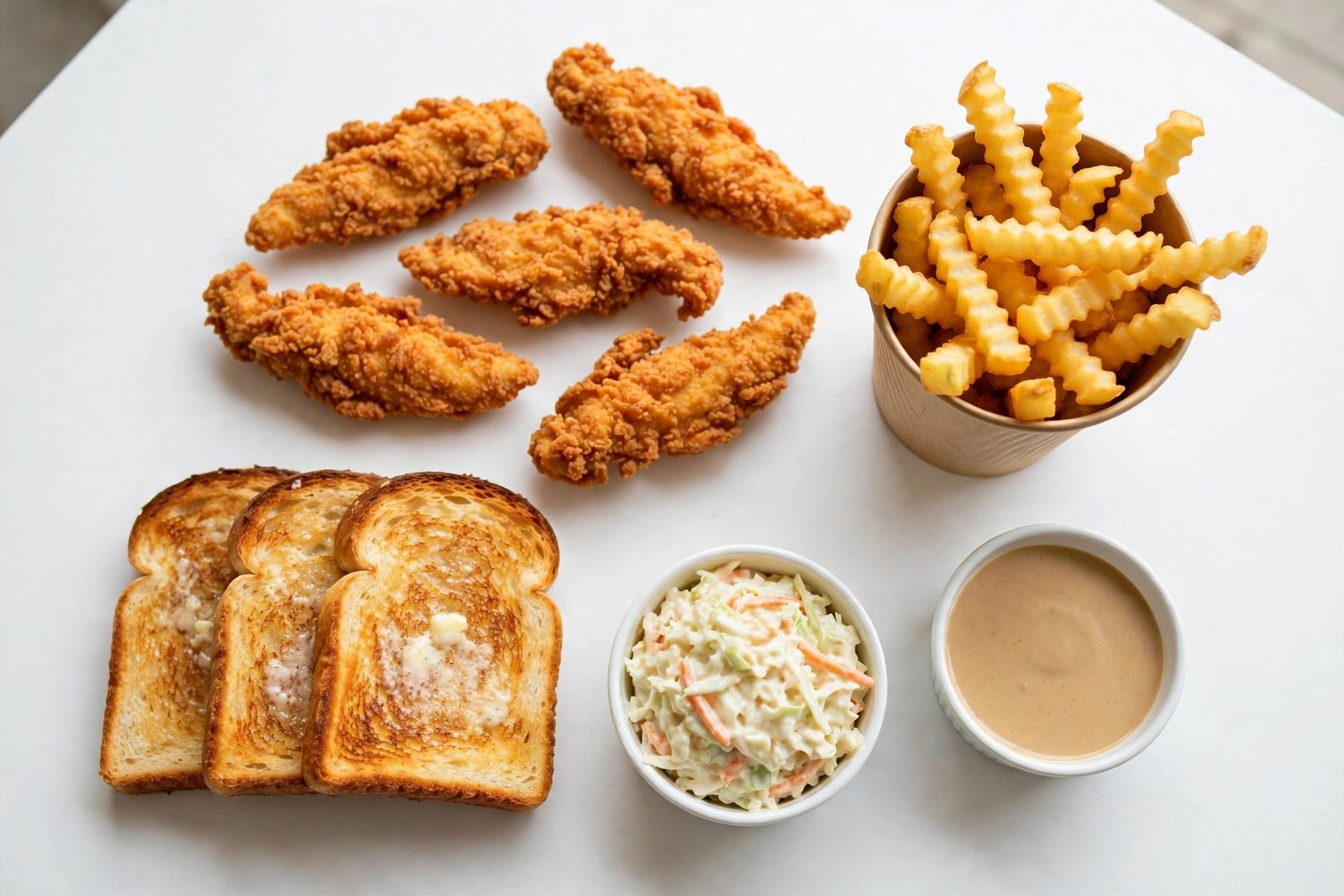
Pork and Alcohol at Raising Cane’s: Essentially a Non-Issue
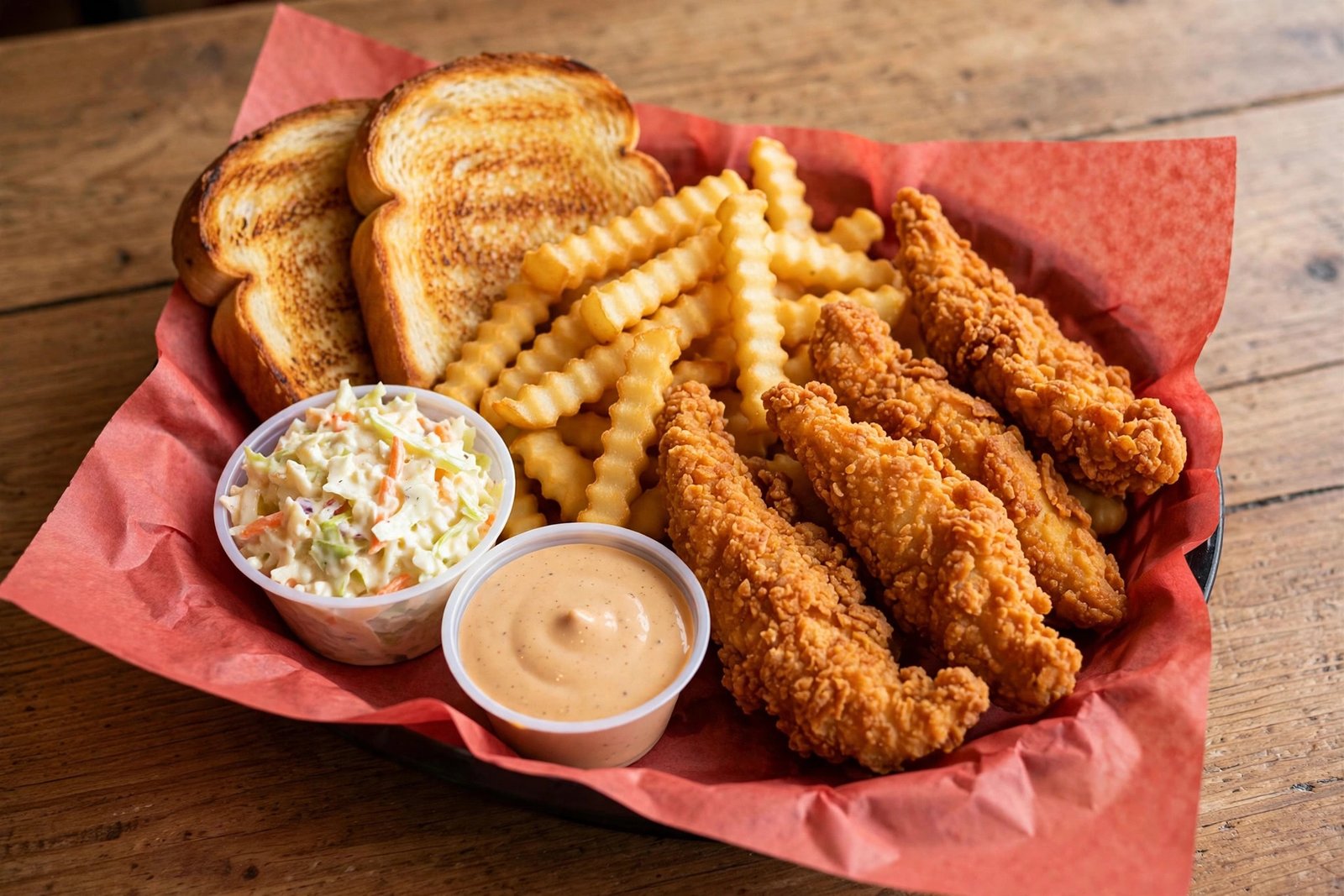
This is the good news, and it’s the simplest part of the guide. Raising Cane’s menu is famously tiny — chicken fingers, crinkle-cut fries, coleslaw, Texas toast, Cane’s Sauce, and drinks (Coca-Cola products, tea, lemonade). For the full item-by-item rundown, see our Raising Cane’s menu with 2026 prices.
- No pork items exist on the menu. No bacon, ham, sausage, or pepperoni — nothing pork-based is sold at any location.
- No alcohol is served. Drinks are limited to soda, tea, and lemonade.
- Vegetable oil only. The company’s official allergen document states all fried foods are cooked in “an all-vegetable, trans fat free blend of soybean and canola oil.” No animal fat, no lard.
- Cane’s Sauce is a trade secret. The exact recipe is not published. Widely circulated copycat recipes list Worcestershire sauce among the ingredients — which traditionally contains anchovies (a fish product, not a halal problem) — but since the real formula is undisclosed, strictly cautious diners often skip the sauce or ask at the counter rather than assume.
Fryers and Cross-Contamination
Because the menu is chicken-only, pork cross-contamination is effectively a non-issue — pork never enters the fryers. But there are two cross-contact points worth knowing:
- Fries and chicken share fryer oil. The official allergen document warns that fries “may contain eggs, milk, and wheat from shared fry oil,” and notes that cross-contact risk always exists in the kitchens. If you avoid the chicken for halal reasons but eat the fries, know they’re fried in the same oil.
- Coleslaw and Texas toast contain dairy (mayo-based slaw; buttered grilled toast). They’re meat-free, so some diners treat them as safe sides — check the Raising Cane’s nutrition guide for the full allergen breakdown before deciding.
Why Some Muslims Eat There — and Why Others Don’t
This is where honest reporting matters most, because both positions are widespread and neither is fringe:
Why some Muslims eat at Raising Cane’s: They point to the complete absence of pork and alcohol, the vegetable-only frying oil, and the Qur’anic verse (5:5) permitting “the food of the People of the Book.” From this view, conventionally slaughtered chicken at a pork-free chain is acceptable — particularly where certified zabiha options aren’t available. Many in this camp still say a personal prayer before eating.
Why others won’t touch the chicken: They require zabiha as the non-negotiable standard — slaughter by a Muslim with the invocation of God’s name and full blood drainage (Qur’an 6:121: “Eat not of meats on which Allah’s name has not been pronounced”). Industrial poultry processing, with its stunning and automated lines, doesn’t meet this. No certification, no zabiha — no chicken.
Both are matters of personal conscience and religious scholarship, not of restaurant policy. If you’re unsure where you land, ask a scholar or imam you trust rather than a fast-food blog — this article included.
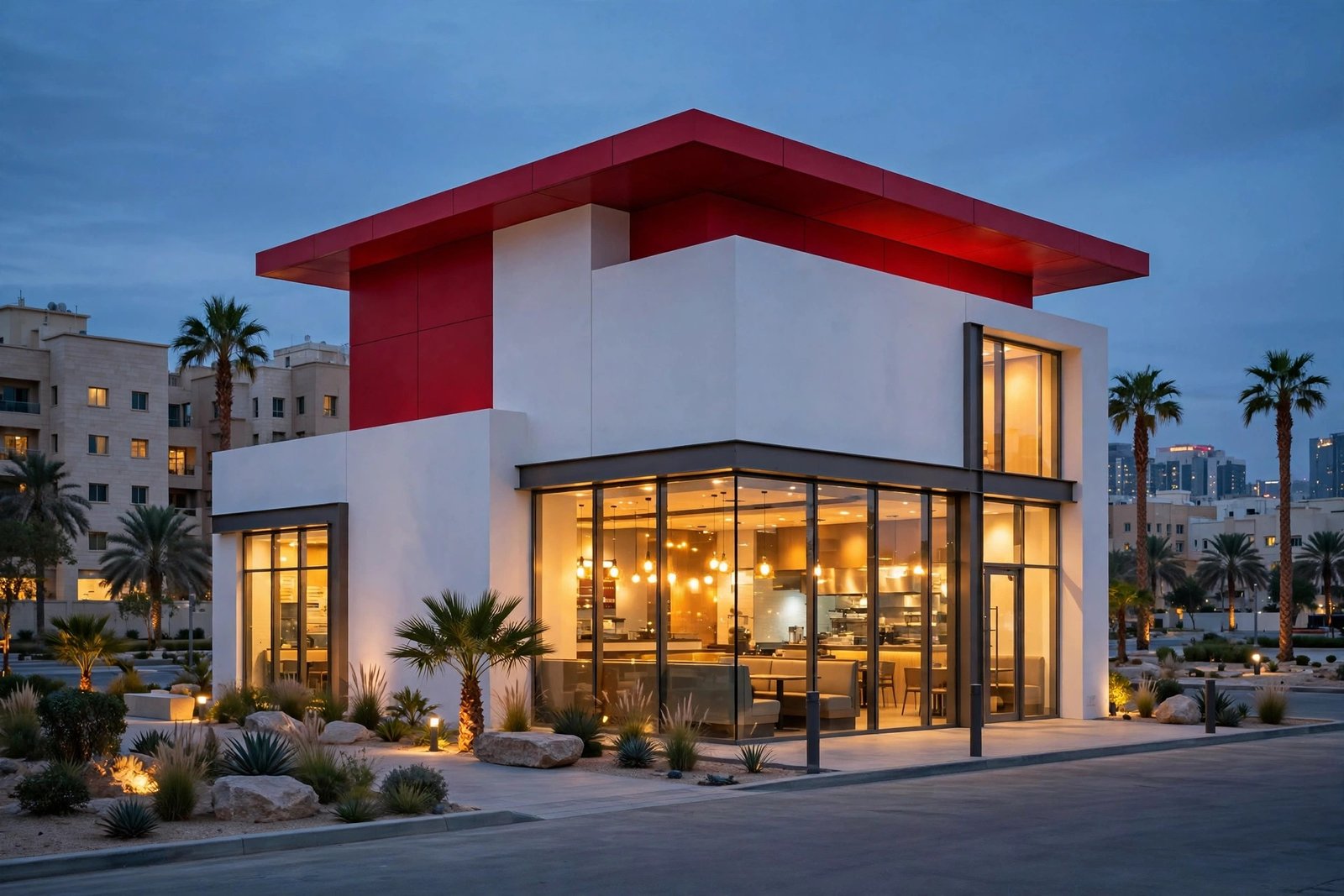
The Middle East Exception: Halal by Design
If you’re in the Gulf, the story flips. Raising Cane’s opened its first international restaurant in September 2015 at The Avenues in Kuwait City, operated by franchise partner M.H. Alshaya Co.
Founder Todd Graves took halal compliance seriously from the start. As he told Baton Rouge’s 225 magazine during the launch: the team “spent a lot of time sourcing products and ensuring that everything we serve is halal compliant,” and he personally traveled to the Middle East multiple times to inspect chicken providers and products.
Today the chain operates dozens of locations across Kuwait, Saudi Arabia, the UAE, Bahrain, and Qatar under Alshaya Group — all running on halal-compliant sourcing, as local food regulations require. So: US = not halal-certified; Middle East = halal-compliant by design. Don’t assume one region’s status applies to the other.
Practical Tips for Muslim Diners
- Decide your standard before you go. “Pork-and-alcohol-free” and “zabiha-only” lead to different answers at Cane’s. Knowing which camp you’re in makes the decision easy.
- Ask at the counter using the questions below — crew members are used to allergen and sourcing questions, and a polite ask costs nothing.
- Check the official allergen PDF before ordering if you have dairy, egg, wheat, or soy concerns — it lists every menu item’s allergens.
- Consider meat-free orders. If you’re on the fence about the chicken, the fries, Texas toast, and coleslaw contain no meat at all — though the fries share fryer oil with the chicken.
- Don’t rely on rumors. Social media claims about “secret halal suppliers” or “they switched to zabiha” circulate regularly. Unless Raising Cane’s publishes a certification, treat such claims as unverified.
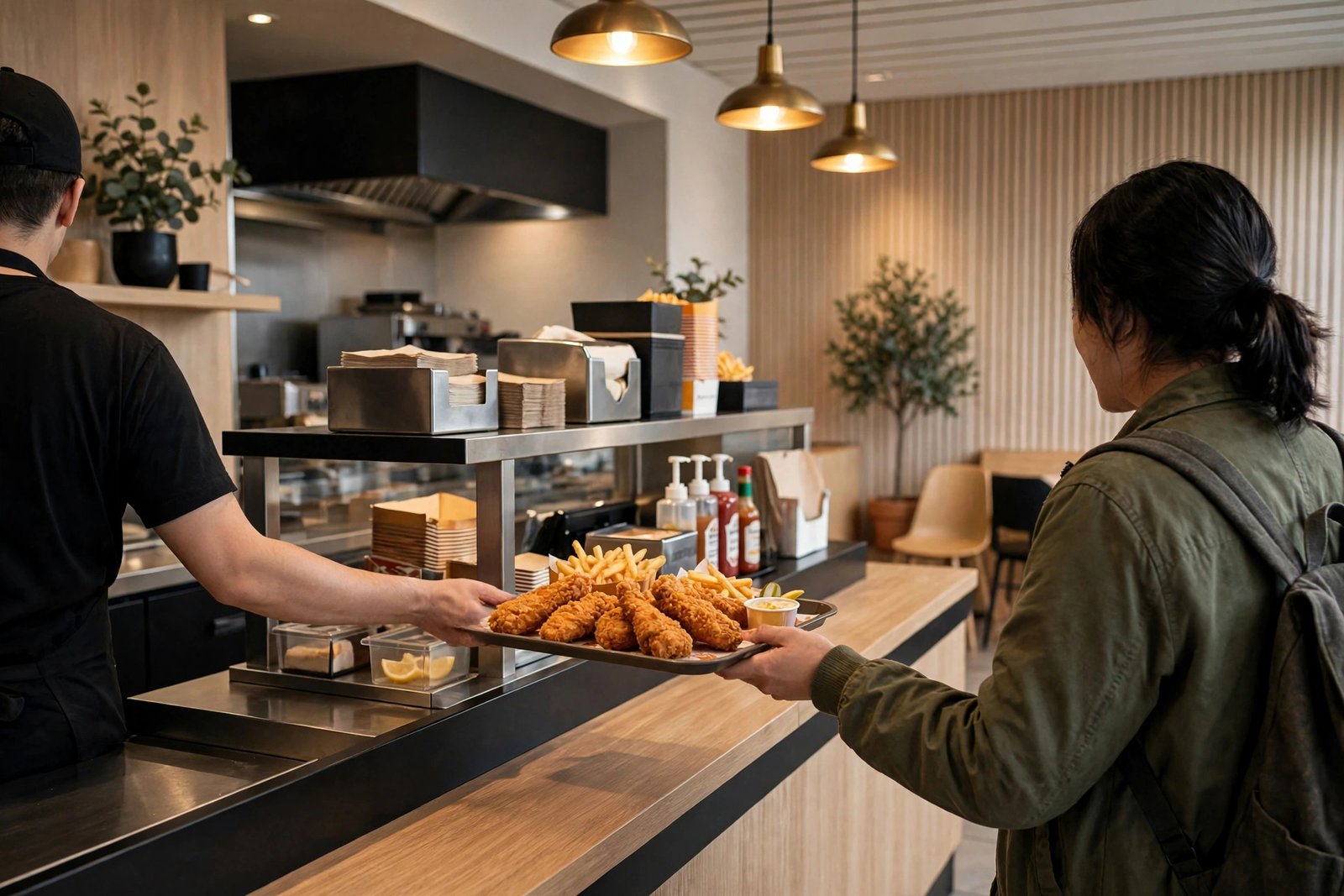
How to Ask About Halal at the Counter
Keep it short and specific — you’ll get better answers than with a general “is it halal?” Try these:
- “Is your chicken halal-certified or zabiha?” (Expect: no, at US locations.)
- “Do you cook anything with pork or animal fat?” (Nothing pork-based is on the menu; oil is a vegetable blend.)
- “Do the fries share oil with the chicken?” (Yes — the allergen sheet confirms shared fry oil.)
- “Can I see your allergen or ingredient information?” (Crew can point you to the official allergen document.)
- “What’s in the Cane’s Sauce?” (It’s a trade secret — the crew won’t have the formula.)
If you want the chicken but hold a zabiha standard, the respectful move is simply to skip Cane’s for the meat and grab a certified-halal spot instead. For everything else about the menu — combos, pricing, and what’s worth ordering — our Raising Cane’s menu guide, combos breakdown, and the longhornsmenus.com homepage have you covered.
Is Raising Cane’s Halal? FAQs
Is Raising Cane’s halal in the USA?
No. Raising Cane’s is not halal-certified at any US location. The chicken comes from conventional American poultry suppliers with no published halal or zabiha certification, and the company has never claimed otherwise.
Is Raising Cane’s halal in Dubai, Kuwait, or Saudi Arabia?
Yes — the Middle East locations are different. Raising Cane’s restaurants in Kuwait, Saudi Arabia, the UAE, Bahrain, and Qatar operate under franchise partner Alshaya Group with halal-compliant sourcing; the founder personally inspected chicken providers before the first Kuwait opening in 2015.
Does Raising Cane’s have pork on the menu?
No. The menu is chicken-only — chicken fingers, crinkle-cut fries, coleslaw, Texas toast, Cane’s Sauce, and drinks. There are no pork items, and all fried foods are cooked in an all-vegetable soybean and canola oil blend.
Is Cane’s Sauce halal?
The exact recipe is a trade secret, so it can’t be fully verified. Copycat recipes list ingredients like mayonnaise, ketchup, and Worcestershire sauce — none of which are inherently haram — but since the real formula isn’t published, strictly cautious diners often skip it.
Are Raising Cane’s fries cooked in separate oil from the chicken?
No. Fries and chicken fingers share fryer oil, and the company’s allergen document notes fries “may contain eggs, milk, and wheat from shared fry oil.” However, no pork ever goes through the fryers.
Can Muslims eat at Raising Cane’s?
It depends on your personal standard. Muslims who accept non-zabiha meat at pork-free restaurants commonly eat there; Muslims who require zabiha slaughter do not eat the chicken. This guide reports the facts — the decision is yours, ideally made with guidance from a scholar you trust.