
The jimmy john’s allergen menu is the document that decides whether you can eat at Jimmy John’s at all. It is not a separate menu with special items — it is Jimmy John’s official allergen and ingredients guide, a PDF that lists every standard menu item and every ingredient against the nine major allergens the FDA tracks, and it is updated regularly. This guide explains what the official guide says, how to read it, which items contain which allergens, how the Unwich works as the gluten-avoidance route, what cross-contamination really means in a Jimmy John’s kitchen, and exactly what to say when you order.
One warning up front, in Jimmy John’s own words: “Please note that because individual foods may come into contact with each other during preparation of your sandwich, and because of shared utensils and equipment, we cannot guarantee that our food is free from any allergens.” That sentence is the most important thing in the guide, and everything in this article is written around it. This guide is for general information only — it is not medical advice, and if you have a severe allergy, you should check the current guide on jimmyjohns.com and talk to the staff at your local store before you order.
What Is the Jimmy John’s Allergen Menu?
Jimmy John’s publishes its allergen information in two forms. The first is the Allergen and Ingredients PDF, hosted on jimmyjohns.com’s content delivery network and dated effective March 2, 2026. It is a multi-page document: the first pages are an allergen chart covering every standard menu item against ten columns — Milk, Soy, Wheat, Gluten, Eggs, Fish, Sesame, Shellfish, Tree Nuts, and Peanuts — with a check mark wherever an item contains that allergen, and the later pages are a full ingredient list for every standard item. The second form is the interactive Nutrition and Allergen Guide on jimmyjohns.com, which lets you look up a single sandwich and see its allergens and nutrition together.
The guide is updated periodically. The PDF itself says: “This guide is updated periodically; we suggest you check back each time you order with us.” Suppliers change, recipes change, and new items arrive — the Picklewich, for example, is a newer addition that appears in the 2026 guide but not in older versions. The figures in this article are taken from the guide effective March 2, 2026, cross-checked against the interactive guide’s menu data dated September 2, 2026, and against independent allergen trackers that republish Jimmy John’s data. Where sources disagree, the conflict is flagged.
There is no separate “allergen menu” of special dishes at Jimmy John’s. The chain does not make allergen-free sandwiches. What it does is publish the data and let you build a safe order from standard ingredients — mostly by removing the bread, removing the cheese, or swapping a sauce. That is why the guide is organized by ingredient as well as by sandwich: because the safe order at Jimmy John’s is almost always a customized one.
The 9 FDA Allergens Jimmy John’s Tracks
The United States FDA regulates nine major food allergens: eggs, fish, milk, peanuts, sesame, shellfish, soybeans, tree nuts, and wheat. Jimmy John’s allergen chart covers all nine, plus gluten as a separate column — because gluten is not one of the nine FDA allergens, but it is the thing most customers are actually asking about. The chart’s columns are Milk, Soy, Wheat, Gluten, Eggs, Fish, Sesame, Shellfish, Tree Nuts, and Peanuts.
A check mark in the chart means the item contains that allergen in its standard recipe. It does not mean “may contain” — the chart only lists allergens that are directly in the item. Cross-contact from shared equipment is handled separately, in the disclaimer, and it applies to everything. That distinction matters: an item with no check marks is not guaranteed allergen-free, it is just made from ingredients that do not themselves contain the allergen.
One more detail from the guide’s fine print: Jimmy John’s no longer lists items as containing soy or peanut when they only contain highly refined soy or peanut oil, following the FDA’s definition of non-allergenic oils. That is why the Jimmy Chips, which are cooked in peanut oil, are listed for gluten (in the BBQ flavor) but not for peanut. The oil itself is not the allergen — but if you have a peanut allergy, you should still tell the staff, because the chips are fried in peanut oil and that is a fact worth knowing before you order them.
Allergens in Jimmy John’s Breads and Wraps
Bread is where almost every allergen problem at Jimmy John’s starts, because every bread and wrap on the menu contains gluten and wheat. There is no exception, and there has never been one.
| Bread / Wrap | Gluten | Wheat | Other Allergens |
|---|---|---|---|
| French Bread | Yes | Yes | — |
| Sliced Wheat (9-grain) | Yes | Yes | — |
| Flour Wrap | Yes | Yes | — |
| Garlic & Herb Wrap | Yes | Yes | — |
| Wheat Sub Bread | Yes | Yes | — |
That table is the whole story for gluten. All five breads and wraps contain gluten and wheat. The wraps are the trap: customers assume a wrap is a lighter, safer option, but the Flour Wrap and the Garlic & Herb Wrap both contain gluten and wheat, which means the Chicken Caesar Wrap, the Kickin’ Ranch Chicken Wrap, the Tuscan Italian Wrap, and the Buffalo Ranch Chicken Wrap are all out for anyone avoiding gluten — even though the fillings inside them are mostly fine.
Jimmy John’s has never offered gluten-free bread, and there is no sign that it plans to. The chain bakes its bread in store all day, every day, which is part of why a dedicated gluten-free product is not practical in its kitchens. The only bread-free option is the Unwich, covered below. Our guide to Jimmy John’s bread covers all five breads in detail, including which sandwiches they are available on.
The Unwich: Jimmy John’s Gluten-Avoidance Route
The Unwich is the single most important item in the Jimmy John’s allergen menu. It is not a sandwich — it is a format. Any sandwich on the menu can be made as an Unwich, which replaces the bread entirely with large iceberg lettuce leaves wrapped around the same fillings. Jimmy John’s lists the Unwich as a single ingredient, lettuce, with no allergens at all.
The Unwich solves the ingredient problem. A Turkey Tom Unwich, for example, is turkey, lettuce, tomato, and mayo wrapped in lettuce — no gluten, no wheat, nothing from the bread column. A Beach Club Unwich is turkey, provolone, avocado spread, cucumber, lettuce, tomato, and mayo in lettuce, with milk (from the provolone) and egg (from the mayo) as the only allergens. Hold the cheese and swap the mayo for mustard or oil and vinegar, and the Beach Club Unwich has nothing on the allergen chart at all. Our guide to the Jimmy Johns Beach Club covers its Unwich nutrition: 500 calories and 9 grams of carbs, against 850 calories and 75 grams of carbs for the Regular on French bread.
But the Unwich does not solve the environment problem, and Jimmy John’s is honest about that. The chain bakes bread in the store all day. Flour gets into the air, onto the counters, and onto the gloves. The same knives and boards handle bread and fillings. There is no separate prep area and no gluten-free certification anywhere in the building. The Unwich is a lettuce wrap made in a bakery, and that is the trade-off.
What you can do about it is ask. Staff at Jimmy John’s are used to the request, and the practical steps are: ask for a glove change before your sandwich is built, ask for a clean surface or a fresh sheet of paper to build on, and ask them to build your Unwich by hand rather than on the shared line. Customers on gluten-free forums report that many locations will do exactly this without being asked twice — some will even build the Unwich on a separate, unused line. But experiences vary by location and by who is working that shift, and the flour in the air cannot be removed by any of these steps. If you have celiac disease, read the cross-contamination section below before you decide.
Allergens by Sandwich: The Items That Catch People Out
Most Jimmy John’s sandwiches contain milk (from the provolone) and egg (from the mayo) as a baseline, because most of them are built with cheese and mayo. The surprises are the items where an allergen hides in a component you would not expect. These are the ones that catch people out, taken from the official allergen guide’s ingredient-level data:
- Tuna Salad contains gluten and wheat. It is made with Kikkoman soy sauce, which is brewed with wheat. The Tuna Unwich is not gluten-free, and the Tuna Picklewich is the one Picklewich that is not gluten-free either. This is the single most common mistake in Jimmy John’s allergen ordering.
- Kickin’ Ranch contains gluten. Regular Ranch does not. The two sauces look similar and sit next to each other, but only the Kickin’ Ranch has gluten. If you are avoiding gluten and you want ranch, order the regular Ranch, and say so by name.
- Caesar dressing contains fish, milk, eggs, and soy. The fish comes from anchovy, which is a standard Caesar ingredient. The Chicken Caesar Wrap is out for fish-allergy customers as well as gluten-avoidance customers, since the wrap itself also contains gluten.
- Gyro meat contains gluten and soy. The gyro is a newer menu item and the meat itself is the problem, not just the pita it is served on.
- Horseradish sauce contains egg and soy. It is a limited option, but it appears on some toasted sandwiches.
- Marinara sauce contains gluten. It appears on the meatball sub and other limited-time toasted items.
- Crispy fried onions contain gluten and wheat. They are a topping on some toasted sandwiches, not a standard topping on the cold menu.
- Croutons contain gluten, milk, and wheat. They appear in the salads, not the sandwiches.
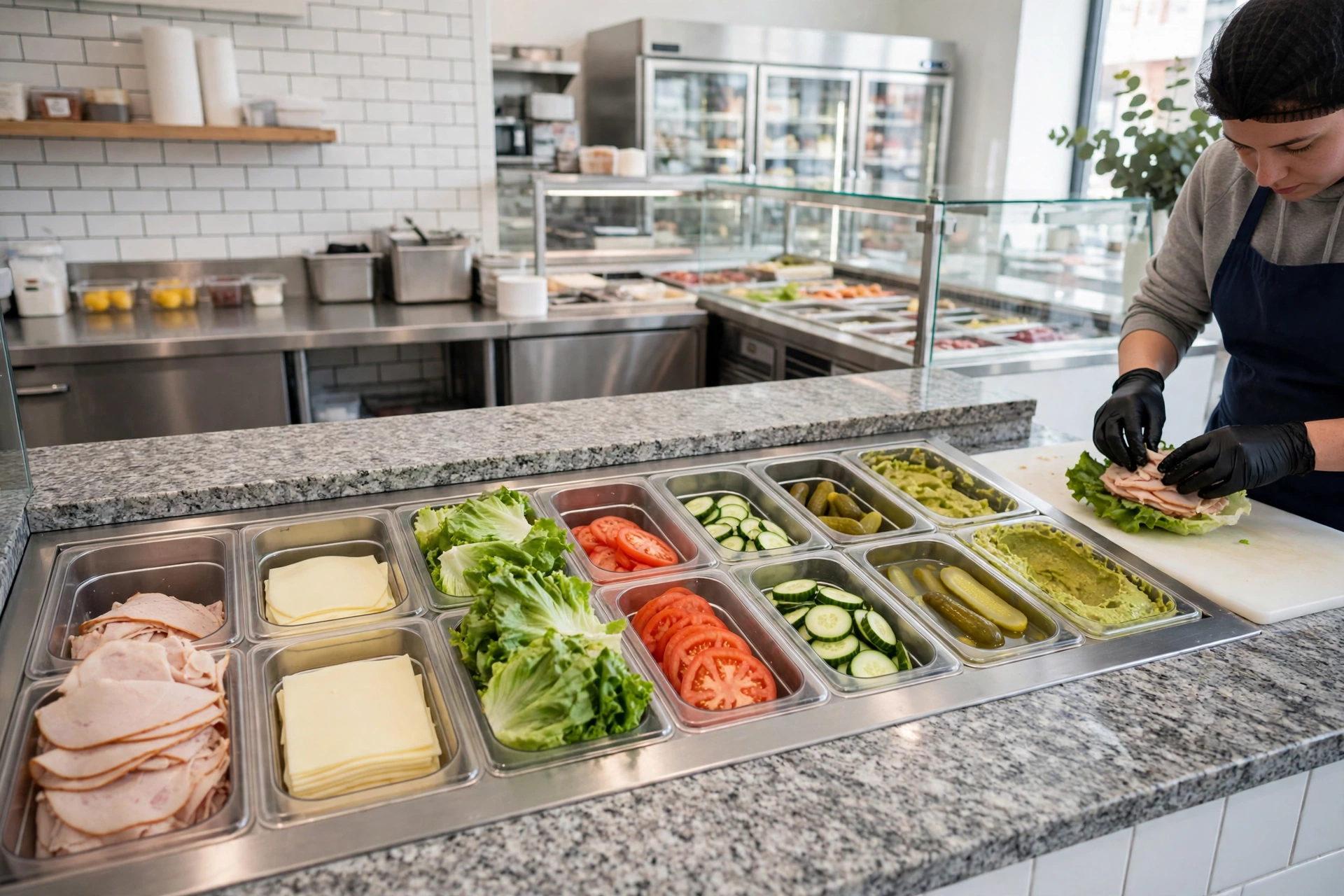
By contrast, most of the core ingredients are clean. The meats — turkey, smoked ham, roast beef, salami, capocollo, bacon, all-natural chicken, and coffee-rubbed brisket — have no gluten or wheat listed. The cheeses — provolone, sliced cheddar, shaved parmesan, sliced mozzarella — have milk as their only allergen. The vegetables — lettuce, tomato, onion, cucumber, sliced pickles, Jimmy Peppers, celery, and oregano-basil — have no allergens listed at all. The avocado spread has no allergens listed. That is why a customized Unwich works: the fillings are mostly fine, and the problems are concentrated in the bread, the sauces, and a handful of specific items.
Jimmy John’s Allergen Menu by Allergy
The fastest way to use the guide is to start from your allergy, not from a sandwich. Here is what the official data says for each of the common allergies.
Gluten and Wheat
No bread, no wraps, no tuna salad, no Kickin’ Ranch, no gyro meat, no marinara, no crispy fried onions, no croutons, no cookies or brownies, no pesto pasta salad. Order any sandwich as an Unwich, and ask for a glove change and a clean surface. Four of the six Picklewiches are gluten- and wheat-free in Jimmy John’s data — the Turkey, Ham, Roast Beef, Vito, and Veggie Picklewiches come back with milk as the only allergen, from the provolone, and the Tuna Picklewich is the exception. Our guide to Jimmy John’s gluten free options covers the Unwich and the Picklewich in full detail, including the cross-contamination picture.
Milk and Dairy
Nearly the entire menu can be ordered dairy-free, because the only dairy in most sandwiches is the cheese. Order any sandwich with no cheese and it is dairy-free. The Beach Club with no cheese is the classic example — customers who order it that way report that the avocado spread provides the creaminess the cheese would have given. Watch the sides: the Kickin’ Ranch, Salt & Vinegar Jimmy Chips, Pickle Chips, Pesto Bow Tie Pasta Salad, and all cookies and brownies contain milk. The egg patty and the meatballs also contain milk. Our guide to the Jimmy Johns Beach Club covers the no-cheese order in detail.
Egg
The main egg source is the Hellmann’s mayonnaise, which is on most sandwiches as standard. Order your sandwich with no mayo and swap in yellow mustard or oil and vinegar instead. The tuna salad contains mayo, so it is out. The egg patty contains egg and milk. The cookies and brownies contain egg. The Caesar dressing contains egg. The Thousand Island dressing contains egg.
Soy
Soy shows up in the tuna salad, the gyro meat, the Caesar dressing, the horseradish sauce, and the cookies and brownies. Plain meats, vegetables, avocado spread, mustard, and oil and vinegar are soy-free. Note the refined-oil rule: Jimmy John’s no longer lists items as containing soy when they only contain highly refined soybean oil, so the mayo’s soybean oil does not count as a soy listing in the guide — but if you have a soy allergy, mention it anyway, because the mayo is made with soybean oil and that is a fact your server should know.
Peanuts and Tree Nuts
Jimmy John’s does not use peanuts or tree nuts in its core sandwich ingredients, and no standard sandwich lists peanut or tree nut as a contained allergen. The risk is cross-contact: some products are made in facilities that also process peanuts and tree nuts, and the Jimmy Chips are fried in peanut oil. The Alliance Kitchen note in the guide — Jimmy John’s shared kitchen in Atlanta — flags that peanut, shellfish, and tree nut allergens are present in that kitchen. If you have a peanut or tree nut allergy, skip the chips, tell the staff, and ask about the specific items you are ordering.
Fish and Shellfish
Fish appears in the tuna salad and in the Caesar dressing (anchovy). Shellfish appears only in the Alliance Kitchen shared-kitchen note, not in any standard menu item. If you have a fish allergy, the tuna salad and anything with Caesar dressing are out, and you should tell the staff, because tuna is prepared in the same kitchen as everything else.
Sesame
Sesame is a newer addition to the FDA’s major-allergen list, and Jimmy John’s tracks it in the guide. No standard sandwich ingredient lists sesame as a contained allergen in the current guide, but sesame appears in the chart because the guide tracks it — check the current PDF for the item you are ordering, since the guide is updated periodically and sesame-containing items may be added.
Sides, Desserts, and Drinks: What Is Safe?
The sides are where the allergen picture gets worse, because the sides are mostly processed items with longer ingredient lists. Here is the guide’s data for the sides and desserts:
| Side / Dessert | Allergens (per official guide) |
|---|---|
| Jimmy Chips, Regular | None listed (cooked in peanut oil) |
| Jimmy Chips, BBQ | Gluten (barley malt flour); cooked in peanut oil |
| Jimmy Chips, Salt & Vinegar | Gluten, milk (malt vinegar) |
| Jimmy Chips, Jalapeño | None listed (cooked in peanut oil) |
| Pickle Chips | Milk |
| Homestyle Potato Salad | Egg, soy |
| Pesto Bow Tie Pasta Salad | Gluten, wheat, milk |
| Chocolate Chip Cookie | Egg, gluten, milk, soy, wheat |
| Chocolate Fudge Brownie | Egg, gluten, milk, soy, wheat |
| Red Velvet Cookie Sandwich | Egg, gluten, milk, soy, wheat |
The regular Jimmy Chips are the safest side on the menu for most allergies — no allergens listed, and they are the item gluten-free guides most often recommend. The catch is the peanut oil: the chips are cooked in peanut oil, so they are not a safe choice for a peanut allergy even though peanut is not listed as a contained allergen. The cookies and brownies are the worst: all five major allergens in every one of them. If you have any of egg, gluten, milk, soy, or wheat allergies, skip the desserts entirely.
Drinks are the simplest category. Canned soft drinks and bottled water have no allergens listed, and they are the safest thing on the menu for any allergy. Our guide to Jimmy John’s chips covers the flavors and the peanut-oil question in more detail.
Cross-Contamination at Jimmy John’s: The Honest Picture
This is the section that matters most for anyone with celiac disease or a severe allergy, and it is the section where the honest answer is uncomfortable. Jimmy John’s is not a gluten-free environment, and it is not an allergen-free environment. The chain says so itself, in the guide’s disclaimer, and every independent gluten-free guide that has reviewed the chain says the same thing.
The reasons are structural. Jimmy John’s bakes bread in every store, all day long. Flour gets into the air, onto the counters, and onto the gloves. The same knives and boards handle bread and fillings. The same slicer cuts all the meats and cheeses — the chain’s own dairy-free guide notes that the slicer is cleaned between each meat and cheese, except for salami and capocollo, which are combined meats and are sliced together. There is no separate prep area, no dedicated gluten-free line, and no gluten-free certification anywhere in the building.
What the staff can do is reduce the risk, not eliminate it. Ask for a glove change. Ask for a clean surface or a fresh sheet of paper. Ask them to build your Unwich by hand rather than on the shared line. Ask them to use a clean knife. Customers report that many locations do all of this willingly and well — some locations build Unwiches on a separate, unused line when they can. But other customers report the opposite: staff who did not know what gluten was, or who did not change gloves, or who built the Unwich on the same board as the bread. It varies by location, by shift, and by who is working.
For celiac disease specifically, the honest assessment from gluten-free reviewers is that an in-store bakery is close to the worst case for airborne flour, and that even a carefully built Unwich carries a real risk. People with mild non-celiac gluten sensitivity generally find the Unwich acceptable with a glove change and a clean surface. People with celiac disease or a severe wheat allergy should treat Jimmy John’s as a high-risk choice and decide based on their own sensitivity — and, if in doubt, on their doctor’s advice, not on a menu guide. The chain’s own guide does not claim the Unwich is safe for celiac disease. Nobody at Jimmy John’s claims it is.
One more thing worth knowing: workers at Jimmy John’s wear latex gloves. If you have a latex allergy, that is a separate risk, and it is worth mentioning when you order — the gloves touch every sandwich.
How to Order Safely at Jimmy John’s: A Step-by-Step Script
Ordering with an allergy at Jimmy John’s works best when you are specific and early. Here is the process that allergen guides and customer reports agree on:
Step 1: Check the guide before you go. Open the interactive Nutrition and Allergen Guide on jimmyjohns.com, or download the Allergen and Ingredients PDF. Look up the exact sandwich you want and note its allergens. Do not rely on memory — the guide changes, and items like the tuna salad and the Kickin’ Ranch catch people who assume they know the answer.
Step 2: Say the allergy first. When you order, lead with the allergy, not the sandwich. “I have a wheat allergy” before “#12 Beach Club as an Unwich” gets you a different build than the other way around. If you order on the app, use the special instructions field and the allergy note — but know that the app does not replace telling a person, especially for a severe allergy.
Step 3: Name the format and the swaps. “As an Unwich” is the format. Then name the swaps: “no cheese” for dairy, “no mayo, mustard instead” for egg, “no tuna” is not a swap, it is a different sandwich. Be specific about the sauce by name — “regular Ranch, not Kickin’ Ranch” — because the two are easy to confuse.
Step 4: Ask for the precautions. “Could you change gloves and build it on a clean surface?” is the standard ask, and it is the one that matters most. If the store is busy and you are not comfortable with the answer, it is better to walk away than to eat a sandwich you do not trust.
Step 5: Check the sandwich before you eat it. Open the Unwich and look at it. Check that the bread is actually gone, that the cheese is actually off, that the sauce is the one you asked for. Mistakes happen, and they are easier to fix at the counter than after the first bite.
For delivery orders, the same rules apply with one addition: put the allergy in the delivery notes as well as the special instructions, because the person building the sandwich and the person handing it to the driver are not always the same person.
Jimmy John’s Allergen Guide vs Other Sandwich Chains
Jimmy John’s allergen guide is more detailed than most sandwich chains publish, and that is to its credit. The ingredient-level data — the full list of what is in each item, not just the allergen check marks — is more than Subway or Jersey Mike’s publish in a single document, and the interactive guide is genuinely useful. The chain’s transparency about cross-contamination is also better than average: many chains bury the disclaimer, while Jimmy John’s puts it on the first page of the guide.
Where Jimmy John’s is weaker than its competitors is in the environment, not the information. Jersey Mike’s offers gluten-free bread (Udi’s) at most locations, which Jimmy John’s does not. Subway offers gluten-free bread at some locations. Jimmy John’s offers the Unwich, which is a good solution for mild sensitivity and a poor one for celiac disease, because the chain bakes bread in every store. If you need certified gluten-free bread, Jimmy John’s is not the right chain. If you need a lettuce wrap and a detailed allergen chart, it is one of the better ones.
The Picklewich is worth a mention here because it is Jimmy John’s newest bread-free format, and it is genuinely interesting for allergen ordering. The sandwich is built inside a hollowed-out jumbo kosher dill pickle instead of bread, and four of the six Picklewiches are gluten- and wheat-free in Jimmy John’s data. It has been a limited-time item that keeps coming back rather than a permanent one, so check the app before you drive over — but when it is on, it is the most interesting gluten-free order at any sandwich chain. Our guide to the Jimmy John’s pickle sandwich covers the Picklewich in full.
Where to Find the Official Jimmy John’s Allergen Guide
The official guide lives on jimmyjohns.com. The PDF is titled “Allergen and Ingredients” and is dated effective March 2, 2026. The interactive version is the Nutrition and Allergen Guide on the Jimmy John’s website, which lets you build a sandwich and see its allergens and nutrition together. If you cannot find it on the site, search for “Jimmy John’s allergen information PDF” — the PDF is hosted on the chain’s content delivery network and is the first result.
Jimmy John’s customer service can also help: the guide lists the phone number 1-866-276-6302 for questions about allergens and nutrition. That is the number to call if the guide does not answer your question, or if you need to confirm something about a specific location.
One last note on keeping the guide current: the PDF says it is updated periodically, and the guide’s own text notes that the information was effective as of April 2025 in one place and March 2026 in another — a small inconsistency in the document itself that tells you how often it is revised. Check the date on the guide every time you order, and if the date has changed since your last visit, read it again. Recipes and suppliers change without announcement, and the guide is the only source that matters.
Frequently Asked Questions About Jimmy John’s Allergen Menu
Does Jimmy John’s have an allergen menu?
Yes. Jimmy John’s publishes an official Allergen and Ingredients guide — a PDF effective March 2, 2026, plus an interactive Nutrition and Allergen Guide on jimmyjohns.com. It lists every standard menu item and ingredient against Milk, Soy, Wheat, Gluten, Eggs, Fish, Sesame, Shellfish, Tree Nuts, and Peanuts. It is not a separate menu of special dishes; it is the allergen data for the regular menu.
Does Jimmy John’s have gluten-free bread?
No, and it never has. All five breads and wraps — French bread, sliced wheat, the flour wrap, the garlic and herb wrap, and the wheat sub bread — contain gluten and wheat. The gluten-free option is the Unwich, a lettuce wrap that replaces the bread on any sandwich.
What is a Jimmy John’s Unwich?
The Unwich is any Jimmy John’s sandwich made as a lettuce wrap instead of on bread. The fillings are wrapped in large iceberg lettuce leaves. Jimmy John’s lists the Unwich as a single ingredient, lettuce, with no allergens at all. It is the chain’s gluten-avoidance route, but it is not certified gluten-free and cross-contamination is possible.
Is Jimmy John’s safe for celiac disease?
Jimmy John’s states it cannot guarantee any food is free from allergens, and the chain bakes bread in every store, so flour is in the air and on shared surfaces. The Unwich removes gluten from the ingredients but not from the environment. People with celiac disease should treat Jimmy John’s as a high-risk choice and ask for a glove change and a clean surface if they do order.
Does the Jimmy John’s tuna salad contain gluten?
Yes. The tuna salad is made with Kikkoman soy sauce, which is brewed with wheat, so it contains gluten and wheat. The Tuna Unwich and the Tuna Picklewich are not gluten-free. This is the most common mistake in Jimmy John’s allergen ordering.
What allergens are in the Jimmy Johns Beach Club?
The standard Beach Club on French bread contains egg (mayo), gluten and wheat (bread), milk (provolone), and soy. As an Unwich with no cheese and mustard instead of mayo, it has nothing on the allergen chart. See our guide to the Jimmy Johns Beach Club for the full breakdown.
Are Jimmy John’s chips gluten-free?
The regular and jalapeño Jimmy Chips have no allergens listed, but they are cooked in peanut oil. The BBQ flavor contains gluten from barley malt flour, and the Salt & Vinegar flavor contains gluten and milk. Skip the chips entirely if you have a peanut allergy.
Can you order Jimmy John’s dairy-free?
Yes. Nearly the entire menu can be ordered dairy-free by holding the cheese. The meats, vegetables, avocado spread, mustard, and oil and vinegar are all dairy-free. Watch the sides: Kickin’ Ranch, Salt & Vinegar chips, Pickle Chips, pesto pasta salad, and all cookies and brownies contain milk.
Does Jimmy John’s have a peanut-free menu?
Jimmy John’s does not use peanuts or tree nuts in its core sandwich ingredients, and no standard sandwich lists peanut or tree nut as a contained allergen. But the chips are fried in peanut oil, some products come from facilities that process peanuts and tree nuts, and the chain’s shared kitchen in Atlanta handles peanut and tree nut allergens. Tell the staff about a peanut or tree nut allergy when you order.
How do I find the official Jimmy John’s allergen guide?
The PDF is titled “Allergen and Ingredients” on jimmyjohns.com, effective March 2, 2026, and the interactive Nutrition and Allergen Guide is on the Jimmy John’s website. You can also call Jimmy John’s customer service at 1-866-276-6302. Check the date on the guide every time you order, because it is updated periodically.