
Important first: this longhorn wild west shrimp recipe is a fan-made copycat. LongHorn Steakhouse does not publish its recipes, and this is not the restaurant’s official formula. What follows is a home-kitchen approximation built from the dish’s known components — crispy hand-breaded shrimp, spicy cherry peppers, garlic butter, and ranch — refined against the most popular copycat versions online.
If you want the full rundown of the restaurant original first, see our Wild West Shrimp deep-dive, and our LongHorn shrimp appetizer guide for how it compares to the other shrimp starters. Then come back here to cook.
What Makes the Real Wild West Shrimp Tick
LongHorn’s own menu describes the original as “a generous portion of our signature crispy, hand-breaded shrimp tossed with spicy cherry peppers and garlic butter, served with ranch dip.” Every copycat version that gets close nails the same four components:
- Crispy fried shrimp: shrimp dredged in seasoned flour and fried until golden, so the coating shatters against the tender shrimp inside.
- Cherry peppers: jarred sliced cherry peppers — sweet or hot — warmed in the sauce. They bring the signature tangy heat.
- Garlic butter: melted butter with garlic and lemon juice, the glossy coating that carries the seasoning.
- Prairie Dust: LongHorn’s proprietary steakhouse seasoning. The restaurant doesn’t sell the recipe, so copycats use a fan-made blend of paprika, cayenne, chili powder, and friends.
- Ranch: creamy ranch dressing for dunking, served cold against the hot shrimp.
Ingredients
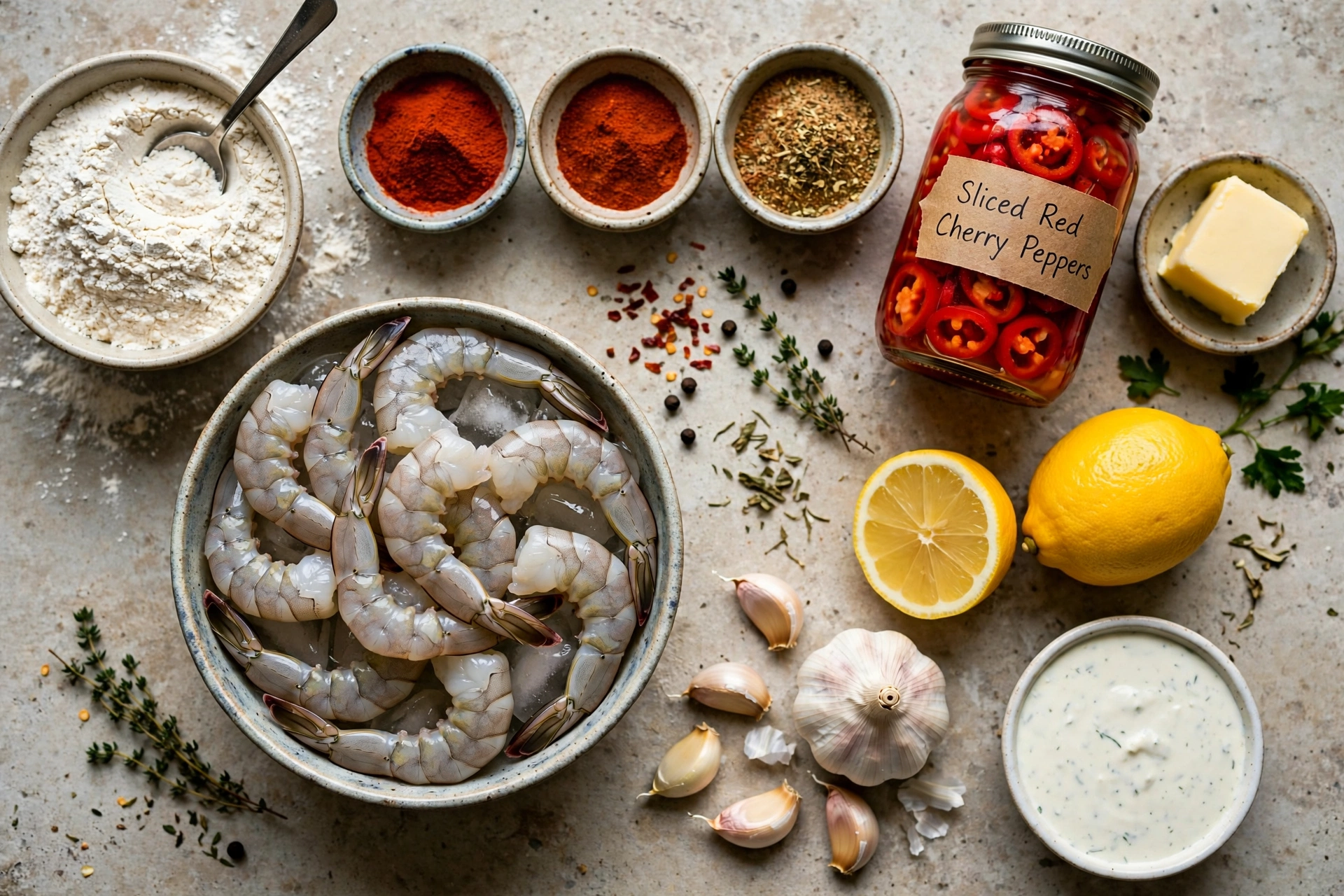
Makes 4 appetizer servings (about the size of one restaurant order, which is built for sharing).
For the shrimp
- 1 lb large raw shrimp, peeled and deveined (tails on or off — tails look nicer, off is easier to eat)
- 1 cup all-purpose flour (or self-rising flour for extra crunch)
- 2 tablespoons copycat Prairie Dust seasoning (recipe below), plus more for finishing
- 1 teaspoon salt
- 1/2 cup milk or buttermilk
- Vegetable or canola oil, for frying (about 2 inches in the pan)
For the cherry-pepper garlic butter
- 1/2 cup (1 stick) salted butter
- 1/2 cup jarred sliced cherry peppers, drained well
- 2 teaspoons garlic paste or finely minced garlic
- 1 tablespoon lemon juice
- 1 tablespoon copycat Prairie Dust seasoning
For serving
- Creamy ranch dressing, for dipping
- Lemon wedges (optional)
Copycat Prairie Dust Seasoning
LongHorn’s real Prairie Dust is proprietary, but the fan consensus — repeated across the most-loved copycat recipes — is a smoky, slightly sweet, moderately hot blend. Mix these and store the extra in a jar; it’s excellent on steak, chicken, and roasted vegetables too.
- 1/4 cup paprika
- 2 teaspoons cayenne pepper (use 1 teaspoon for milder)
- 1 tablespoon chili powder
- 2 teaspoons garlic powder
- 2 teaspoons ground mustard
- 2 teaspoons black pepper
- 1 teaspoon brown sugar
- 1 teaspoon salt
Whisk everything together. You’ll need about 3 tablespoons total for this recipe; the rest keeps for months in a sealed jar.
Step-by-Step: Copycat Wild West Shrimp

- Make the Prairie Dust. Whisk all the seasoning ingredients in a small bowl. Set aside 3 tablespoons for the recipe and jar the rest.
- Set up the dredge. In a shallow bowl, combine the flour, 2 tablespoons of Prairie Dust, and the salt. Pour the milk into a second shallow bowl.
- Bread the shrimp. Pat the shrimp dry with paper towels — this is the difference between a crisp coating and a soggy one. Dip each shrimp in milk, then dredge firmly in the seasoned flour, pressing so the coating sticks. Rest the breaded shrimp on a rack for 5 minutes so the coating sets.
- Heat the oil. Pour about 2 inches of oil into a heavy skillet or Dutch oven and heat to 350°F (175°C). If you don’t have a thermometer, a pinch of flour should sizzle vigorously on contact.
- Fry in batches. Fry the shrimp 1–2 minutes per side until deep golden and crisp. Don’t crowd the pan — crowded shrimp steam instead of crisping. Drain on a wire rack (not paper towels, which trap steam) and sprinkle lightly with extra Prairie Dust while hot.
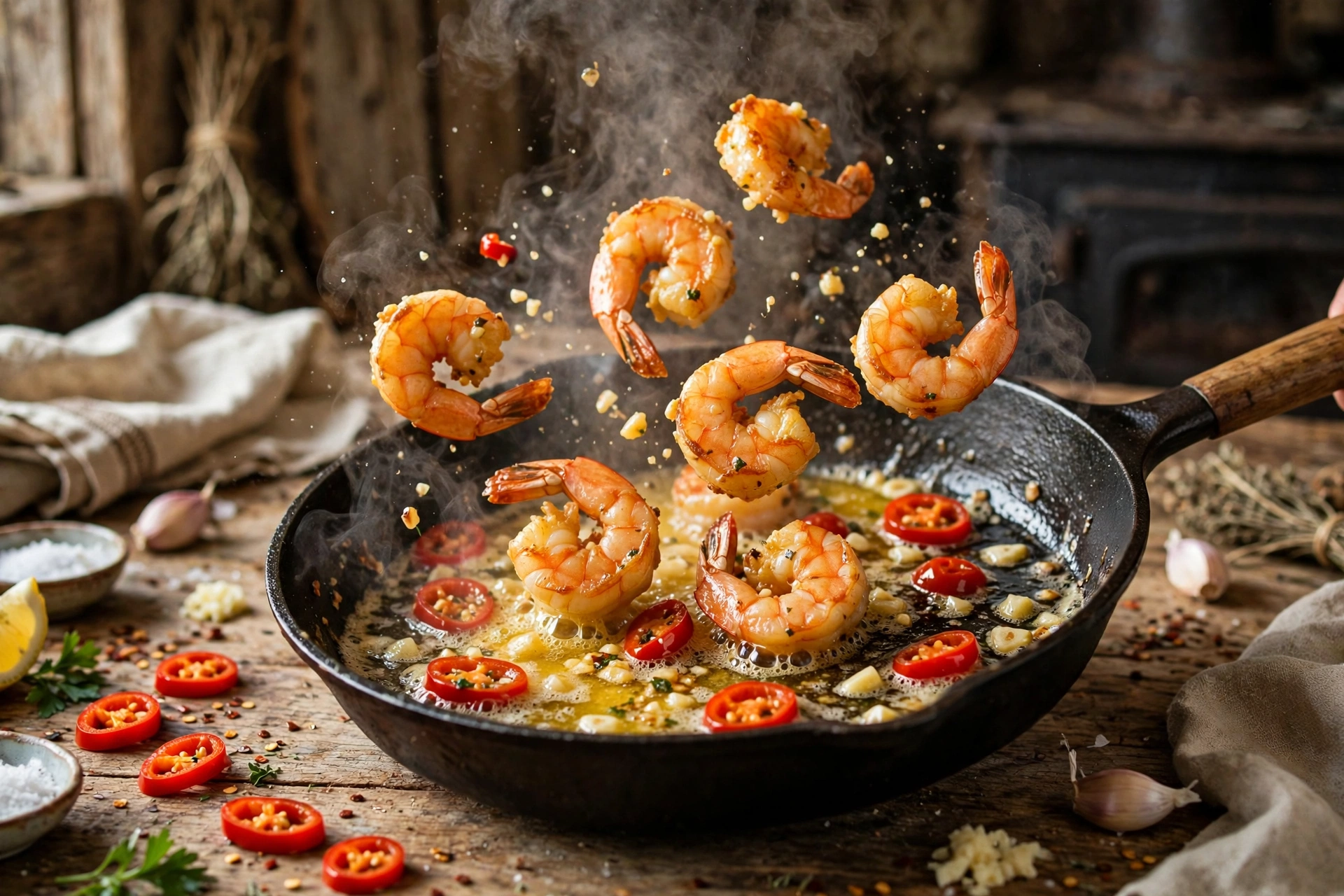
- Build the cherry-pepper butter. While the last batch fries, melt the butter in a clean skillet over medium heat. Add the garlic and cook about 30 seconds until fragrant — don’t let it brown. Stir in the drained cherry peppers, lemon juice, and 1 tablespoon of Prairie Dust. Cook 1 minute more, just to warm the peppers through.
- Toss. Add the hot fried shrimp to the skillet and toss gently until every piece is glossed with the cherry-pepper butter.
- Serve immediately. Pile onto a warm platter, pour over any extra butter from the pan, and serve with cold ranch dressing for dipping.
Tips for Getting It Right
Hot vs. sweet cherry peppers: this is the biggest decision in the recipe. Jarred hot cherry peppers (near the pickles or Italian ingredients, brands like Mezzetta are the ones copycat cooks reach for) give you the restaurant-style kick. Sweet cherry peppers give the same tangy flavor with much less heat — several popular copycat recipes actually prefer sweet, noting the restaurant version leans tangy-sweet as much as spicy. For a middle ground, use half sweet and half hot, or rinse hot peppers briefly under cool water to tame them.
Keep the shrimp dry before dredging. Wet shrimp = coating that slides off in the oil. Pat thoroughly, and let the breaded shrimp rest a few minutes before frying.
Oil temperature matters more than anything. Too cool and the coating absorbs oil and goes greasy; too hot and it browns before the shrimp cooks through. 350°F is the sweet spot, and frying in batches keeps the temperature from crashing.
Don’t skip the lemon. A tablespoon of lemon juice in the butter sauce is what keeps the rich butter and fried coating from feeling heavy — it’s the brightness that makes the restaurant version so craveable.
Serve it hot, ranch cold. The temperature contrast between the sizzling shrimp and the cold ranch is half the experience. Have the ranch portioned before the shrimp comes out of the oil.
Serving, Storage, and Reheating
This is a serve-immediately dish — fried shrimp waits for no one. If you must hold it, keep the fried shrimp on a wire rack in a 200°F oven for up to 20 minutes, and toss with the butter sauce just before serving.
Leftovers keep 2 days in the fridge. Reheat in an air fryer or hot oven (400°F, 5–6 minutes) to re-crisp; the microwave will turn the coating rubbery. The cherry-pepper butter can be made a day ahead and gently reheated.
Want the full steakhouse spread? Pair it with a simple LongHorn-style salad to cut the richness, and check the official LongHorn menu if you’re comparing against the restaurant original.
Longhorn Wild West Shrimp Recipe FAQs
Is this the official LongHorn Wild West Shrimp recipe?
No. LongHorn Steakhouse does not publish its recipes. This is a fan-made copycat built from the dish’s known components — crispy breaded shrimp, cherry peppers, garlic butter, Prairie Dust-style seasoning, and ranch — and it should be described that way wherever you share it.
What kind of cherry peppers should I use?
Jarred sliced cherry peppers from the pickle/Italian aisle. Hot cherry peppers give the restaurant-style kick; sweet cherry peppers give the same tangy flavor with less heat. Drain them well before they hit the butter, and rinse hot ones briefly under cool water if you want to tame the heat.
What is Prairie Dust?
Prairie Dust is LongHorn’s proprietary steakhouse seasoning — a smoky, slightly sweet, moderately hot blend used across the menu. The real formula isn’t public, so copycats use a fan blend: paprika, cayenne, chili powder, garlic powder, ground mustard, black pepper, brown sugar, and salt.
Can I make this less spicy?
Yes. Use sweet cherry peppers instead of hot, cut the cayenne in the Prairie Dust in half (or leave it out), and go easy on the finishing sprinkle. The garlic butter and ranch carry plenty of flavor without the heat.
Can I air-fry the shrimp instead of deep-frying?
You can, with a texture trade-off. Spray the breaded shrimp generously with oil and air-fry at 400°F for 6–8 minutes, flipping once. You’ll get a crisp-ish coating, but it won’t match the shattering crunch of a proper fry. Honestly, for this dish, the fry is worth it.
How long does this recipe take?
About 30 minutes total: 10 minutes of prep (breading is the slow part) and 15–20 minutes of frying in batches. The butter sauce comes together in the time the last batch fries.
What size shrimp works best?
Large raw shrimp, peeled and deveined — roughly 21/25 or 26/30 count per pound. Raw matters: pre-cooked shrimp will overcook and turn rubbery during frying. Tails on looks nicer for serving; tails off is easier to eat.
Can I make any of this ahead?
The Prairie Dust keeps for months, and the cherry-pepper butter can be made a day ahead and reheated gently. The shrimp themselves should be breaded and fried just before serving — fried shrimp doesn’t hold well.
What dipping sauce goes with Wild West Shrimp?
Creamy ranch dressing, served cold. That’s what the restaurant serves, and the cool-against-hot contrast is part of the dish. Blue cheese works in a pinch, but ranch is the authentic pairing.
How close is this to the restaurant version?
It’s a strong approximation, not a clone. The cherry-pepper garlic butter and crispy coating land very close; the exact Prairie Dust blend and fry setup are the parts no home cook can perfectly replicate. Judge it on its own merits — it’s a genuinely great appetizer.