What Is the Texas Roadhouse Allergen Menu?
The texas roadhouse allergen menu is the chain’s official guide to the allergens in its food. It lists the menu items and the common allergens each one contains, so guests with food allergies or intolerances can check a dish before they order it. The allergens covered include milk, eggs, fish, shellfish, peanuts, tree nuts, soy, wheat, and sesame, along with notes on gluten and sulfites.
This guide teaches you how to use that allergen menu, which dishes are usually safe for gluten-free and dairy-free guests, and what to ask your server before you order. It does not reproduce the full allergen matrix — the official guide changes when the menu changes, and the only version you should trust for your meal is the current one from Texas Roadhouse itself.
One warning applies to everything in this guide. Texas Roadhouse states that it cannot guarantee any menu item is free of all major allergens, because of the risk of cross-contamination in a shared kitchen. If you have a severe allergy, the allergen guide is a starting point, not a promise — always tell your server, and confirm the preparation at your location.
Where to Find the Official Texas Roadhouse Allergen Guide
The official texas roadhouse allergy menu is available on the Texas Roadhouse website and through the Nutritionix portal, which hosts the chain’s nutrition and allergen information. You can also ask your server for a printed copy when you visit the restaurant. The printed copy is the version to use at the table, because it reflects what that location is actually serving.
Before your visit, look up the dishes you plan to order and note the allergens listed for each one. The guide is organized by menu category — starters, salads, entrées, sides, and desserts — so it is easy to check a whole meal in a few minutes. If a dish is not listed, or if the listing looks out of date, ask your server to check with the kitchen.
Third-party menu sites also republish the allergen information, but those copies can be stale. The official guide on the Texas Roadhouse site or the Nutritionix portal is the source to trust, and the printed copy at the restaurant is the final word for your meal.
How to Read the Allergen Guide: The 9 Allergens
The allergen guide lists the major allergens for each dish. The main ones are milk, eggs, fish, shellfish, peanuts, tree nuts, soy, and wheat, plus sesame. A dish is marked with every allergen it contains, including allergens hidden in sauces, gravies, dressings, and seasonings — not just the main ingredient.
That detail matters, because the hidden allergens are the ones that catch people out. A steak itself may only list milk and soy, from the butter and the marinade. A salad may list milk, egg, and wheat, from the cheese, the dressing, and the croutons. A side like seasoned rice lists milk, soy, and wheat in the guide, even though rice itself is naturally gluten-free — the broth and seasonings are where the allergens come in.
When you read the guide, check the whole plate, not just the entrée. Check the sauce, the dressing, the side, and the bread. A meal that looks safe on the entrée line can still carry an allergen in the gravy or the seasoning, and the guide is designed to catch exactly that.
Texas Roadhouse Gluten-Free Menu: What to Order
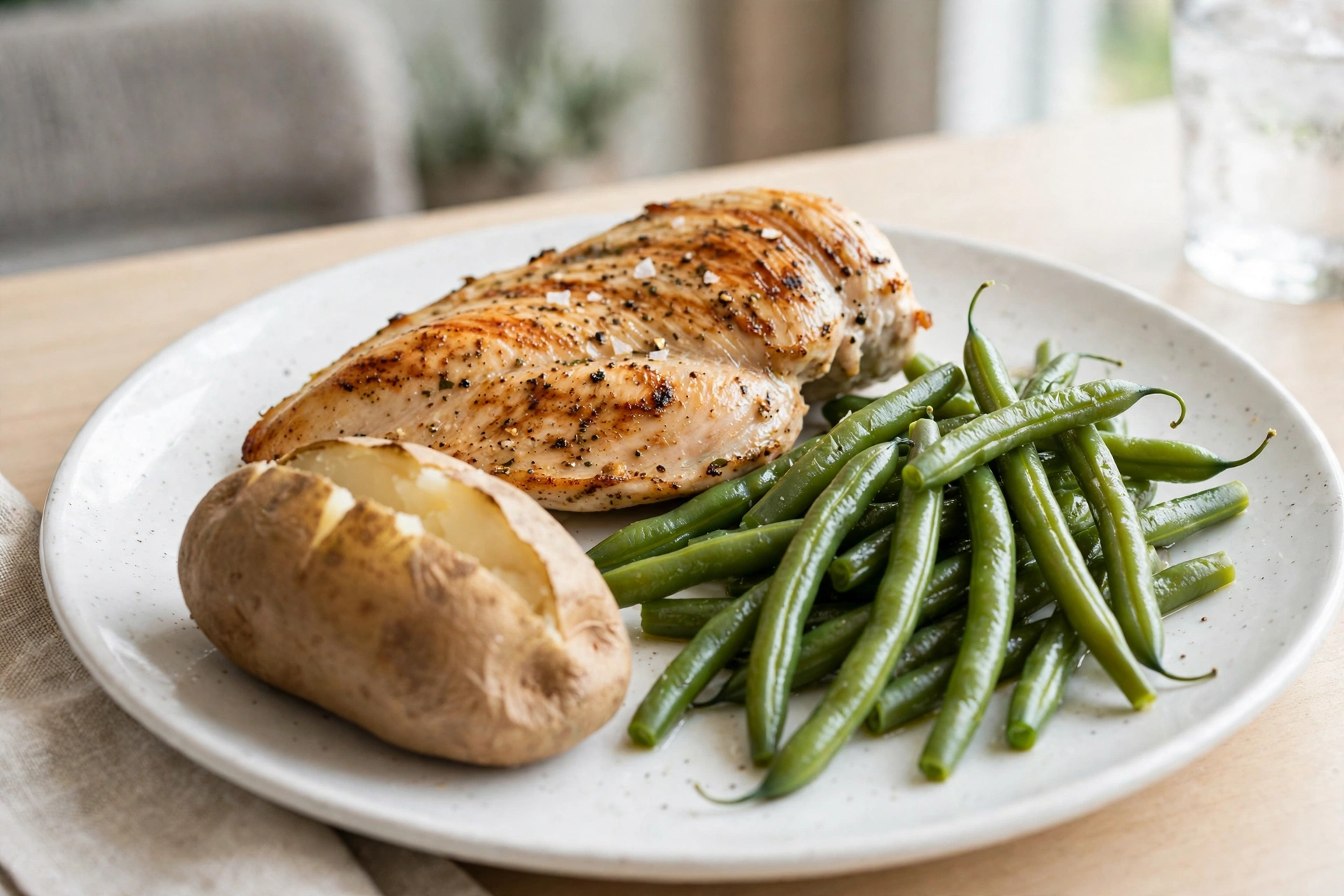
Texas Roadhouse offers a gluten-free menu — the chain calls it its “gluten friendly” menu — and several dishes work well for gluten-free guests. The safest picks are the plain grilled proteins and the simple sides. Grilled salmon, grilled chicken, and plain grilled steaks are the usual starting points, and the guide lists several of them with no gluten-containing ingredients.
For sides, the gluten-free options reported in the guide include green beans, a plain baked potato, and applesauce. The house salad works if you order it without cheese and without croutons, and with a gluten-free dressing — oil and vinegar is the safest choice. Ask for the salad dressing on the side so you control how much goes on.
There are three gluten traps to know about. First, the bread: the famous fresh-baked rolls contain wheat, milk, and eggs, and all buns contain dairy and wheat, so ask for a bunless burger or sandwich if you need one. Second, the fried foods: Texas Roadhouse does not have a separate fryer for gluten-free items, so fried items carry a cross-contamination risk even if the item itself is gluten-free. Third, the sauces: brown gravy and several smother sauces contain gluten, so order your steak plain or with a gluten-free sauce like au jus, and confirm the sauce at your location.
Seasoned rice is another trap. Rice itself is gluten-free, but the Texas Roadhouse seasoned rice is listed in the guide with milk, soy, and wheat, because of the broth and seasonings used to cook it. Do not assume a rice dish is gluten-free — check the guide first.
Texas Roadhouse Dairy-Free Menu: What to Order
The texas roadhouse dairy free options are better than many guests expect, but they need careful ordering. The chain is dairy-heavy — butter, cheese, cream, and milk show up across the menu — so the dairy-free picks are mostly plain grilled items with the dairy components removed.
For entrées, the dairy-free options reported in the guide include grilled chicken, grilled salmon, plain steaks ordered without butter or cheese toppings, and the country vegetable plate. The grilled chicken salad works if you order it without cheese, and the house salad works without cheese and croutons. The all-beef hot dog on the kids menu is also listed as a dairy-free option, though it contains wheat.
For dressings and sauces, the dairy-free options reported include honey French dressing, honey lime sauce, Italian dressing, oil and vinegar, and honey mustard dressing — though honey mustard and Italian dressing contain egg, so check if egg is also a concern for you. Dairy-free entrée sauces reported in the guide include au jus, brown smother gravy, Creole mustard sauce, honey lime sauce, horseradish (not the creamy horseradish sauce), pico de gallo, and tartar sauce. The creamy horseradish sauce, creamy smother gravy, green chile sauce, peppercorn sauce, and portobello mushroom sauce all contain milk, so avoid those.
The dairy traps are the ones that surprise people. The table bread contains milk. The seasoned rice contains dairy. The steak fries contain milk in the seasoning. The Texas Roadhouse chili contains milk in the base recipe, not just in the cheese topping. And the grilled shrimp sidekick and sautéed onions contain dairy. All desserts at Texas Roadhouse are dairy-heavy, so there is no safe dessert pick on the standard menu for a dairy-free guest.
Peanuts, Tree Nuts and the Free Peanuts on the Table
Peanuts are the allergen that confuses the most guests at Texas Roadhouse, because the restaurant serves free peanuts at the table. Menu guides report that Texas Roadhouse does not use peanuts in its food products and does not offer toppings or sauces that contain peanuts — but the complimentary peanuts are served on the table for guests, so the dining room itself is not peanut-free.
If you have a peanut allergy, tell your server as soon as you sit down. The staff can clear the peanuts from your table and note the allergy for the kitchen. If your allergy is airborne or severe, ask about seating away from tables where peanuts are being eaten, and consider whether the dining room is safe for you at all.
Tree nuts are a separate question. The allergen guide lists tree nuts as a covered allergen, and some dishes and desserts may contain them. Check the guide for the specific dish you want, and ask your server if the listing is unclear — desserts and salads are the categories where tree nuts show up most often.
Cross-Contamination: What the Kitchen Can and Cannot Do
Cross-contamination is the biggest risk at any steakhouse, and Texas Roadhouse is no exception. The kitchen shares grills, fryers, cutting boards, and utensils across dishes, and the chain is open about that: it cannot guarantee any item is free of all major allergens.
The fryer is the clearest example. All fried items are cooked in shared oil, and there is no separate fryer for gluten-free items. If you have celiac disease or a serious gluten sensitivity, fried items are a risk even when the item itself contains no gluten. The same logic applies to the grill, where a steak cooked next to a buttered item can pick up traces of milk.
What the kitchen can do is take precautions when you tell them about an allergy. That usually means cleaning the grill surface, using fresh utensils, and preparing your dish separately from the standard line. Those steps reduce the risk, but they do not remove it. If your allergy is severe, the honest answer is that no shared-kitchen restaurant can give you a zero-risk meal, and you should weigh that before you order.
What to Ask Your Server: 6 Questions
Telling your server about an allergy is the single most important step, and it works best when you are specific. Here are the six questions to ask, in order:
- “Can I see the current allergen guide?” Ask for the printed copy at the table. It is the version that matches what the kitchen is serving today.
- “Does this dish contain [your allergen]?” Name the allergen, not just the diet. “Gluten-free” and “dairy-free” mean different things to different kitchens — naming the allergen is clearer.
- “What is in the sauce, gravy, or dressing?” Sauces are where hidden allergens live. Ask about the sauce separately from the entrée.
- “Can this be cooked plain, without butter or seasoning?” A plain grilled steak or chicken breast, with no butter, no seasoning blend, and no sauce, is the safest order for most allergies.
- “Is the fryer shared?” If you need a fried item, ask whether it shares oil with other foods. At Texas Roadhouse, the answer is yes, so plan around it.
- “Can the kitchen clean the grill and use fresh utensils for my order?” This is the cross-contamination question. Asking it puts the allergy on the ticket and tells the kitchen to take precautions.
If the server is unsure about any answer, ask them to check with the kitchen or the manager. A good server will do that happily. If you ever feel the allergy is not being taken seriously, it is better to order something simple and plain — or to eat elsewhere — than to risk a reaction.
Allergens in Kids Meals, Sides and Desserts
The kids menu carries the same allergens as the adult menu, and the same rules apply. The kids items reported in the dairy-free guide include the all-beef hot dog, the Ranger Rib Basket, applesauce, green beans, and steak fries — but the steak fries contain milk in the seasoning, so they are not dairy-free despite appearing on a dairy-free list. That contradiction is a good reminder to check the guide yourself rather than trusting a summary.
For sides, the plain baked potato is the safest all-rounder: the guide lists it as allergen-free when ordered plain, with no butter, cheese, or sour cream. Applesauce and green beans are also reported as safe for many allergies. Mashed potatoes, gravy, seasoned rice, and the loaded baked potato all carry milk and other allergens, so skip them if dairy or gluten is a concern.
Desserts are the hardest category. The guide and the dairy-free guides agree that all desserts at Texas Roadhouse are dairy-heavy, and most contain wheat and egg as well. If you need a dessert and you have an allergy, the safest option is fresh fruit if the location offers it — and if not, skip dessert at the restaurant.
For the full picture on how the chain’s sister menus handle allergens, our guide to the allergen menu for LongHorn Steakhouse covers the same ground for the other big steakhouse chain.
Frequently Asked Questions About Texas Roadhouse Allergen Menu
Where can I find the Texas Roadhouse allergen menu?
The official Texas Roadhouse allergen menu is available on the Texas Roadhouse website and through the Nutritionix portal, and you can ask your server for a printed copy at the restaurant. The printed copy at your location is the version to trust for your meal, because it reflects what that kitchen is serving.
Does Texas Roadhouse have gluten-free options?
Yes, Texas Roadhouse offers gluten-free options, including grilled salmon, grilled chicken, plain grilled steaks, green beans, a plain baked potato, and a house salad without croutons. The chain calls this its “gluten friendly” menu. There is no separate fryer for gluten-free items, so fried foods carry a cross-contamination risk.
Is Texas Roadhouse dairy-free friendly?
Texas Roadhouse has dairy-free options, including grilled chicken, grilled salmon, plain steaks without butter or cheese, the country vegetable plate, and salads without cheese. Dairy-free dressings include honey French, honey lime, Italian, and oil and vinegar. The table bread, seasoned rice, steak fries seasoning, and chili all contain milk, so avoid those.
Does Texas Roadhouse use peanut oil?
Menu guides report that all fried items at Texas Roadhouse are cooked in peanut oil. Guests with a peanut allergy should avoid fried foods and tell their server about the allergy. Free peanuts are also served on the tables, so ask for them to be removed from your table when you sit down.
Are Texas Roadhouse rolls gluten-free?
No, the Texas Roadhouse rolls are not gluten-free. The rolls contain wheat, milk, and eggs. All buns used for burgers and sandwiches also contain dairy and wheat. Ask for a bunless version if you need to avoid gluten or dairy.
Can Texas Roadhouse accommodate a severe allergy?
Texas Roadhouse staff can take precautions, such as cleaning the grill and using fresh utensils, when you tell them about an allergy. However, the chain states it cannot guarantee any item is free of all major allergens because of cross-contamination in a shared kitchen. Guests with severe allergies should confirm preparation with the manager.
What allergens are in Texas Roadhouse seasoned rice?
The allergen guide lists Texas Roadhouse seasoned rice with milk, soy, and wheat, even though rice itself is naturally gluten-free. The allergens come from the broth and seasonings used to cook it. Do not assume the rice is gluten-free or dairy-free — check the guide first.
Is there a vegan menu at Texas Roadhouse?
Texas Roadhouse does not have a full vegan menu, but vegan-friendly options reported in menu guides include the house salad with oil and vinegar (no cheese, no croutons) and the country vegetable plate. The buns contain dairy, and most sides contain milk or egg, so ordering vegan requires careful substitutions — ask your server.
Does Texas Roadhouse have a separate gluten-free fryer?
No, Texas Roadhouse does not have a separate fryer for gluten-free items. Fried foods share oil with other items, so they carry a cross-contamination risk for guests with celiac disease or a serious gluten sensitivity.
What should I tell my server about my food allergy?
Tell your server the specific allergen by name, ask to see the current printed allergen guide, and ask about the sauce, dressing, and cooking method for your dish. Ask whether the dish can be cooked plain and whether the kitchen can clean the grill and use fresh utensils. If the server is unsure, ask them to check with the kitchen.