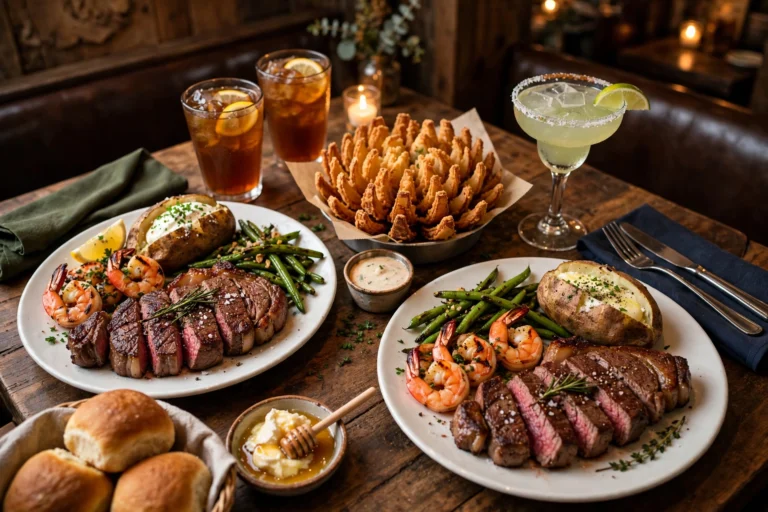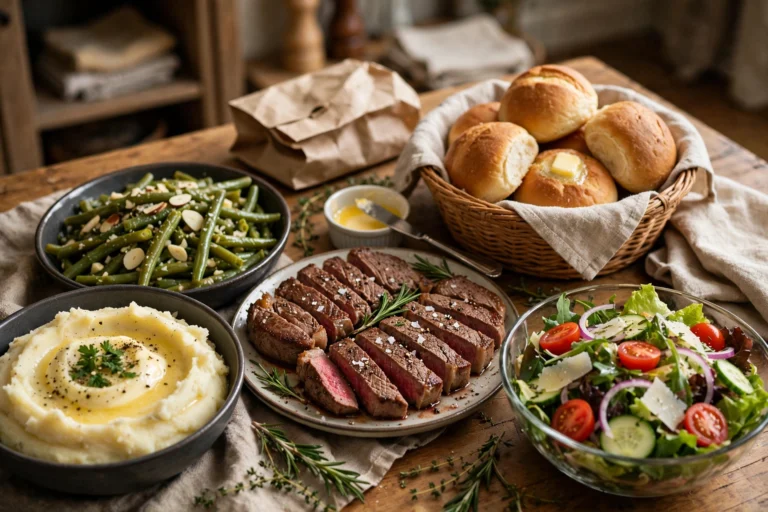

The Texas Roadhouse Cheese Fries are one of the most argued-over appetizers on the menu. Some diners call them a perfect plate of comfort food — thick steak fries, real melted cheddar, smoky bacon bits. Others call them the weakest appetizer Texas Roadhouse serves. Both sides are describing the same dish, and the difference usually comes down to one thing: how fast you eat them.
This guide covers the Texas Roadhouse Cheese Fries from every angle: what is actually on them, how much they cost, how many calories they carry, whether the chili add-on is worth it, what reviewers really think, and a full copycat Texas Roadhouse cheese fries recipe so you can make them at home. Prices are reported from recent menu guides and vary by location — treat every dollar figure as a reported range and confirm locally.
What Are Texas Roadhouse Cheese Fries?
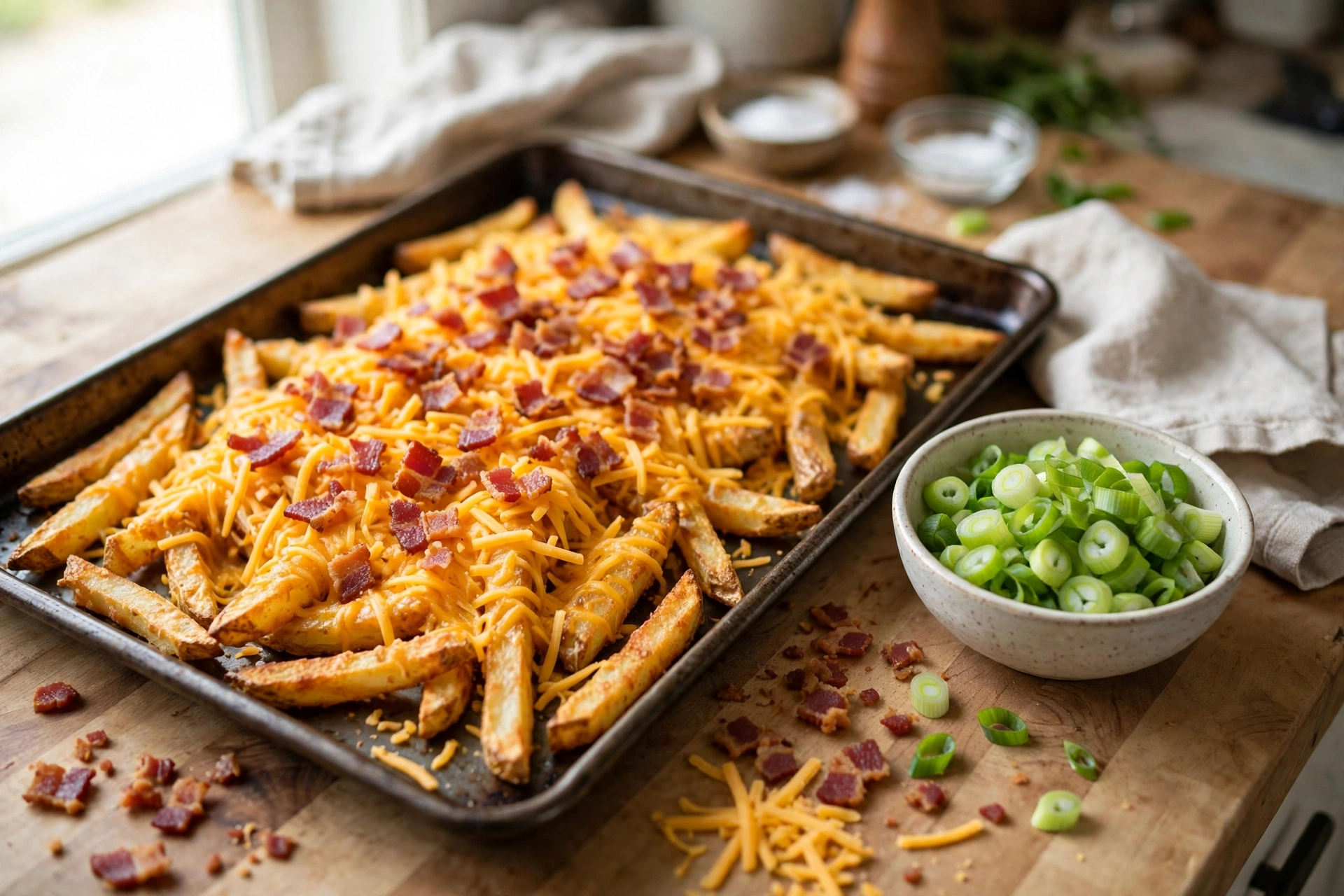
Texas Roadhouse Cheese Fries are seasoned steak fries smothered with melted cheddar cheese and bacon bits. That is the whole dish, as the chain’s own menu training materials describe it: “seasoned steak fries smothered with cheddar cheese and bacon bits (may be topped with chili), ranch dressing and jalapeño slices upon request.”
The base matters more than it sounds. These are not thin fast-food fries. Texas Roadhouse uses thick-cut steak fries — the same seasoned steak fries that come with the steaks and the Killer Ribs — which hold up under a heavy layer of cheese better than a thin fry would, and give you a satisfying cheese pull when they are hot. The cheese is melted cheddar, not a processed cheese sauce, and the bacon bits are crispy. Ranch dressing and sliced jalapeños are available on request, and Texas chili (no beans) can be added for a small extra charge.
The dish is served on a large warm oval platter, built for the table rather than for one person. It is listed under “Just for Starters,” and it is one of the most-ordered appetizers on the menu — partly because it is familiar, partly because it is one of the cheaper ways to feed a table before the entrees arrive.
What Is on Texas Roadhouse Cheese Fries?
Every serving is built from the same short list of components:
- Seasoned steak fries: thick-cut, golden, seasoned — the same fries served with the steaks. Our guide to Texas Roadhouse Steak Fries covers the plain version in detail.
- Melted cheddar cheese: shredded cheddar melted over the hot fries. Reviewers consistently note that it is real cheddar, not a cheese product — which is both the dish’s strength and its weakness, as explained below.
- Crispy bacon bits: crumbled bacon scattered over the cheese.
- Texas chili (optional, extra charge): the chain’s no-bean Texas Red Chili, added on top for a small fee — most guides report about 99 cents.
- Ranch dressing (on request): served on the side for dipping.
- Jalapeño slices (on request): fresh sliced jalapeños for guests who want heat.
What is not on the dish is almost as important. There is no cheese sauce poured over the top — the cheese is shredded cheddar melted onto the fries, which means it behaves like melted cheddar: glorious for about three minutes, then increasingly firm as it cools. There are no green onions on the restaurant version, though many copycat recipes add them. And the chili is an add-on, not a default — if you want chili cheese fries, you have to ask and pay the extra charge.
How Much Do Texas Roadhouse Cheese Fries Cost?
As with everything at Texas Roadhouse, the price depends on your location, and the guides disagree by a surprising amount. Recent menu guides report the Cheese Fries anywhere from about $6.99 to about $12.99. The most commonly cited recent figures cluster around $8.49 to $11.99, with one national guide listing $10.99 and noting a range from $7.99 in North Carolina to $12.99 in California. A Wichita, Kansas price check from September 2026 put them at $10.49, while another guide from the same period lists $8.49.
Older guides still in circulation show $6.99, which mostly reflects price increases over the past year rather than a different dish. The chili add-on is consistently reported at about 99 cents across guides, which is one of the few prices that does not vary much.
As a planning range for 2026, expect roughly $9 to $12 for the Cheese Fries at most locations, with lower prices in smaller markets and higher prices in California and at airport locations. Check your location’s menu or app for the exact price before you order. For a shared appetizer that can feed two or three people as a starter, that is reasonable value — though whether it is good value depends on whether the cheese arrives melted, which brings us to the reviews.
Texas Roadhouse Cheese Fries Calories and Nutrition
The calorie count is one of the most consistent figures on the Texas Roadhouse menu: nearly every current guide lists the Cheese Fries at 1,240 calories. That figure appears across guides updated in 2025 and 2026, and it is the number to plan around.
There are exceptions. One guide lists 720 calories, another lists 850, and a Wichita price check lists a range of 860 to 1,240 calories for two sizes — suggesting some locations offer a smaller portion. The 1,240 figure is the standard full serving, and the lower numbers most likely reflect a smaller or lunch portion, or an older recipe. If you are counting calories, plan on 1,240 and treat a smaller number as a pleasant surprise rather than a promise.
For the rest of the nutrition picture, one current guide breaks the dish down at about 24 grams of protein and 46 grams of fat, with 580 calories from fat. Another source lists about 20 grams of protein, 60 grams of carbohydrate, and 60 grams of fat for an 850-calorie portion. These figures come from third-party guides, not from a published official nutrition sheet, so treat them as approximate — but the direction is clear either way: this is a rich, high-calorie appetizer built for sharing, not a light side.
Adding chili adds calories on top. A cup of Texas Red Chili is a substantial addition on its own, so chili cheese fries are a bigger meal than the plain version. The ranch dressing on the side adds calories too, though less than most people assume — a couple of tablespoons of ranch is roughly 140 to 280 calories depending on the portion.
Loaded vs Plain: Which Version Should You Order?
The menu offers the Cheese Fries in one form, but in practice there are three versions, depending on what you ask for:
- Plain Cheese Fries: steak fries, cheddar, bacon bits. This is the default order, and it is the version most reviewers judge.
- Chili Cheese Fries: the same plate with Texas chili added for about 99 cents. The chili adds savory depth, moisture that keeps the cheese softer for longer, and enough substance to turn the appetizer into a light meal. Most reviewers who like the dish recommend the chili version.
- Loaded, your way: cheese fries with ranch and jalapeños on request. The ranch cools the richness, the jalapeños add heat and crunch, and the combination is the closest thing to a fully loaded fry plate on the menu.
If you are ordering for the table, the chili version is the better bet. The single most common complaint about the plain version is that the cheese cools and firms up within minutes, leaving the bottom layer of fries nearly bare — and the hot chili on top keeps the whole plate warmer and more evenly covered for longer. If you are ordering for yourself as a side with a steak, the plain version is enough, and you can always add ranch.
One warning from the reviews: the Cheese Fries do not travel well. The cheese sticks to the takeout lid, the fries steam and soften in the closed container, and by the time you get home you can, as one reviewer put it, “literally pick up the cheese by hand.” If you want them at their best, eat them in the restaurant, immediately, while the cheese is still melted.
What Do Customers Really Think of Texas Roadhouse Cheese Fries?
Honestly? It depends on who you ask, and the split is unusually sharp for such a simple dish.
Tasting Table’s reviewer ranked the Cheese Fries dead last out of ten appetizers. The complaint was not the flavor — it was the physics of melted cheddar. “The cheddar cheese starts to cool immediately, so what starts out with melty goodness quickly firms into soft cheese. The top layer has the most cheese and bacon, and then the bottom layer has little to none.” The same review noted that the dish would be more interesting with the chili added. A separate Tasting Table roundup of the worst Texas Roadhouse appetizers, based on customer reviews, included the Cheese Fries for the same reasons: “Fries were thick and flaccid and only half covered with oddly stiff globs of cheese,” wrote one Tripadvisor reviewer, while a Yelp reviewer said “the cheese on our cheddar fries was plasticky and not melty like cheese fries should be.”
Chowhound’s reviewer was kinder, ranking the Cheese Fries sixth and praising the cheese pull: “The best part about the Cheese Fries is that they are super cheesy. They even give you a super-satisfying cheese pull. Texas Roadhouse doesn’t mess around with a fake cheese product either. Instead, you get tons of delicious, melted cheddar cheese and no dry fries.” The same reviewer noted that the thick steak fries hold plenty of melted cheese, but “lacked the crunch needed” for a higher ranking — a fair point, since steak fries are soft by design.
Ordinary diners land somewhere in the middle. One reviewer rated them 7 out of 10: “Not bad. They’re average steak fries with melted cheese and bacon, they tasted just as expected. Nothing to write home about, although the fries are seasoned quite well, taste good, and are crispy by themselves.” Another diner called the bacon and cheese fries “amazing” alongside the ribs. And one regular’s story captures the dish’s appeal: their server noticed a chili cheese fries order had gone out without the chili and had a fresh order made before the guest even complained.
The pattern in the reviews is consistent enough to be useful. When the Cheese Fries arrive hot and fresh, people like them. When they sit for even a few minutes — on the pass, on the table, or in a takeout box — the cheese firms, the fries soften, and the dish falls apart. Order them when you are ready to eat them, eat them first while they are hot, and add the chili if you want them to stay good for longer.
Texas Roadhouse Cheese Fries Recipe (Copycat)
This is a copycat recipe — our version of the dish, built from the restaurant’s described ingredients and from the copycat recipes that home cooks have tested. It is not the official Texas Roadhouse recipe, which the chain does not publish. What it does reproduce is the structure: crispy thick-cut fries, melted sharp cheddar, smoky bacon, and the optional chili and ranch.
Prep time: 10 minutes. Cook time: 20 minutes. Total time: about 30 minutes. Serves: 4 as an appetizer.
Ingredients
- 16 ounces (about 4 cups) frozen steak fries — thick-cut, not shoestring
- 1 1/2 to 2 cups shredded sharp cheddar cheese, freshly grated if possible
- 6 slices bacon, cooked until crisp and crumbled (about 1/2 cup)
- 2 green onions, thinly sliced (optional, not in the restaurant version)
- Salt and seasoned salt, to taste
- Ranch dressing, for serving on the side
- Optional: 1 cup Texas-style chili (no beans) for chili cheese fries; sliced jalapeños for heat
Steps
Step 1: Cook the bacon. Cook the bacon in a skillet over medium-high heat until crisp, then drain on paper towels and crumble. Set aside. If you want extra flavor, reserve a teaspoon of the bacon drippings for seasoning the fries.
Step 2: Cook the fries until genuinely crisp. This is the step that decides whether the copycat works. Preheat your oven to 450°F (232°C) or your air fryer to 400°F (200°C). Spread the frozen steak fries in a single layer on a baking sheet or in the air fryer basket — do not crowd them, or they will steam instead of crisping. Bake for 20 to 25 minutes in the oven, flipping once halfway through, or air fry for 15 to 20 minutes, shaking the basket halfway. They should be deeply golden and crisp at the edges. Season with salt while they are hot.
Step 3: Build the plate. Transfer the hot fries to an oven-safe dish, a cast-iron skillet, or a rimmed baking sheet. Spread them in an even layer — a single layer is ideal, but a shallow pile is fine if the dish is wide enough. Sprinkle the shredded cheddar evenly over the fries, making sure the edges get cheese too, since the edges are where the bare fries hide.
Step 4: Melt the cheese. Place the dish under the broiler for 1 to 2 minutes, watching it constantly, until the cheese is fully melted and bubbly. Alternatively, return the dish to a 400°F oven for 2 to 3 minutes. Do not walk away — shredded cheddar goes from melted to browned in under a minute under a broiler.
Step 5: Top and serve immediately. Scatter the crumbled bacon and sliced green onions over the melted cheese. If you are making chili cheese fries, spoon the warmed chili over the top before the bacon. Serve right away with ranch dressing on the side — the dish starts to firm up within minutes, exactly like the restaurant version.
Tips for the Best Copycat Cheese Fries
- Grate your own cheese. Pre-shredded cheese is coated in anti-caking starch, which makes it melt less smoothly. A block of sharp cheddar grated at home melts into a much better blanket.
- Crisp the fries more than you think you need to. The cheese and bacon add moisture, and fries that are merely golden will go soft under the topping. Aim for deeply golden and audibly crisp.
- Use a wide, shallow dish. The most common failure in copycat cheese fries is a deep pile where only the top layer gets cheese. A wide skillet or sheet pan gives every fry a fair share.
- Season the fries while they are hot. Salt and seasoned salt stick to hot fries and bounce off cold ones.
- Do not microwave leftovers. Reheating in the microwave makes the fries soggy. If you must reheat, use a hot oven or air fryer for a few minutes — but honestly, cheese fries are best made in the quantity you plan to eat at once.
Variations
- Chili cheese fries: add a cup of warmed no-bean chili over the cheese before the bacon, as the restaurant does for about 99 cents.
- Spicy version: add sliced jalapeños and a drizzle of hot sauce, or swap half the cheddar for pepper jack.
- Cheese blend: mix sharp cheddar with Monterey Jack for a stretchier melt, or add a little smoked Gouda for depth.
- What not to add: some copycat recipes online add chorizo or sausage to the dish. That is a different recipe — the restaurant version has no chorizo or sausage, only cheddar and bacon, so leave them out if you want the copycat to taste like the original.
What to Pair With Texas Roadhouse Cheese Fries
The Cheese Fries are a starter, so the question is really what comes after them — or what shares the table with them. A few pairings that work:
- With steak: order the fries as the table appetizer and a steak as the main. The fries are rich, so a leaner cut like the sirloin balances better than a ribeye with its own richness.
- With Chicken Critters: the hand-battered chicken tenders are the other great Texas Roadhouse starter for a table, and they share well with the fries. Our guide to Texas Roadhouse Chicken Critters covers the tenders, the sauces, and the combos — including the ribs and critters plate that pairs them with the Texas Roadhouse Killer Ribs.
- With a salad: if the fries are the indulgent half of the table, a house salad or Caesar side salad is the fresh half. It also gives you something to eat while the fries cool to a temperature that will not burn your mouth.
- With a margarita: the Legendary Margarita is the house drink, and salty, cheesy fries with a cold margarita is a combination Texas Roadhouse has built its bar business around.
- As a meal: the chili cheese fries version, plus a side salad, is a legitimate light dinner — and at roughly a third of the price of a steak entree, it is one of the cheapest filling meals on the menu.
Cheese Fries vs Tater Skins: Which Appetizer Wins?
The closest rival on the same menu is the Tater Skins — eight baked potato skins loaded with melted cheddar cheese and bacon bits, served with sour cream. The two dishes share the same toppings, so the choice comes down to the base.
Tater Skins are the more structured dish: the potato skin holds its shape, the cheese and bacon sit in a defined cup, and the sour cream adds a cool contrast. They are listed at about 520 calories for the plate in one current guide, which makes them a lighter choice than the 1,240-calorie Cheese Fries. They also travel slightly better, since the skins are sturdier than fries.
Cheese Fries are the messier, more generous dish: more food, more cheese pull, more sharing potential, and a lower price per bite. If you are feeding a table, order the Cheese Fries. If you want the same flavors in a neater, lighter portion for one or two people, order the Tater Skins. Neither is a wrong choice — but if you can only order one, the Cheese Fries are the better value and the Tater Skins are the better-executed plate.
Frequently Asked Questions About Texas Roadhouse Cheese Fries
What are Texas Roadhouse Cheese Fries?
Texas Roadhouse Cheese Fries are seasoned steak fries smothered with melted cheddar cheese and bacon bits, served on a large warm oval platter. Ranch dressing and jalapeño slices are available on request, and Texas chili can be added for a small extra charge.
How much are Texas Roadhouse Cheese Fries?
Reported prices vary by location. Recent menu guides list the Cheese Fries at roughly $9 to $12, most commonly around $8.49 to $11.99, with some locations as low as $6.99 and some as high as $12.99. The chili add-on is consistently reported at about 99 cents. Confirm the price at your local restaurant.
How many calories are in Texas Roadhouse Cheese Fries?
The standard serving is listed at 1,240 calories in nearly every current menu guide. A few guides list lower figures — 720 or 850 calories, or a range of 860 to 1,240 for two sizes — which most likely reflect a smaller portion. Plan on 1,240 calories for the full serving, and more if you add chili.
What cheese is on Texas Roadhouse Cheese Fries?
Melted cheddar cheese — shredded cheddar melted over the hot steak fries. Reviewers consistently note that it is real cheddar, not a processed cheese sauce, which is why it has a good cheese pull when hot and firms up quickly as it cools.
Can you add chili to Texas Roadhouse Cheese Fries?
Yes. Texas chili (no beans) can be added to the Cheese Fries for a small extra charge, most guides report about 99 cents. Ask for chili cheese fries when you order. The chili adds flavor and moisture and helps keep the cheese softer for longer.
Are Texas Roadhouse Cheese Fries gluten-free?
Texas Roadhouse does not list the Cheese Fries as a gluten-free item, and the fries are cooked in shared fryers. Guests with celiac disease or a gluten sensitivity should check the current allergen guide at the restaurant and ask the server rather than relying on a menu blog.
How do you make Texas Roadhouse cheese fries at home?
Make a copycat version with frozen steak fries, shredded sharp cheddar, and crumbled bacon: bake or air fry the fries until deeply crisp, spread them in a wide oven-safe dish, cover evenly with cheese, broil 1 to 2 minutes until melted, then top with bacon and green onions and serve immediately with ranch. The full copycat Texas Roadhouse cheese fries recipe with ingredients, steps, and tips is in the recipe section above.
Why do Texas Roadhouse Cheese Fries get a bad review sometimes?
The main complaint is that the melted cheddar cools and firms up within minutes, leaving stiff cheese and bare fries at the bottom of the plate. Reviewers also note uneven coverage — the top layer gets most of the cheese and bacon. The dish is at its best eaten immediately, hot, in the restaurant, ideally with the chili add-on.
Are Texas Roadhouse Cheese Fries worth it?
For a shared table appetizer, yes — they are one of the cheaper starters, they feed two or three people, and the cheese pull when they arrive hot is genuinely good. As a solo order, or for takeout, they are a weaker choice: the cheese firms fast and the fries soften in a closed container. Order them fresh, eat them fast, and add chili.
What is the difference between Cheese Fries and Tater Skins at Texas Roadhouse?
Both are topped with melted cheddar and bacon bits, but Cheese Fries are thick steak fries smothered in cheese (about 1,240 calories), while Tater Skins are eight baked potato skins filled with cheese and bacon, served with sour cream (about 520 calories). Cheese Fries are the bigger, messier, better-value share plate; Tater Skins are the neater, lighter portion.