
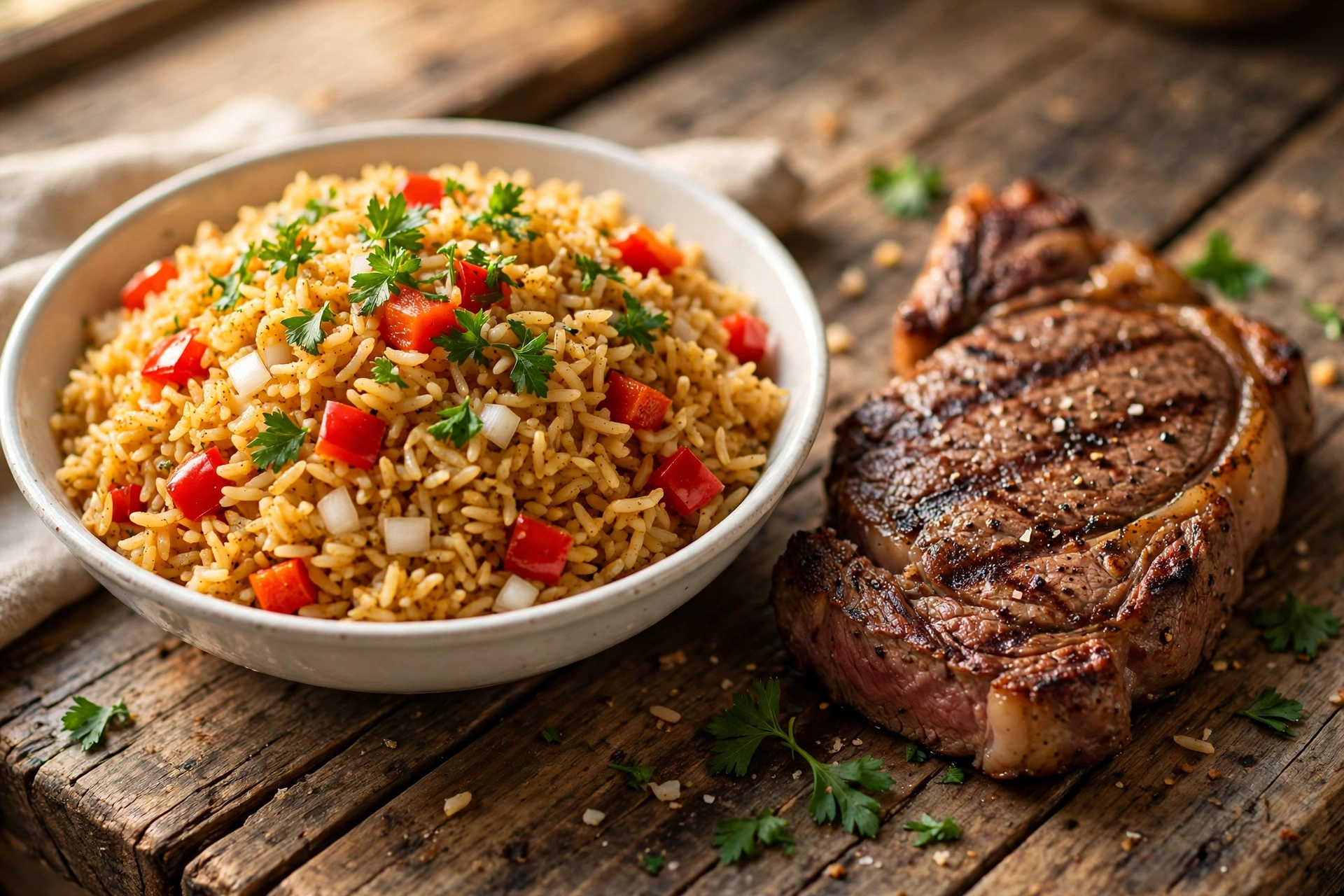
What Is LongHorn Rice Pilaf?
LongHorn rice pilaf is the seasoned rice side dish served at LongHorn Steakhouse, and it has quietly become one of the most talked-about sides on the menu. It is long-grain white rice cooked in seasoned broth until fluffy, then finished with butter, herbs, and colorful vegetables. Fans know it under several names: seasoned rice pilaf LongHorn, LongHorn seasoned rice pilaf, and LongHorn Steakhouse rice pilaf all point to the same dish.
The dish follows the classic pilaf method. The dry rice is first toasted in fat, which gives the grains a light golden color and a nutty depth, and then it simmers in chicken broth instead of plain water. That is why the flavor runs all the way through every grain instead of sitting on the surface. It is a small detail, but it is the reason this side tastes deliberate rather than like an afterthought scooped next to a steak.
LongHorn Steakhouse rice shows up in two roles on the menu. You can order it as one of the sides that come with an entrée, and it also appears underneath certain dishes as the bed the protein is served on. Either way, it is the same fluffy, savory, lightly golden rice that regulars ask for by name.
If you have only ever ordered a baked potato or fries at LongHorn, the rice pilaf is worth trying once. It is lighter than most steakhouse sides, it soaks up steak juices beautifully, and it pairs with almost everything on the menu, from salmon to sirloin.
What Does LongHorn Rice Pilaf Taste Like?
The flavor of LongHorn rice pilaf is savory and buttery first, with a gentle warmth in the background. Fan recipes and menu guides consistently describe the same building blocks: chicken broth, butter, onion, garlic, red bell pepper, and parsley, with a pinch of paprika and black pepper for color and warmth.
It is not a spicy dish. Most diners describe it as mild, comforting, and lightly seasoned rather than hot. The red bell pepper adds a subtle sweetness and a little crunch, while the onion and garlic give it a savory backbone. A touch of turmeric shows up in some fan versions, which explains the pale golden color of the finished rice.
The texture is just as important as the taste. Properly made pilaf has grains that stay separate and fluffy, never sticky or mushy. The butter finish gives it a soft richness, and the vegetables stay just tender enough to add bite. That combination is why it works so well as a base: it catches steak juices, mushroom sauce, and shrimp butter without turning to paste.
Compared with plain steamed rice, the difference is night and day. Plain rice is a neutral filler. LongHorn seasoned rice pilaf tastes like a dish in its own right, which is why so many home cooks have tried to recreate it and why copycat recipes for it are among the most searched LongHorn recipes online.
LongHorn Rice Pilaf Price and Calories (Reported)
LongHorn Steakhouse does not publish one national price for its sides, so every figure below is reported from fan menu guides and is not official. Reported prices for a side of LongHorn seasoned rice pilaf generally fall around $3.49 to $3.99, and some guides list it as typically under $5. Reported calories for a serving generally fall around 220 to 230.
Both numbers vary by location. Prices differ between markets, and portion sizes and preparation can shift the calorie count a little from one restaurant to another. Treat any figure you see online as a planning estimate, and confirm the current price with your local LongHorn before you order.
The value angle is simple: many LongHorn entrées already include a side, so the rice pilaf often costs nothing extra when you pick it as your included side. The à la carte price only applies when you order it as an extra side on top of an entrée. At roughly 220 calories, it is also one of the lighter sides on the menu, sitting well below mac and cheese or a loaded baked potato.
One fan guide notes that LongHorn marks the seasoned rice pilaf as gluten sensitive when prepared without croutons or breading modifications. Guests with celiac disease or a serious gluten sensitivity should still confirm ingredients and preparation with their server at the specific location, since kitchen practices can vary.
LongHorn Seasoned Rice Pilaf Ingredients (As Reported)
LongHorn does not publish its exact recipe, so the ingredient list below is pieced together from fan copycat recipes and menu guides that describe the dish. The most commonly reported ingredients are:
- Long-grain white rice: jasmine or basmati style rice, which stays fluffy and separate after cooking.
- Orzo pasta: a small rice-shaped pasta that some fan versions add for textural contrast, giving the dish its signature mix of tender grains and slightly chewier pasta pieces.
- Chicken broth: the cooking liquid that carries most of the flavor, replacing plain water entirely.
- Butter and olive oil: the fat used to toast the rice and saute the vegetables at the start.
- Onion and garlic: finely diced yellow onion and minced garlic, cooked until soft and fragrant.
- Red bell pepper: diced, for sweetness, color, and a gentle crunch.
- Parsley, thyme, and turmeric: dried parsley and thyme for herbal notes, with a small pinch of turmeric for the golden color.
- Salt and black pepper: the basic seasoning that ties the whole dish together.
Some fan versions also add green onion, a little paprika, or a splash of soy sauce for extra savory depth. The core idea never changes: toast the rice in fat, cook it in broth with aromatics, and let it rest before fluffing. That method is what makes it a pilaf rather than just seasoned rice.
If you are cooking for a vegetarian, the home version is easy to adapt: swap the chicken broth for vegetable broth and keep the same spice blend. The restaurant version is reported to be cooked in chicken broth, so vegetarians should ask their server about the cooking liquid at their location.
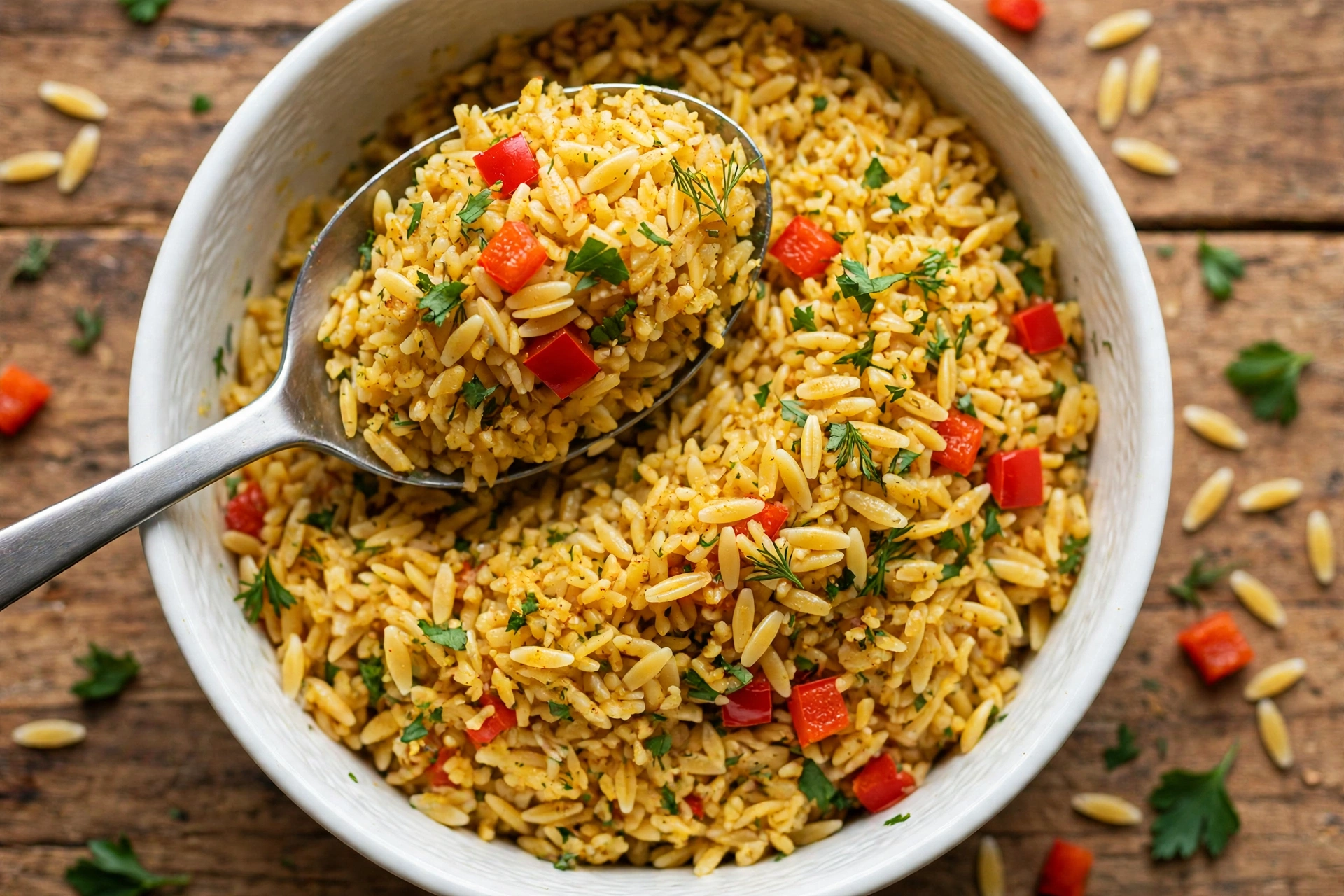
LongHorn Rice Pilaf Recipe: Fan Copycat Version
This is a fan copycat recipe, not an official LongHorn Steakhouse recipe. LongHorn does not publish its exact rice pilaf recipe, so home cooks have reverse-engineered the flavor from taste and from commonly reported ingredients. The version below follows the most widely shared fan method and serves four.
Ingredients
- 1 cup long-grain white rice, uncooked
- 1/3 cup orzo pasta (optional, for the classic texture)
- 2 cups chicken broth (use low-sodium if preferred)
- 3 tablespoons butter
- 1 tablespoon olive oil
- 1/2 medium yellow onion, finely diced
- 1/2 red bell pepper, finely diced
- 2 cloves garlic, minced
- 1 teaspoon dried parsley
- 1/2 teaspoon dried thyme
- 1/4 teaspoon turmeric
- Salt and black pepper to taste
- 2 tablespoons fresh parsley, chopped, for serving
Steps
- Heat the olive oil and 1 tablespoon of the butter in a medium saucepan over medium heat.
- Add the dry rice and orzo and stir constantly for 2 to 3 minutes, until the grains turn lightly golden and smell nutty.
- Add the onion and red bell pepper and cook for 2 to 3 minutes more, until softened.
- Add the garlic, parsley, thyme, and turmeric. Stir for about 30 seconds, until fragrant.
- Pour in the chicken broth and bring the mixture to a boil.
- Reduce the heat to low, cover tightly, and simmer for 15 to 18 minutes, until the liquid is absorbed.
- Remove from the heat and let the rice rest, covered, for 5 minutes.
- Stir in the remaining butter and fresh parsley, fluff with a fork, season to taste, and serve hot.
The whole dish takes about 35 minutes from start to finish, with only about 10 minutes of active work. If you want it a little richer, add an extra tablespoon of butter at the end. If you want it lighter, use olive oil in place of some of the butter. A rice cooker version follows the same idea: toast the rice and vegetables in a pan first, then transfer everything to the rice cooker with the broth and cook as normal.
Leftovers keep well in the fridge for three to four days. Reheat with a splash of water or broth in a covered pan over low heat, or in the microwave with a damp paper towel over the bowl, and the rice comes back fluffy instead of dry.
What Entrees Pair Best With LongHorn Rice Pilaf?
Rice pilaf is one of the most flexible sides on the LongHorn menu because it works with almost every protein the kitchen serves. The pairings guests mention most often are:
- With steak: the rice catches the juices from a sirloin or ribeye, and the savory seasoning echoes the steakhouse rub. This is the classic pairing.
- With salmon: fan cooks call rice pilaf a great alternative to a baked potato with salmon fillets, and the light, buttery rice suits fish better than a heavy side does.
- With grilled chicken: the rice adds a savory backbone that plain sides sometimes lack, and it turns a simple chicken plate into a full meal.
- With shrimp: garlic butter from grilled shrimp melts into the rice and brightens the whole plate.
- With ribs: the rice soaks up rib glaze and barbecue sauce better than almost any other side on the menu.
If you are building a plate from scratch, a good rule is to pair the rice pilaf with one saucy or juicy protein and one fresh or green side, like a house salad or steamed broccoli. That keeps the plate balanced instead of heavy. For family-style meals, the rice travels well in a takeout container and reheats cleanly, which makes it a smart pick for group orders.
The rice pilaf also works as a base under saucy dishes. If your entree comes with a mushroom sauce or a buttery topping, ask for it over the rice and let the pilaf do the work of catching every drop.
LongHorn Rice Pilaf vs Texas Roadhouse Seasoned Rice
LongHorn rice pilaf and Texas Roadhouse seasoned rice are the two most compared steakhouse rice sides, and the comparison is fair: both are savory, broth-cooked, pilaf-style sides served with steak. But they are not the same dish.
LongHorn’s version leans lighter and more herbal. The reported flavor profile centers on chicken broth, butter, onion, garlic, red bell pepper, and parsley, with turmeric giving it a golden color. It reads as a classic rice pilaf: fluffy, mildly seasoned, and built to sit quietly next to a bold steak.
Texas Roadhouse seasoned rice leans bolder and smokier. Fan descriptions point to paprika, chili powder, and a pinch of red pepper flakes on top of the same broth-and-butter base, with French onion soup showing up in the most popular copycat recipes. It has more warmth and a slightly deeper, smokier flavor.
On calories, the reported figures are close: LongHorn rice pilaf is reported at roughly 220 to 230 calories per serving, while Texas Roadhouse seasoned rice is reported at about 360 calories per serving. On price, both are reported in the same range as an a la carte side, roughly $3 to $4, with prices varying by location. Neither chain publishes one national price, so confirm locally.
Which one is better comes down to taste. If you want a lighter, more delicate rice that lets the steak do the talking, LongHorn’s pilaf is the pick. If you want a bolder, smokier rice that stands up on its own, Texas Roadhouse seasoned rice wins. Both are strong choices, and both have earned their fan followings for the same reason: they taste deliberate, not like filler.
LongHorn Rice Pilaf vs Other LongHorn Sides
LongHorn has a deep side menu, so it helps to know where rice pilaf fits. Compared with a baked potato, it is lighter and less starchy, and it handles sauces better. Compared with mac and cheese, it is far less rich and much lower in reported calories. Compared with fries, it is softer, holds up better as leftovers, and soaks up sauces instead of going soggy.
Compared with steamed broccoli or a house salad, the rice pilaf is more filling and more seasoned, but it is also heavier. For guests watching calories, reported figures put the rice pilaf at roughly 220 calories, which sits in the middle of the side menu: lighter than mac and cheese or a loaded baked potato, heavier than green beans or steamed vegetables.
It is also one of the few sides that works as both a side and a base. Mashed potatoes can do the same job under gravy, but rice handles shrimp butter, mushroom sauce, and steak juices in a way potatoes do not quite match. If you are deciding between sides and you want the most flavor per bite without the heaviness of cheese or cream, rice pilaf is one of the strongest choices on the list.
For a drink to go with it, the rice pilaf pairs well with anything from iced tea to a cold beer.
Tips for Ordering LongHorn Seasoned Rice Pilaf
A few practical tips make the side work harder for you. First, if your entree already comes over rice, spend your side pick elsewhere so you do not end up with rice twice. Second, ask for the rice pilaf as your side with saucy entrees like ribs or mushroom-topped steak, where it earns its place.
Third, if you are ordering to-go, rice pilaf travels well. It holds its texture in a closed container better than fries do, and it reheats cleanly with a splash of water. That makes it a smart pick for family takeout orders and for next-day lunches from leftovers.
Fourth, if you are trying to keep the meal lighter, pair the rice pilaf with grilled fish or chicken and a green vegetable instead of a second starchy side. The rice is filling enough on its own that you do not need a baked potato next to it.
Finally, if you are deciding between LongHorn and another steakhouse for dinner, the rice pilaf is a small but real differentiator. It is one of those sides that regulars come back for, and it is worth ordering once just to see whether it becomes your default side too.
Why LongHorn Rice Pilaf Has a Cult Following
Most chain-restaurant sides are forgettable. LongHorn rice pilaf is not, and the reason is that it tastes deliberate. It is not a filler scooped next to a steak; it is a small dish with its own seasoning logic, and guests notice the difference.
It also photographs and talks well. Food writers and copycat creators keep returning to it because the flavor is distinctive enough to describe but simple enough to recreate at home. That loop of restaurant visits, home attempts, and online recipes keeps the dish in conversation long after the meal ends.
The search numbers back that up. Fans search for LongHorn rice pilaf, seasoned rice pilaf LongHorn, LongHorn Steakhouse rice, and LongHorn rice recipes in large numbers, and the copycat recipes are among the most shared LongHorn recipes online. A side dish does not get that kind of attention unless it is genuinely good.
If you have never tried it, order it once as your side with a steak or salmon. It is a low-risk experiment: if you love it, you have found a new default side. If not, the rest of the LongHorn side menu is deep enough that you will not run out of options.
Frequently Asked Questions About LongHorn Rice Pilaf
What is LongHorn rice pilaf?
LongHorn rice pilaf is the seasoned rice side dish at LongHorn Steakhouse, also called seasoned rice pilaf LongHorn or LongHorn seasoned rice pilaf. It is long-grain white rice toasted in butter, then cooked in chicken broth with onion, garlic, red bell pepper, and parsley until fluffy and golden.
How much does LongHorn rice pilaf cost?
Reported prices for a side of LongHorn rice pilaf generally fall around $3.49 to $3.99, with some guides listing it as typically under $5. LongHorn does not publish one national price, so prices vary by location. Confirm the current price with your local restaurant.
How many calories are in LongHorn rice pilaf?
LongHorn rice pilaf is reported at roughly 220 to 230 calories per serving. That is a reported figure from fan menu guides, not an official national listing, and the exact value can vary by location and portion.
What is in LongHorn seasoned rice pilaf?
As reported by fan recipes and menu guides, LongHorn seasoned rice pilaf contains long-grain white rice, sometimes with orzo pasta, cooked in chicken broth with butter, onion, garlic, red bell pepper, parsley, thyme, and a pinch of turmeric. LongHorn does not publish its exact recipe.
Can I make LongHorn rice pilaf at home?
Yes, with a fan copycat recipe. Home versions toast long-grain rice and orzo in butter and olive oil, add onion, red bell pepper, garlic, and herbs, then simmer in chicken broth for 15 to 18 minutes and rest for 5 minutes before fluffing. This is a fan recreation, not the official restaurant recipe, which LongHorn does not publish.
Is LongHorn rice pilaf gluten-free?
Fan guides report that LongHorn marks the seasoned rice pilaf as gluten sensitive when prepared without croutons or breading modifications. However, broth and kitchen preparation can introduce gluten, so guests with celiac disease or a serious gluten sensitivity should confirm ingredients with their local restaurant before ordering.
Is LongHorn rice pilaf vegetarian?
The restaurant version is reported to be cooked in chicken broth, so it is generally not considered vegetarian. If you need a vegetarian version, make the copycat recipe at home with vegetable broth, or ask your server about the cooking liquid at your location.
What entrees pair best with LongHorn rice pilaf?
Rice pilaf pairs best with steak, salmon, grilled chicken, shrimp, and ribs. It catches steak juices and sauces well, and it is light enough to sit next to fish without overwhelming it. It also works as a base under saucy entrees like mushroom-topped steak.
How is LongHorn rice pilaf different from Texas Roadhouse seasoned rice?
LongHorn rice pilaf leans lighter and more herbal, with chicken broth, red bell pepper, parsley, and turmeric. Texas Roadhouse seasoned rice leans bolder and smokier, with paprika, chili powder, and red pepper flakes. Both are broth-cooked pilaf-style sides, and both are reported in a similar price range.
Does LongHorn rice pilaf travel well for takeout?
Yes, it is one of the best takeout sides on the menu. It holds its texture in a closed container better than fries, and it reheats well with a splash of water or broth. It is also a strong side choice for family takeout packs.