If you have ever stared at the Texas Roadhouse menu and wondered whether the Texas Roadhouse Killer Ribs are a starter, a meal, or a dare, you are not alone. The name sounds like a challenge, the portion looks like a meal, and the menu lists it under “Just for Starters” — yet plenty of regulars order it as their whole dinner.
This guide answers every question people actually ask about the Texas Roadhouse Killer Ribs: what they are, how many ribs you get, what they cost, how many calories they carry, how they differ from the Fall-Off-The-Bone Ribs entree, what sauces you can choose, and whether they are worth ordering. Prices are reported from recent menu guides and vary by location, so treat every dollar figure here as a reported range and confirm locally before you order.
What Are Texas Roadhouse Killer Ribs?
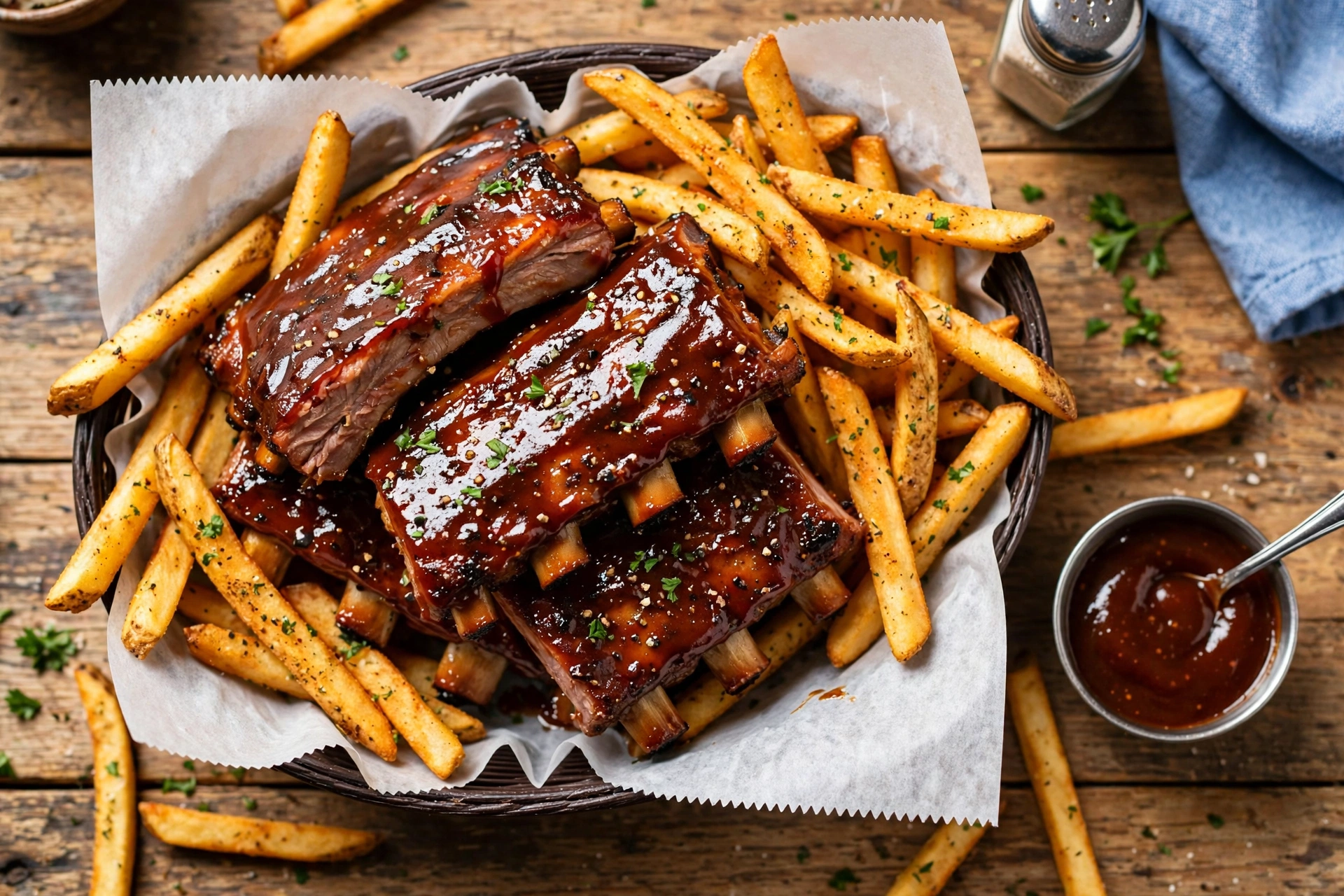
The Texas Roadhouse Killer Ribs are a basket of the restaurant’s fall-off-the-bone pork ribs, coated in the chain’s signature barbecue sauce and served with seasoned steak fries. They sit on the “Just for Starters” section of the menu, which is why many first-time visitors assume they are a small appetizer. In practice, they are a serious portion of food.
According to Texas Roadhouse’s own menu training materials, the Killer Ribs are a 4-bone portion of the restaurant’s fall-off-the-bone ribs with seasoned steak fries, served in a deli-lined basket with a wet nap on request. That 4-bone figure is the detail most menu guides skip, and it explains a lot about how to order: the Killer Ribs are the smallest ribs serving on the menu, smaller than a half slab and much smaller than a full slab.
The ribs themselves are pork baby back ribs — also called pork loin back ribs — the same cut used for the full Fall-Off-The-Bone Ribs entree. They are not beef ribs at Texas Roadhouse locations in the United States. (The chain serves beef ribs at some Middle Eastern locations, but that does not apply to US restaurants.) Baby backs are smaller, leaner, and more curved than spare ribs or St. Louis-style ribs, and they are the cut that pulls cleanly away from the bone when cooked low and slow.
What makes them “killer” is not heat. The sauce is sweet and smoky, not spicy, and the name is about the portion and the flavor rather than any chili burn. If you want heat, you will need to ask for jalapeños or hot sauce on the side — the ribs themselves are not a spicy dish.
Texas Roadhouse Killer Ribs vs Fall-Off-The-Bone Ribs: Same Ribs, Different Serving
This is the single most confusing thing about the Texas Roadhouse ribs menu, so let us settle it plainly: the Killer Ribs and the Fall-Off-The-Bone Ribs are the same ribs. The difference is the serving size, the section of the menu, and what comes with them.
The Fall-Off-The-Bone Ribs is the name of the entree, sold as a half slab or a full slab and served with two made-from-scratch sides plus the endless fresh-baked rolls. The Killer Ribs is the appetizer version — a smaller 4-bone basket served with steak fries instead of two sides. Same meat, same seasoning, same sauce, same cooking process. Only the portion and the plate change.
Here is how the three servings compare:
| Serving | Bones (reported) | Calories (reported) | Comes with | Menu section |
|---|---|---|---|---|
| Killer Ribs (appetizer) | 4 bones | 910 | Seasoned steak fries | Just for Starters |
| Fall-Off-The-Bone Ribs, half slab | 6–7 bones | 900 | Two made-from-scratch sides | Hand-cut steaks & ribs / entrees |
| Fall-Off-The-Bone Ribs, full slab | 10–11 bones | 1,450 | Two made-from-scratch sides | Hand-cut steaks & ribs / entrees |
| Rib Sidekick (add-on) | 4–5 bones | About 550 | Added to any entree | Add-on |
Yes, the calorie numbers look odd at first glance: the 4-bone Killer Ribs appetizer is listed at 910 calories while the 6–7 bone half slab is listed at 900. The reason is the steak fries that come in the Killer Ribs basket — the fries add a large share of the calories — while the half slab figure is generally quoted for the ribs with standard sides counted separately. Do not read the table as saying four bones have more calories than seven. The basket and the plate are counted differently, and that is exactly why you should treat menu calorie figures as guidance for the dish as served, not as a per-bone calculation.
There is also a fourth way to get the same ribs: the Rib Sidekick, a 4–5 bone portion that can be added to any entree. If you want steak and ribs together without ordering a full combo, the Sidekick is the quiet option most people never notice on the menu.

How Much Do Texas Roadhouse Killer Ribs Cost?
Here is the honest answer: it depends on your location, and the sources do not agree on a single number. Texas Roadhouse sets prices at the local level, and recent menu guides report the Killer Ribs appetizer anywhere from about $8.99 to about $14.99. The most commonly reported recent figures cluster around $12.99 to $13.49, with one national guide listing $13.49 and noting a range from $12.52 in North Carolina to $14.99 in Oregon. Older guides from 2025 list $8.99 to $11.99, which mostly reflects price increases since then rather than a different dish.
The Fall-Off-The-Bone Ribs entree shows the same spread. Recent guides report the half slab at roughly $13.99 to $20.49 and the full slab at roughly $19.99 to $25.99, with the most commonly cited recent figures around $18.49 to $20.49 for a half slab and $24.49 to $25.99 for a full slab. One widely cited guide lists the full slab at $24.99, and another puts the half slab at $18.99. A few guides still show older figures near $17.99 for a half slab and $22.99 for a full slab.
So what should you actually expect to pay? As a planning range for 2026, use about $12 to $15 for the Killer Ribs appetizer, about $18 to $21 for a half slab, and about $24 to $26 for a full slab — and check your local restaurant’s menu or the app before you go, because airport and big-city locations run higher. Texas Roadhouse itself advises guests to select their preferred location and start an online order to see local prices, which is the most reliable way to get the exact number.
One more price note: some diners have noticed the full slab climbing from around $18.99 to around $25.99 over the past couple of years, and a few reviews call the ribs out as the one Texas Roadhouse item that no longer feels cheap. Compared with other chains, though, the ribs still tend to come out ahead on value — Tasting Table’s comparison of Texas Roadhouse and Outback Steakhouse ribs found Texas Roadhouse cheaper for a half slab, and its chain-ribs ranking put Texas Roadhouse at number one overall.
Texas Roadhouse Killer Ribs Calories and Nutrition
The calorie figures for the ribs are more consistent across sources than the prices, which makes them easier to trust — with one caveat about what is included.
- Killer Ribs appetizer: 910 calories, as listed across nearly every current menu guide. This includes the steak fries in the basket.
- Fall-Off-The-Bone Ribs, half slab: 900 calories for the ribs. Sides are counted separately, so your plate total depends on what you choose.
- Fall-Off-The-Bone Ribs, full slab: 1,450 calories in most current guides, though at least one widely used guide lists 1,340. The difference is likely a recipe or portion revision between guide updates; either way, a full slab is a very large meal.
- Family Sized Ribs: three full racks, listed at about 4,020 calories in one current guide — built for sharing, not for one person.
For protein and fat, one current nutrition table lists the full rack at about 96 grams of protein and 88 grams of fat, and the half slab at about 48 grams of protein and 44 grams of fat. Those figures come from a third-party menu guide, not from a published official nutrition sheet, so treat them as approximate.
What about allergens and dietary notes? The ribs are covered in the chain’s signature barbecue sauce unless you ask otherwise, and the sauce contains sugar. Gluten-free diners should note that some guides list the ribs as gluten-free only when ordered without barbecue sauce — but that is a third-party claim, and Texas Roadhouse’s own allergen information is the authority. Ask your server and check the current allergen guide at the restaurant rather than relying on a menu blog.
How Texas Roadhouse Cooks Its Ribs
The reason the ribs fall off the bone is the cooking process, not a trick of the sauce. Texas Roadhouse cooks its ribs low and slow in a three-step method: season, slow-cook, and grill. A Texas Roadhouse chef told a Minnesota news station that the ribs cook at about 200°F for roughly 10 hours, sitting on a rack above water and liquid smoke so they stay moist without sitting in liquid. When a guest orders ribs, the already-cooked rack goes onto a hot grill for a few minutes, where it is turned and basted with barbecue sauce until the sauce caramelizes.
Some sources describe the whole thing as a three-day process. That figure covers the full preparation cycle — seasoning, holding, cooking, resting, and staging across batches — while 10 hours is the oven time for a given batch. Our full guide to how Texas Roadhouse cooks ribs works through the conflicting numbers, the seasoning, the grill finish, and a copycat method for home cooks, so we will not repeat the whole process here. The short version is that the ribs arrive at the grill already tender, and the grill’s job is char, smoke, and sauce — not cooking.
Two details from that process matter when you order. First, the seasoning is a dry rub applied heavily on both sides before the long cook, and it is the same rub whether you order the Killer Ribs appetizer or a full slab. Second, the sauce goes on at the grill, at the end, which is why it stays glossy and sticky instead of burning during the long oven cook.
Sauce Options for the Killer Ribs
The default is the chain’s signature barbecue sauce — sweet, smoky, and tangy, applied on the grill. But you do have choices, and the menu training materials list them plainly:
- Signature BBQ sauce (default): the standard finish, basted on during the grill step.
- Extra BBQ sauce: ask for more sauce, either basted on or served on the side for dipping.
- Remove BBQ sauce: order the ribs without sauce. Some guides describe this as a “dry rub only” order — the seasoned crust without the glaze.
- Sauce on the side: the ribs come dry-rubbed and the sauce arrives in a cup, which is the best option if you like to control how much sauce is on each bite.
- Ranch or honey mustard for dipping: not a rib sauce, but a common request for the steak fries in the basket.
One thing the sources do not confirm is a second barbecue sauce flavor. Some menu blogs mention “two types of barbecue sauces” as a customization option, but the chain’s own materials and the most detailed guides describe a single signature sauce with remove-or-extra as the choice. Do not expect a spicy, vinegar, or mustard sauce option at most locations — the house sauce is the sauce. If your location offers a regional variant, it is the exception, not the rule.
What Sides Come With the Killer Ribs?
The Killer Ribs appetizer comes with seasoned steak fries in the basket. That is the whole side situation for the appetizer — no second side, no salad, no choice of two sides the way the entree offers. You can ask to substitute the steak fries for a different side, and guides report that servers will generally swap in mashed potatoes, green beans, or another standard side, though whether a substitution costs extra varies by location.
The Fall-Off-The-Bone Ribs entree, by contrast, comes with two made-from-scratch sides of your choice, plus the fresh-baked rolls with cinnamon butter that come with every entree. Good pairings for ribs include a loaded baked potato, seasoned rice, green beans, or buttered corn — and if you are ordering the Killer Ribs as a meal, adding a side salad or a cup of chili is the simplest way to round it out.
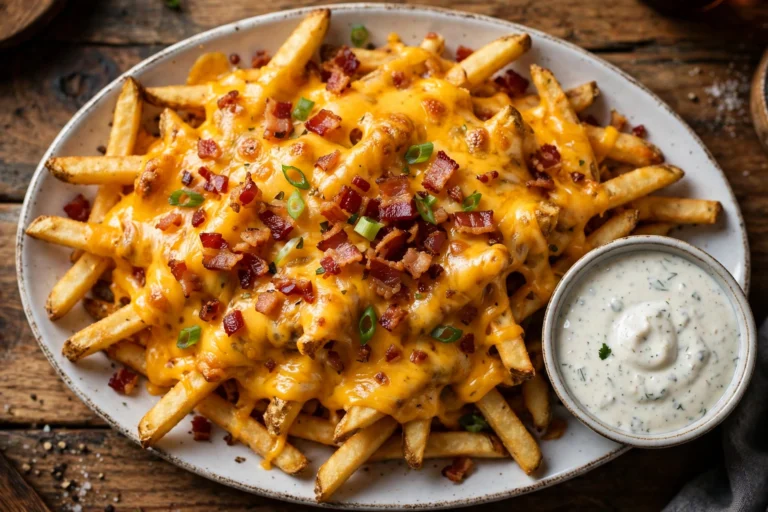
If you are pairing the ribs with another appetizer at the table, the Texas Roadhouse Cheese Fries are the natural match — the same seasoned steak fries, smothered in cheddar and bacon bits — though be warned that two fry dishes at one table is a lot of potato. A lighter pairing is the house salad or the grilled shrimp skewer.
Are Texas Roadhouse Killer Ribs Worth It?
For most people, yes — with one honest caveat. Tasting Table ranked Texas Roadhouse ribs first in its ranking of chain restaurant ribs, calling the meat tender and juicy with the ideal ratio of smoky and sweet sauce, and noting that the meat literally fell off the bone. Its appetizer ranking put the Killer Ribs at number two overall, specifically because the basket works as a full meal replacement: ribs plus fries for roughly the price of a sandwich elsewhere.
Reddit reviewers are similarly enthusiastic, with the quotes that keep resurfacing in roundups: “beautiful delicious crust and fall-off-the-bone, melt-in-your-mouth tender,” “as far as chains go, they make the most solid rib,” and “I’ve had them probably over 100 times in my life.” One regular wrote that Texas Roadhouse ribs are “consistently the best of any restaurant I have tried,” and that they are “always tender, juicy and fall off the bone” with a sauce that is “delicious and tangy” and “made like this every time.”
The caveat is that the ribs are not real barbecue in the competition sense, and the chain’s critics say so openly. The ribs are cooked in an oven, not a smoker, and barbecue purists on Reddit call them “shortcut ribs” — one wrote that “you could scrape enough sauce off of them to refill a bottle.” Even the critics usually concede that Texas Roadhouse makes one of the better versions of shortcut ribs. If you want smoke-ring barbecue from a pit, this is not that. If you want tender, saucy, consistent ribs at a chain price, it is exactly that.
There are also a few complaints worth knowing about. Some recent reviewers say the meat does not fall off the bone the way it used to, and one Tripadvisor reviewer counted only four bones in a half rack that they expected to have at least six. Portion and quality can vary by location and by night, and the ribs are one of the dishes where a bad night shows. If your ribs arrive dry or short on bones, tell the server — one reviewer reported that the manager removed the ribs from the bill after a quality complaint.
How to Order Killer Ribs Like a Regular
A few practical tips drawn from the menu guides and from regulars:
- Order it as your meal. The Killer Ribs basket plus a side salad is a full dinner for most appetites, and it costs less than the half slab entree. Tasting Table’s reviewers explicitly recommend it as a full-meal replacement.
- Ask for sauce on the side if you like it saucy but not soaked. The ribs come well coated by default, and sauce on the side lets you add more without drowning the seasoned crust.
- Try the dry-rub version once. Ordering without sauce lets you taste the seasoning crust itself, which is the part of the ribs that the grill chars and caramelizes.
- Pair with the Chicken Critters for a combo. The ribs and Chicken Critters combo pairs a rib portion with hand-battered chicken tenders — our guide to Texas Roadhouse Chicken Critters covers that combination and its reported prices.
- Skip it for takeout if you can. The ribs travel better than the cheese fries, but the sauce and the fries both lose something in a closed container, and several reviewers report that carryout is the weakest version of the dish. Dine-in is the better bet.
- Check the Early Dine menu. A half rack of ribs has been reported as one of the rotating Early Dine entrees at some locations, which can make the same ribs significantly cheaper before the dinner rush. Availability is set location by location.
Texas Roadhouse Killer Ribs vs Other Chains
The obvious comparison is Outback Steakhouse, the other big casual chain with a rib plate. Tasting Table’s head-to-head found Texas Roadhouse cheaper for a half slab and better on flavor and variety, with both chains taking top honors in the overall chain-ribs ranking. Outback’s ribs are generally described as a sweeter, more glazed plate; Texas Roadhouse leans on the seasoned crust and the tangy-sweet sauce.
Against LongHorn Steakhouse, the difference is texture more than price. Both chains start with pork baby back ribs and finish on the grill, but Texas Roadhouse cooks low and slow for about 10 hours at 200°F, while LongHorn cooks on higher heat for a shorter time. The result is that Texas Roadhouse ribs are built to fall off the bone, while LongHorn’s generally hold together with a little more bite. If you want meat that slides off the bone, order Texas Roadhouse. If you prefer a firmer bite, LongHorn is the better call.
Frequently Asked Questions About Texas Roadhouse Killer Ribs
What are Texas Roadhouse Killer Ribs?
The Texas Roadhouse Killer Ribs are a 4-bone portion of the restaurant’s fall-off-the-bone pork baby back ribs, coated in signature barbecue sauce and served in a basket with seasoned steak fries. They are listed as an appetizer under “Just for Starters,” but many guests order them as a full meal.
How much do Texas Roadhouse Killer Ribs cost?
Reported prices vary by location. Recent menu guides list the Killer Ribs appetizer at roughly $12 to $15, most commonly around $12.99 to $13.49, with older guides showing $8.99 to $11.99. Prices vary by location, so confirm locally — Texas Roadhouse itself advises checking your location’s menu or app for the current price.
How many calories are in Texas Roadhouse Killer Ribs?
The Killer Ribs appetizer is listed at 910 calories, including the steak fries in the basket. The half slab of Fall-Off-The-Bone Ribs is listed at 900 calories for the ribs alone, and the full slab at 1,450 calories (one guide lists 1,340). Sides add calories on top of those figures.
Are Texas Roadhouse Killer Ribs the same as Fall-Off-The-Bone Ribs?
Yes. They are the same pork baby back ribs, with the same seasoning, sauce, and cooking process. The Killer Ribs are the smaller appetizer serving (4 bones with steak fries), while Fall-Off-The-Bone Ribs is the entree name for the half slab (6–7 bones) or full slab (10–11 bones) served with two sides.
Are fall off the bone ribs Texas Roadhouse pork or beef?
At US locations, Texas Roadhouse ribs are pork — specifically pork baby back ribs, also called pork loin back ribs. Some Middle Eastern Texas Roadhouse locations serve beef ribs instead, but that does not apply to restaurants in the United States.
What is the difference between a half rack and a full rack of ribs?
A half slab is 6–7 bones and about 900 calories for the ribs, while a full slab is 10–11 bones and about 1,450 calories. Both come with two made-from-scratch sides and rolls. The half rack suits a normal appetite or a shared meal; the full rack is a very large portion for one person.
What sauce comes on Texas Roadhouse Killer Ribs?
The default is the chain’s signature barbecue sauce — sweet, smoky, and tangy — basted on during the grill finish. You can ask for extra sauce, sauce on the side, or no sauce at all (dry rub only). Ranch or honey mustard can be requested for dipping the fries.
Are Texas Roadhouse Killer Ribs spicy?
No. The ribs are seasoned with a sweet and smoky barbecue sauce and are not spicy by default. If you want heat, ask for jalapeños or hot sauce on the side.
Can you get Killer Ribs to go?
Yes, the Killer Ribs are available for takeout and curbside pickup at most locations. They travel better than many appetizers, but reviewers note that the fries soften and the sauce settles in a closed container, so dine-in is the better experience if you have the choice.
Are Texas Roadhouse Killer Ribs worth the price?
Most reviewers say yes. Tasting Table ranked Texas Roadhouse ribs first among chain restaurants, and the Killer Ribs basket is widely recommended as a full-meal replacement at appetizer pricing. The main complaints are about portion variation and recent price increases, so value depends on your location — and the ribs are at their best eaten fresh in the restaurant.