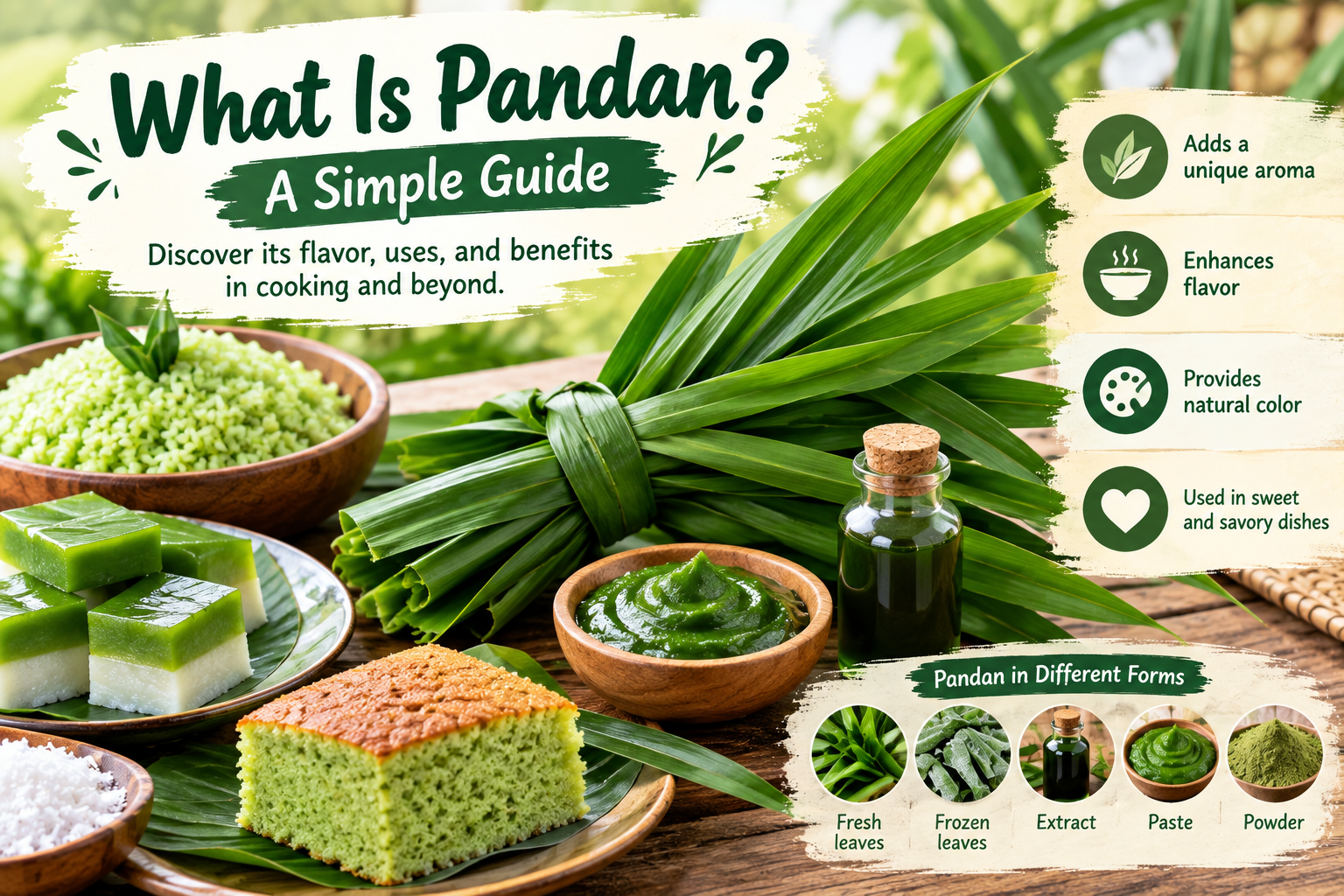
What is pandan It is a tropical plant with long, slender green leaves, and its sweet, fresh fragrance is a signature of Southeast Asian cooking. Cooks use the leaves to flavor rice, desserts and drinks, and to give them a soft natural green color. It is especially common in Thailand, Indonesia, Malaysia, Singapore and the Philippines.
If you have ever eaten a coconut dessert, a bowl of fragrant rice or a green-tinted drink in Asia, you have probably already tasted pandan. A single leaf can change the smell of a whole pot of food.
What Is Pandan Used For?
Pandan is valued mostly for its leaves. Fresh leaves are often tied into a knot and dropped into rice, soups, curries or desserts while they cook. Like a bay leaf, they are usually taken out before serving.
Pandan in Sweet Recipes
Pandan is at its best in desserts. Its mild aroma pairs well with coconut, rice flour, palm sugar and other tropical flavors.
You will find it in cakes, puddings, custards, jelly, ice cream and sweet rice dishes. When a recipe needs a stronger flavor or a deeper green, cooks reach for pandan extract or paste.
Pandan in Savory Dishes
Pandan is not only for sweets. Whole leaves can scent steamed rice, chicken and other savory dishes.
One popular technique is to wrap food in pandan leaves before cooking. The leaf gives the food a delicate fragrance and makes an attractive package.
What Does Pandan Taste Like?
Pandan’s aroma is hard to compare with any single ingredient. Most people describe it as sweet, floral, grassy and slightly nutty.
Some compare it to vanilla or freshly cooked rice, but pandan has a character of its own. That is a big part of why cooks keep using it.
Fresh leaves give a gentle flavor. Extracts and pastes are much more concentrated, so a little goes a long way.
Pandan Leaves and Other Forms
Pandan comes in several forms, and the best one depends on what you are making.
| Pandan Form | Common Use | Key Feature |
| Fresh leaves | Rice and desserts | Natural fragrance |
| Frozen leaves | Cooking | Handy when fresh is hard to find |
| Pandan extract | Cakes and drinks | Concentrated flavor |
| Pandan paste | Desserts | Flavor and green color |
| Pandan powder | Baking | Easy to measure |
| Pandan juice (homemade) | Cakes, puddings and drinks | Fresh taste with no additives |
| Pandan syrup | Drinks and shaved ice | Ready to use |
| Dried leaves | Tea and infusions | Long shelf life |
Fresh leaves are usually the first choice when you can get them, thanks to their natural aroma. Frozen leaves are a good backup when fresh pandan is hard to find.
How to Use Pandan at Home
Using pandan at home is easy. Rinse fresh leaves under clean water to remove dirt, then cut them into shorter pieces or tie them in a loose knot.
Adding Pandan to Rice
Put one or two clean leaves into the rice cooker with the rice and water. As the rice cooks, the leaves release their scent.
Take the leaves out before serving. You end up with fragrant rice that has a light tropical aroma.
Making Pandan Juice
When a recipe needs more flavor, blend the leaves with a little water and strain the liquid. You can add this juice to cakes, drinks, puddings and other recipes.
Store-bought pandan extract and paste also work well. Check the label first, because strength and ingredients differ between brands.
Why Is Pandan So Popular?
Pandan is popular because it is so versatile. A small amount can turn an ordinary recipe into something fragrant that people remember.
It also has deep roots in Southeast Asian food culture. Families have cooked with pandan leaves for generations, especially in rice dishes and festive desserts.
Lately, pandan has caught on outside Asia too. Bakers, chefs and home cooks now use it in cookies, cakes, drinks and frozen desserts.
How to Choose and Store Pandan
When you buy fresh pandan, look for leaves that are green and firm, without big brown or damaged patches. They should smell fresh and sweet.
Keep fresh pandan in the refrigerator and use it soon for the best quality. If you cannot use it quickly, freeze it.
Frozen leaves can lose some texture after thawing, but they still work well for flavoring rice, soups and desserts.
Final Thoughts
Now that you know what pandan is, you can see why it turns up in so many Asian kitchens. Its fragrant leaves add character to both sweet and savory food without any complicated technique.
From scented rice and classic desserts to modern cakes and cold drinks, pandan has plenty of uses. If you have never cooked with it, start with a simple pot of rice or an easy dessert and smell the difference for yourself.
Frequently Asked Questions About Pandan
Is pandan a fruit or vegetable?
Neither. Pandan is a tropical plant, and its leaves are used as a fragrant herb in cooking.
Can you eat pandan leaves?
The leaves are tough and fibrous, so they are used for flavor and usually removed before eating.
Does pandan taste like vanilla?
It can have sweet, vanilla-like notes, but its flavor is also floral and grassy.
Can I use frozen pandan leaves?
Yes. Frozen leaves are a handy substitute for fresh ones.
Where can pandan be used?
In rice, desserts, cakes, drinks, curries and many other recipes.