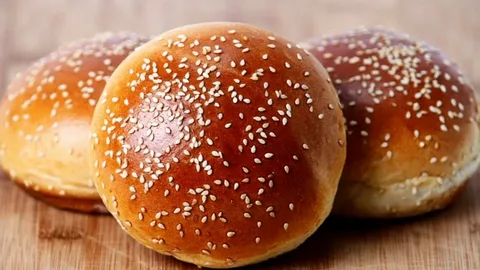
A great burger deserves a great bun. If you have ever made homemade burgers only to find that the bread is dry, too dense, or falls apart under a juicy patty, this hamburger buns recipe is worth trying.
These homemade hamburger buns are soft and fluffy on the inside, lightly golden on top, and sturdy enough to hold a juicy beef patty, cheese, sauces, and your favorite toppings. The dough uses simple ingredients and doesn’t require any complicated baking techniques.
The secret is keeping the dough soft, allowing enough time for it to rise, and avoiding the temptation to add too much flour.
Why You’ll Love This Hamburger Buns Recipe
Homemade buns taste fresher than packaged buns, but the biggest advantage is texture. These buns have a tender crumb without being so delicate that they collapse when filled.
This recipe makes 8 medium hamburger buns and works well for classic beef burgers, chicken burgers, veggie burgers, and pulled meat sandwiches.
You can also prepare them ahead of time and freeze them for later.
Ingredients
For 8 hamburger buns, you’ll need:
- 3 ½ cups all-purpose flour
- 1 cup warm milk
- 1 large egg
- 2 tablespoons unsalted butter, softened
- 2 tablespoons sugar
- 2 ¼ teaspoons instant yeast
- 1 teaspoon salt
- 1 tablespoon melted butter or egg wash for the tops
- Sesame seeds, optional
Milk, egg, and butter give the buns their soft, tender texture, while yeast creates the light structure you want in a burger bun. Similar enriched doughs are commonly used in successful homemade hamburger bun recipes.
How to Make Hamburger Buns
1. Make the Dough
Add the warm milk, yeast, sugar, egg, softened butter, flour, and salt to a large mixing bowl.
Mix until the ingredients come together into a soft dough. Knead by hand for about 8–10 minutes, or use a stand mixer with a dough hook for around 5–6 minutes.
The dough should become smooth and elastic.
Don’t worry if it feels slightly sticky. A softer dough generally produces softer buns, and adding too much flour can make the finished bread heavy and dry.
2. Let the Dough Rise
Place the dough in a lightly greased bowl and cover it with a clean kitchen towel or plastic wrap.
Leave it in a warm, draft-free place for about 1 hour, or until it has roughly doubled in size.
The exact time can vary depending on room temperature, so look at the dough rather than relying only on the clock.
3. Divide and Shape the Buns
Gently remove the risen dough from the bowl and place it on a lightly floured surface.
Divide it into 8 equal portions. If you have a kitchen scale, weighing the pieces will help you make evenly sized hamburger buns.
Shape each piece into a smooth ball by pulling the edges underneath and gently rolling it against the work surface.
Place the dough balls on a parchment-lined baking sheet, leaving enough space between them.
4. Let the Buns Rise Again
Cover the shaped buns loosely and let them rise for another 30–45 minutes.
This second rise is important. It helps the buns become lighter and fluffier instead of dense.
The buns are ready for baking when they look noticeably puffed. If you gently press one with a fingertip, the indentation should slowly spring back.
5. Add the Topping
Preheat your oven to 375°F (190°C).
Brush the tops lightly with beaten egg for a shiny golden finish. If you prefer a softer, slightly less glossy top, melted butter also works.
Sprinkle sesame seeds over the buns if desired.
Egg wash and sesame seeds are commonly used in classic hamburger bun recipes to create a golden, attractive finish and add a little texture.
6. Bake
Bake the hamburger buns for approximately 15–20 minutes, or until the tops are golden brown.
Transfer them to a wire rack and allow them to cool before slicing.
Try not to cut the buns while they are very hot. Cooling gives the interior time to finish setting, which helps prevent a gummy texture.
How Do You Make Hamburger Buns Soft and Fluffy?
The most important factor is the dough’s moisture level.
Don’t keep adding flour just because the dough feels slightly sticky. A soft dough produces a softer bun, while excessive flour can make the bread dense.
Proper proofing is equally important. If the dough doesn’t rise enough, the buns can be heavy. If it rises too much, the dough may lose structure.
For the best results, look for dough that becomes smooth, elastic, and noticeably puffy during both rises.
How Do You Keep Homemade Burger Buns From Falling Apart?
The bun needs enough structure to support the burger.
Don’t make the dough excessively wet, and make sure it is kneaded enough to develop its structure. The final buns should be soft but not fragile.
For especially juicy burgers, slice the cooled buns and lightly toast the cut sides in a skillet. Toasting adds flavor and creates a slight barrier that helps the bread handle sauces and burger juices.
Can You Freeze Homemade Hamburger Buns?
Yes. Hamburger buns freeze very well.
Allow the buns to cool completely, then wrap them individually or place them in a freezer-safe bag with as much excess air removed as possible.
For the best texture, use them within about 2–3 months.
When you’re ready to eat them, thaw at room temperature and warm briefly in the oven. Homemade bun recipes from major recipe publishers also recommend freezing buns for later use.
Common Hamburger Bun Mistakes
Adding too much flour: This is one of the easiest ways to end up with dry, heavy buns.
Not allowing enough rising time: Yeast needs time to create the air pockets that make the bread fluffy.
Making uneven dough balls: Different-sized buns will bake at different speeds.
Overbaking: Take the buns out once they are nicely golden. Excessive baking can dry them out.
Slicing while hot: Let the buns cool first for a better crumb and cleaner slices.
Easy Ways to Customize Your Burger Buns
Once you have the basic recipe mastered, you can easily change the topping or flavor.
Try sesame seeds for a classic burger-bun finish, or use everything seasoning, poppy seeds, or a mixture of seeds.
For a richer bun, increase the butter slightly. For smaller burgers or sliders, divide the dough into more portions and reduce the baking time while watching the color carefully.
These buns are also useful beyond hamburgers. Use them for chicken sandwiches, pulled pork, breakfast sandwiches, or veggie burgers.
Frequently Asked Questions
Can I make hamburger buns without a stand mixer?
Absolutely. Mix the dough in a bowl and knead it by hand until smooth and elastic. It may take a few extra minutes, but a stand mixer isn’t essential.
Why are my hamburger buns dense?
Dense buns usually come from too much flour, insufficient kneading, inactive yeast, or not allowing the dough enough time to rise.
Can I make hamburger buns ahead of time?
Yes. Bake them completely, cool them, and store them in an airtight container for short-term use or freeze them for longer storage.
Should hamburger buns be toasted?
Toasting isn’t required, but it is highly recommended for juicy burgers. A lightly toasted cut side adds flavor and helps the bun stay intact when you add sauces and toppings.
Final Thoughts
Making homemade hamburger buns is easier than it may seem. With basic pantry ingredients, a little patience, and the right dough consistency, you can make soft, fluffy buns that are far better suited to a homemade burger than dry, store-bought bread.
The key is simple: keep the dough soft, don’t overload it with flour, give it enough time to rise, and don’t overbake the buns.
Once you get this hamburger buns recipe right, you may find yourself making the buns before you even start preparing the burgers.