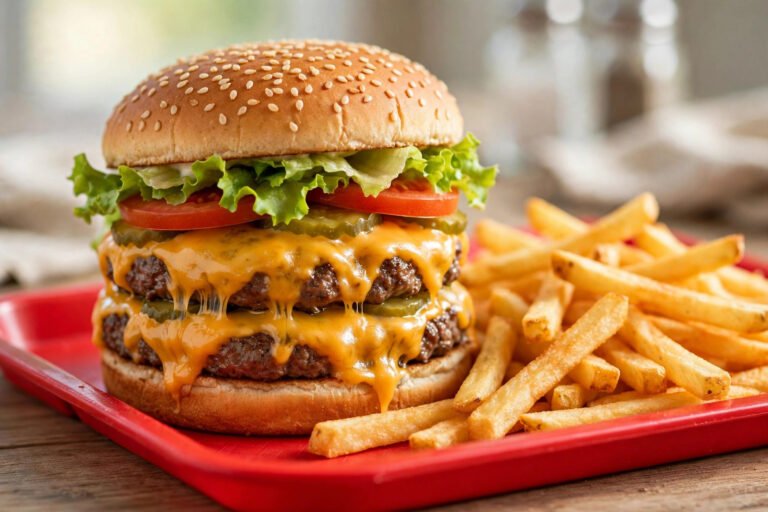
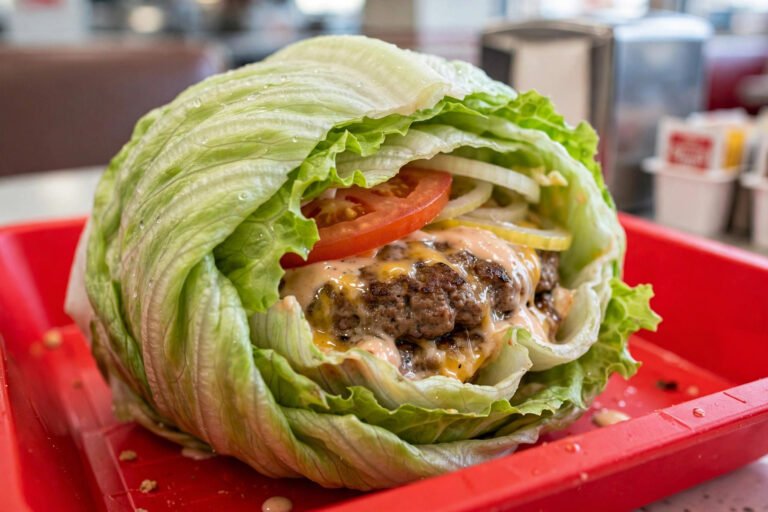
“Is In-N-Out beef real?” It’s one of the most-searched questions about the chain — and given fast food’s reputation, it’s a fair one. The short answer: yes, 100%. The longer answer is actually the reason In-N-Out tastes the way it does. Here’s the full story of what’s in those patties.
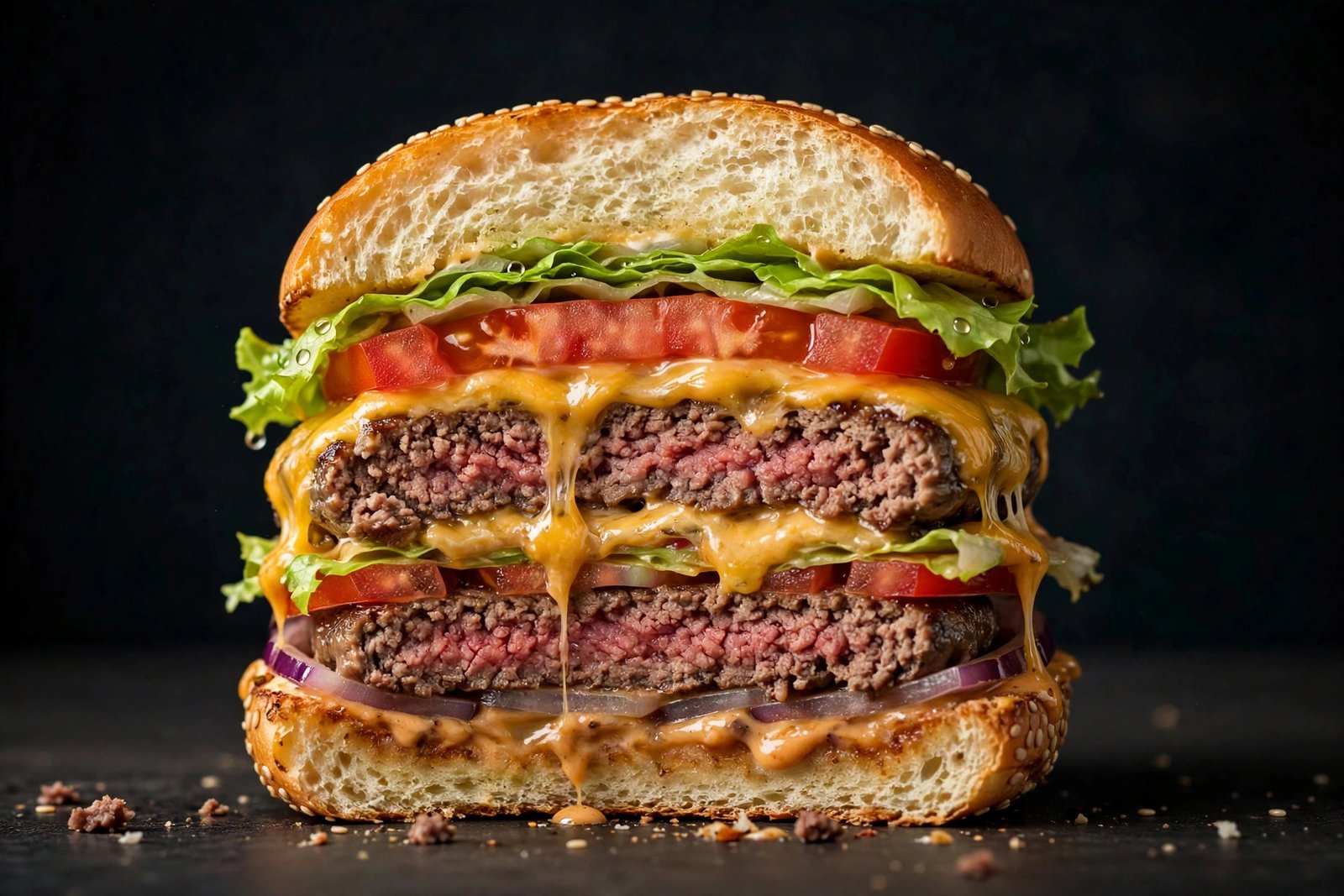
Yes — In-N-Out Uses 100% Real Beef
In-N-Out’s patties are made from 100% USDA ground chuck with no fillers, no additives, no preservatives, and no extenders. That’s not marketing fluff — it’s the company’s stated policy since 1948, and it extends to the entire supply chain.
What Cut of Beef Does In-N-Out Use?
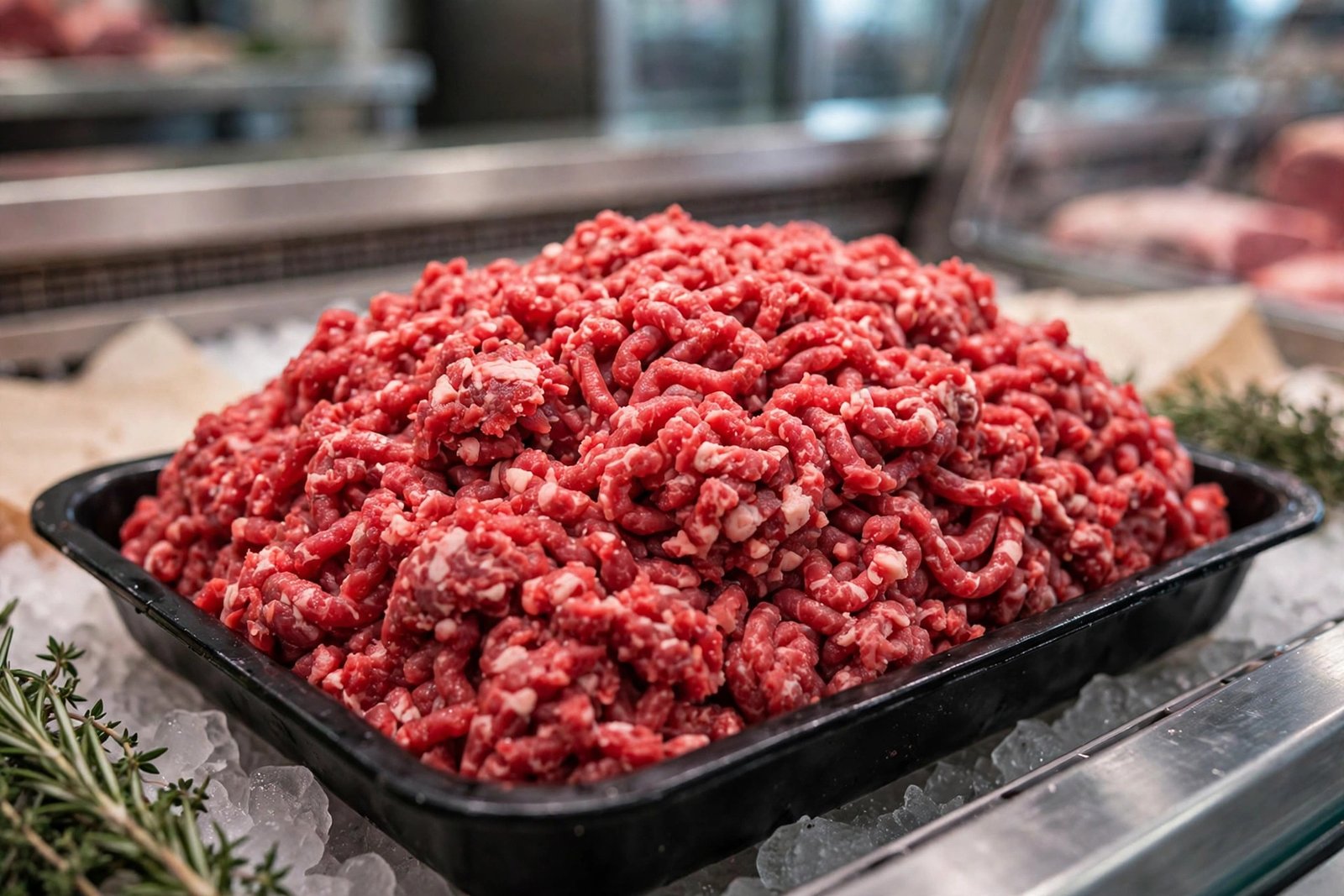
Ground chuck — the shoulder cut. Chuck has a slightly higher fat content than generic “ground beef” (which can come from trimmings all over the animal), giving it a juicier texture, richer flavor, and better cohesion when shaped into patties. It’s the cut most serious burger cooks choose, and In-N-Out has used it exclusively from the start.
Never Frozen — And Why That Matters
This is In-N-Out’s most famous quality claim: the beef is fresh, never frozen. Here’s why it actually matters:
- When meat freezes, ice crystals form and rupture muscle fibers.
- Thawing then squeezes moisture out of those damaged fibers.
- The result: drier, tougher patties that lean harder on condiments.
Fresh beef keeps its natural juices and tenderness intact. It’s a big part of why an In-N-Out burger tastes beefier than its fast-food rivals — you’re tasting the meat, not the freezer.
Ground In-House at Their Own Facilities
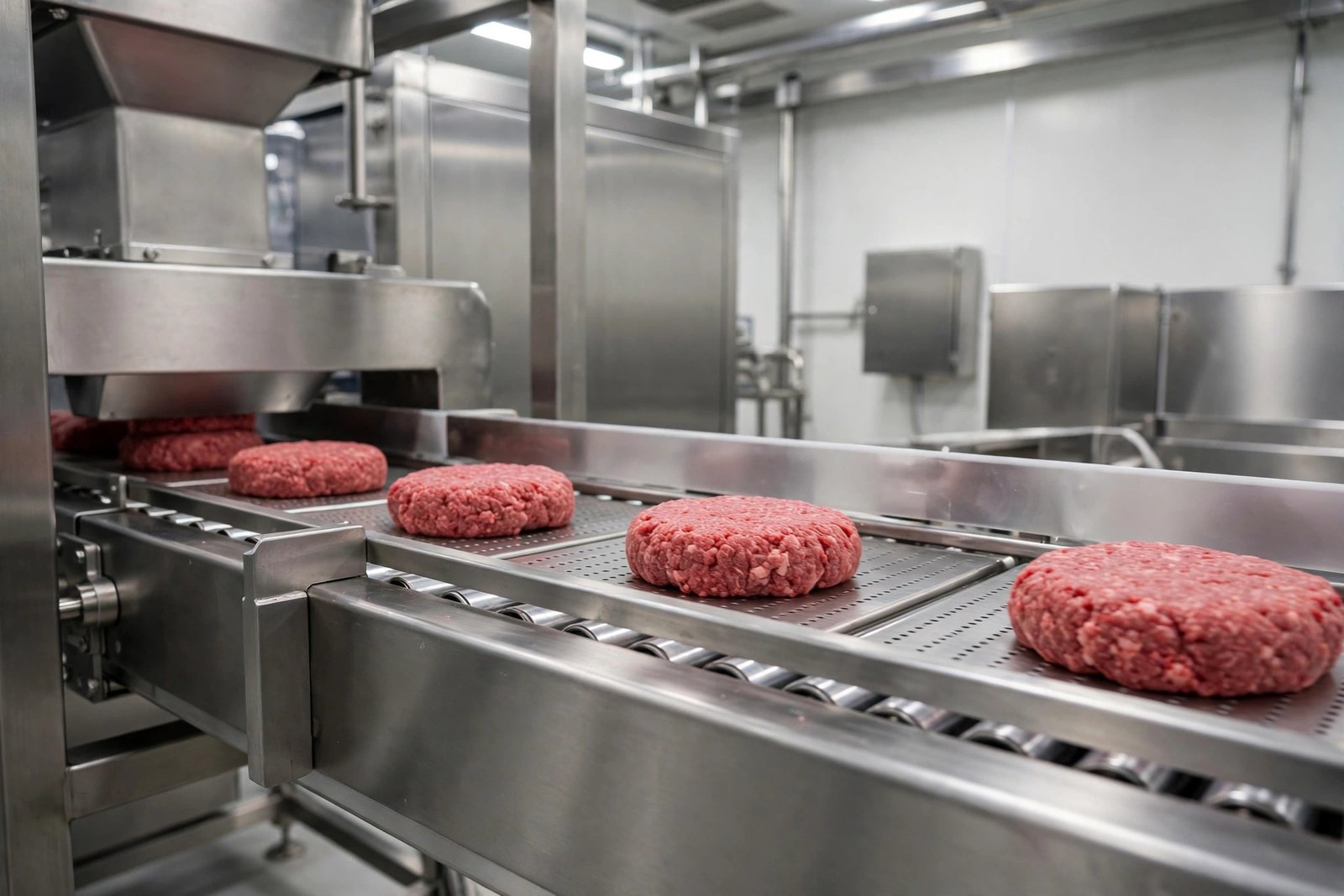
Here’s what really sets In-N-Out apart: the company owns and operates its own patty-making facilities in Baldwin Park and Lathrop, California, and Dallas, Texas. Whole chucks arrive at these facilities, where In-N-Out’s own teams inspect, debone, grind, and form the patties themselves.
Almost no other major chain does this. Most outsource patty production to third-party processors. Doing it in-house gives In-N-Out direct control over every step — and it’s why the chain will only open restaurants within a day’s drive of one of its facilities. Freshness isn’t a slogan; it’s a geographic constraint.
Where Does In-N-Out Get Its Beef?
In-N-Out’s primary beef supplier is Harris Ranch in California’s Central Valley — the largest beef operation in California, running since 1937. Their cattle are grass-raised and grain-finished, a combination aimed at the best mix of flavor and marbling.
But the supplier is only half the story: because In-N-Out processes everything itself, the quality inspection happens under its own roof, not a contractor’s.
How In-N-Out Beef Compares to Rivals
- McDonald’s: Also 100% real beef with no fillers (it dropped “beef trimmings” in 2011) — but standard patties are flash-frozen (only the Quarter Pounder is fresh).
- Five Guys: The closest match — fresh, never-frozen 100% USDA ground chuck, no additives. Difference: Five Guys uses third-party patty facilities; In-N-Out grinds its own.
- Wendy’s: Fresh, never-frozen beef via Tyson Fresh Meats partners, but the exact cuts aren’t disclosed the way In-N-Out discloses chuck.
On paper, several chains now claim fresh beef. In-N-Out’s edge is the combination: disclosed cut + never frozen + ground in-house + one-day delivery radius.
Is In-N-Out Beef FAQs
Is In-N-Out beef 100% real?
Yes. 100% USDA ground chuck with no fillers, additives, or preservatives — the company’s policy since 1948.
Is In-N-Out beef frozen?
No. It’s fresh, never frozen, delivered from the company’s own patty-making facilities. Stores must be within a day’s drive of a facility.
What part of the cow does In-N-Out use?
Chuck (shoulder). Ground chuck’s higher fat content makes for juicier, more flavorful patties than generic ground beef.
Does In-N-Out grind its own beef?
Yes — at its own facilities in Baldwin Park and Lathrop, California, and Dallas, Texas. Whole chucks are inspected, deboned, ground, and formed in-house.
Where does In-N-Out source its beef?
Primarily Harris Ranch in California’s Central Valley, with in-house processing for quality control.