What Is Texas Roadhouse Chili?
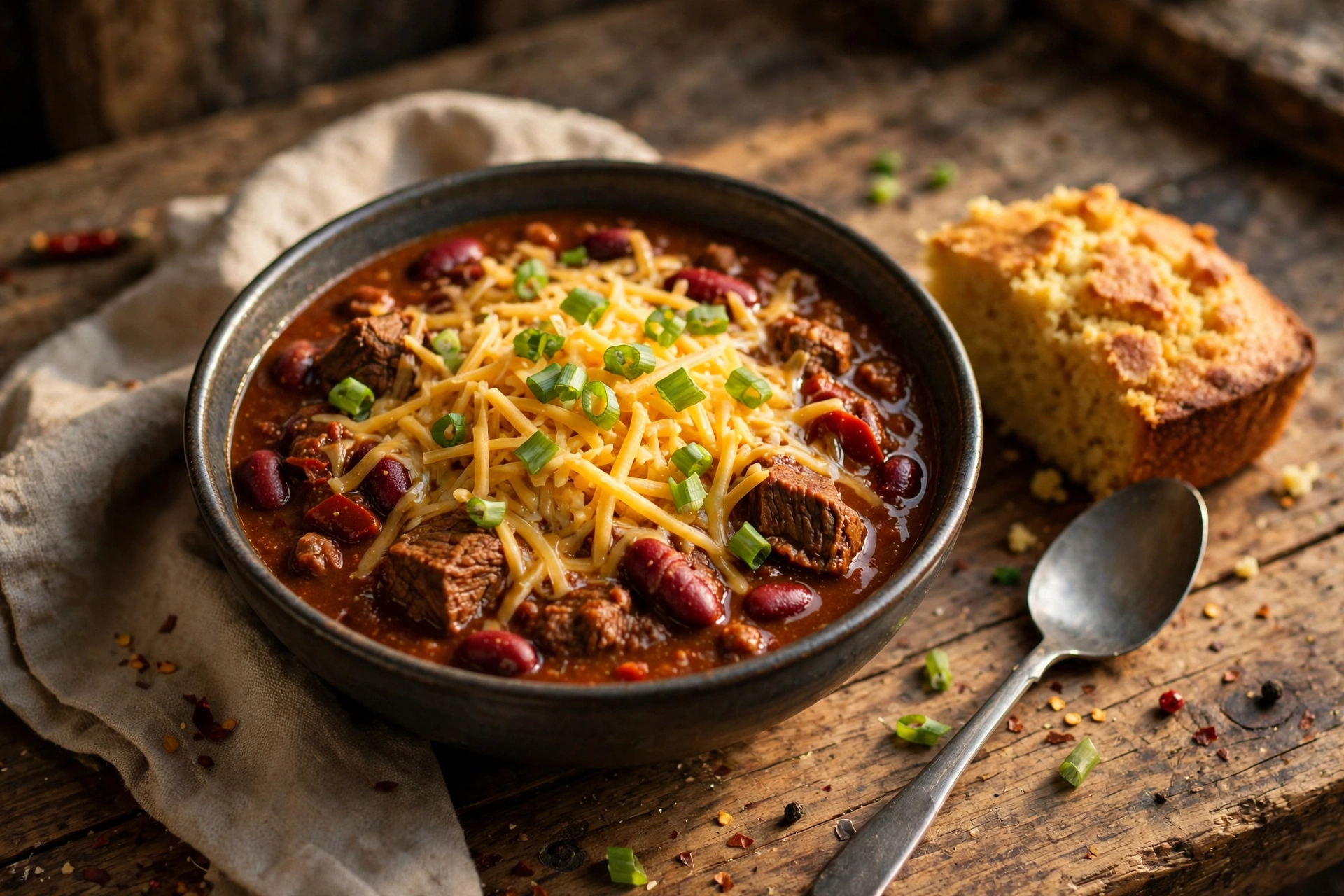
The texas roadhouse restaurant chili recipe people search for is a bowl of thick, beefy, steakhouse chili — the kind that eats like a meal rather than a side. At the restaurant it is sold by the cup or bowl, served topped with shredded cheddar and diced red onion, and it also shows up on the Texas Roadhouse menu as a made-from-scratch side option with entrées. It is not the star of the menu — the steaks and the fall-off-the-bone ribs are — but it has a loyal following, and it is one of the most-searched copycat recipes attached to the chain.
One thing to say up front, because the whole recipe turns on it: this is a copycat recreation, not the official Texas Roadhouse recipe. The chain does not publish its chili recipe, and no copycat version can claim to be the exact restaurant formula. What the copycat recipes agree on is the style — a thick, meat-forward chili built on ground beef, tomato, chili powder, and cumin, simmered until rich and finished with cheese and red onion — and this guide follows that consensus, with the disagreements flagged honestly where they matter.
The biggest disagreement is beans. Some copycat recipes, including versions on Allrecipes and Recipe Fairy, describe the restaurant chili as beanless — all meat, no beans, just a thick, chili-spiced meat sauce. Others, including All She Cooks and Cook What You Love, include kidney beans and describe the restaurant chili as varying by region, with beans at some locations and no beans at others. Both camps are reporting something real: the chili does appear to vary by region, and different locations may serve different versions. This recipe gives you the beanless base as the default — the version most sources describe as closest to the restaurant cup — with beans as an easy, clearly marked option. Make it the way you like it; either way, it is a copycat, not the official recipe.
The Beans vs No-Beans Question, Honestly
If you read five copycat recipes for Texas Roadhouse chili, you will find two different dishes. The beanless camp describes a thick, meaty chili with no beans and no chunks of pepper — just browned ground beef simmered in tomato sauce and beef broth with chili powder, cumin, paprika, and a touch of brown sugar, thickened with masa harina, and topped with shredded cheddar and diced red onion. The beans camp describes a hearty chili with kidney beans, sometimes pinto beans as well, in a crushed-tomato base with a similar spice blend.
Which one is the restaurant’s? The evidence points to variation. All She Cooks, which describes the restaurant chili from personal experience, says plainly that there is more than one Texas Roadhouse chili and that the recipe can vary depending on the region of the restaurant. Recipe Fairy and Allrecipes, both updated in 2026, describe the restaurant cup as beanless and build their copycats without beans. Thyme for the Table splits the difference with a “beans optional” version. The safest conclusion is that the core chili is the same beef-and-spice base everywhere, and beans are a regional or location-level variation — not a different dish, but a different build of the same dish.
This guide’s approach: the recipe below is written beanless, matching the most recent copycat consensus for the restaurant cup, and a short section explains exactly how to add beans if you prefer them. If you have had Texas Roadhouse chili with beans at your local restaurant, you are not misremembering — your location serves the bean version. Neither version is wrong, and neither is official.
Texas Roadhouse Restaurant Chili Recipe (Copycat): Ingredients
This copycat serves 6 people, takes about 15 minutes of prep and 45 to 60 minutes of cooking, and uses one pot or Dutch oven. The ingredients are pantry staples — nothing here requires a specialty store, except masa harina, which is worth finding for the texture it gives. If you cannot find masa harina, all-purpose flour works as a thickener, and several copycat recipes use it that way.
| Ingredient | Amount | Notes |
|---|---|---|
| Ground beef, 80/20 or 85% lean | 2 lb | Ground chuck gives the richest flavor; drain excess fat after browning |
| Yellow onion, diced | 1 medium | About 1 cup diced |
| Garlic, minced | 3–4 cloves | About 2 tablespoons |
| Jalapeño, seeded and finely chopped | 1 | Optional; leave the seeds in for more heat, or skip it for a mild chili |
| Olive oil or vegetable oil | 1 tablespoon | For sautéing the onion |
| Chili powder | 3 tablespoons | The backbone of the spice blend — use a good-quality chili powder |
| Ground cumin | 1 tablespoon | Warm, earthy; the second most important spice here |
| Smoked paprika | 1 teaspoon | Adds smokiness and color |
| Tomato sauce | 1 can (15 oz), about 1¾ cups | The smooth tomato base |
| Diced or crushed tomatoes | 1 can (15 oz), undrained | Crushed gives a smoother chili; diced gives more texture |
| Beef broth | 1–2 cups | Start with 1 cup; add more if the chili gets too thick |
| Tomato paste | 2 tablespoons | Deepens the tomato flavor |
| Brown sugar | 1 tablespoon | A touch of sweetness to balance the heat and acid |
| Apple cider vinegar or white vinegar | 1 tablespoon | Brightens the finished chili |
| Masa harina | 2 tablespoons | The thickener; all-purpose flour works as a substitute |
| Salt and black pepper | To taste | About 1 teaspoon salt to start, then adjust |
| Cayenne pepper | ¼ teaspoon, optional | For extra heat; skip for a mild version |
| Shredded cheddar, diced red onion | For serving | The restaurant’s toppings — see below |
A note on quantities: copycat recipes vary widely in scale — some use 1 pound of beef, others use 4 pounds. The 2-pound version above is the middle of the range and the most practical for a family dinner, serving 6. If you are cooking for a crowd, double everything except the salt, then adjust the salt at the end. If you are cooking for two, halve it and use a smaller pot.
How to Make Copycat Texas Roadhouse Chili: Step by Step
1. Sauté the onion and garlic. Heat the oil in a large pot or Dutch oven over medium heat. Add the diced onion and cook for 8 to 10 minutes, stirring occasionally, until tender and translucent. Add the minced garlic and cook for 1 to 2 minutes more, until fragrant. Do not let the garlic brown — browned garlic turns bitter and will flavor the whole pot.
2. Brown the beef. Add the ground beef to the pot and cook over medium-high heat, breaking it up with a wooden spoon as it cooks, for 5 to 8 minutes, until no longer pink. Drain off the excess fat, leaving a little in the pot for flavor. If you are using the jalapeño, add it now and cook for another minute.
3. Bloom the spices. This is the step that separates a good chili from a flat one. Sprinkle the chili powder, cumin, smoked paprika, and cayenne (if using) directly into the beef and fat, and stir for a full minute over medium heat. Toasting the spices in the hot fat — a technique called blooming — wakes up their flavor and gives the chili a deep, roasty character that you cannot get by stirring them into liquid. Several copycat recipes single this step out as the most important one in the recipe, and they are right.
4. Add the tomato base and broth. Stir in the tomato paste first, cooking it for a minute so it darkens slightly, then add the tomato sauce, diced or crushed tomatoes, beef broth, brown sugar, and vinegar. Stir everything together, scraping up any browned bits from the bottom of the pot — that fond is flavor. Start with 1 cup of broth; the chili will thicken as it simmers, and you can add the second cup later if it gets too thick.
5. Simmer. Bring the chili to a boil, then lower the heat, partly cover the pot, and simmer for 30 to 45 minutes, stirring now and then. The longer simmer is better: some copycat recipes simmer for 15 minutes, others for 2 hours, and the flavor deepens with time. Forty-five minutes is a good middle ground for a weeknight; if you have the time, let it go for a full hour or more on low heat. Taste and adjust the salt, sugar, and heat near the end, not the beginning — the flavors concentrate as the chili reduces.
6. Thicken with masa harina. Sprinkle the masa harina over the chili and stir until fully incorporated, then cover and cook on low for another 10 minutes. The masa thickens the chili and adds a subtle, authentic corn flavor that flour does not. If you are using flour instead, whisk it with a little cold water first to avoid lumps, then stir it in. If the chili is still thinner than you like after 10 minutes, add another tablespoon of masa and give it 5 more minutes.
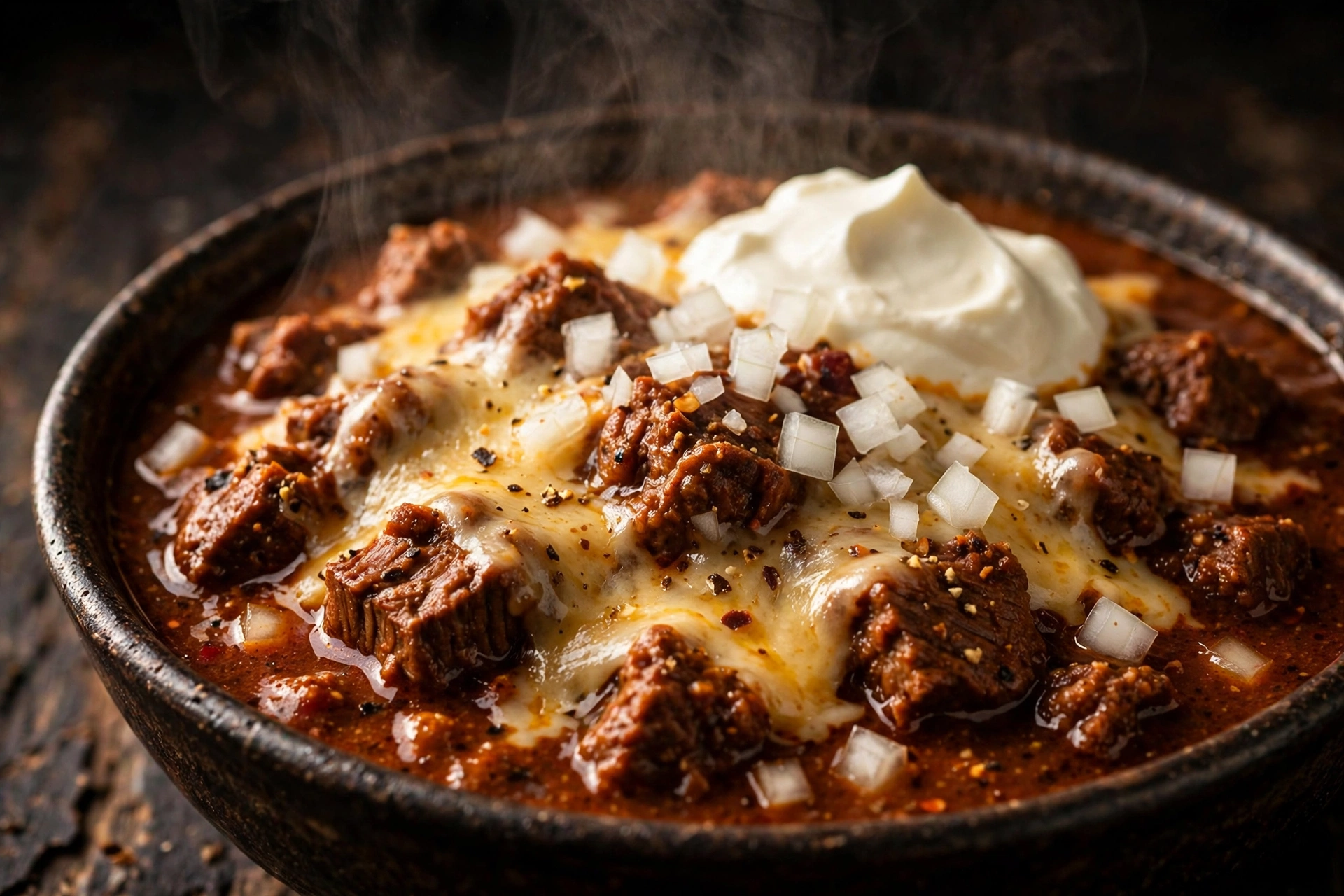
7. Rest and serve. Take the chili off the heat and let it rest for 5 to 10 minutes — it will thicken slightly as it cools, and the flavors will settle. Serve in bowls topped with shredded cheddar and diced red onion, the way the restaurant serves it. Sour cream, sliced jalapeños, and crackers are optional extras. If you are serving it as a side with a steakhouse-style dinner, a cup-sized portion alongside the main plate is the restaurant way to do it — chili is also listed as one of the made-from-scratch sides at Texas Roadhouse, so a small cup next to a steak or a plate of texas roadhouse chicken critters is exactly how it appears on the menu.
Beans or No Beans? How to Add Them
If your local Texas Roadhouse serves chili with beans — or if you simply prefer beans — add one 15-ounce can of dark red kidney beans, drained and rinsed, at step 4, when you add the tomato base. Stir them in and let them simmer with the chili so they absorb flavor. Pinto beans or black beans work too, and some copycat recipes use both kidney and pinto beans. Adding beans stretches the recipe to 8 servings and makes it heartier, which is why the bean version is popular for feeding a crowd.
One caution: beans absorb liquid, so a bean version may need the extra cup of beef broth. Add broth a quarter cup at a time if the chili looks too thick during the simmer. And if you are making the chili a day ahead, add the beans on the day you serve it if you can — beans left overnight in chili can go soft, though the flavor will still be good.
What to Serve With Texas Roadhouse Chili
At the restaurant, chili is a cup or a bowl on its own, or a side with an entrée. At home, the same logic works: serve it as a main with toppings and crackers, or as a side with grilled meat. Good pairings include the fresh-baked rolls the chain is famous for — a soft roll is the ideal tool for the last of the chili in the bowl — cornbread, tortilla chips, or saltine crackers. For toppings, the restaurant’s cheddar and red onion are the baseline; sour cream, sliced jalapeños, chopped green onions, and a little extra hot sauce are all common additions.
For a full steakhouse-style dinner at home, pair the chili with a grilled steak or with ribs cooked the Texas Roadhouse way — our guide to how Texas Roadhouse cooks ribs explains the restaurant’s three-step low-and-slow method. A cup of chili as a starter, followed by the main plate, reproduces the restaurant experience more faithfully than a giant bowl of chili alone. And if you want the rolls to go with it, a copycat honey cinnamon butter — softened butter whipped with honey and cinnamon — is the finishing touch.
Tips for the Best Copycat Chili
Do not skip blooming the spices. Toasting the chili powder and cumin in the beef fat for a full minute is the single highest-impact step in the recipe. It is the difference between a chili that tastes like spiced tomato soup and one that tastes like a steakhouse chili.
Use 80/20 ground beef. Leaner beef makes a drier, less flavorful chili. The fat renders during the simmer and carries the spice flavor; drain the excess after browning, but do not start with extra-lean beef and expect the same result. Ground chuck is the cut most copycat recipes recommend.
Simmer longer than you think. The minimum simmer that works is about 30 minutes, but the chili improves noticeably at 60 minutes and keeps improving up to 2 hours. If you have a slow afternoon, make it early, simmer it low, and reheat it for dinner — chili is famously better the next day, because the flavors keep melding overnight.
Balance the heat at the end. Chili powder varies in heat from brand to brand, and jalapeños vary from pepper to pepper. Taste the chili after 30 minutes of simmering, then adjust: more cayenne or hot sauce for heat, a pinch more brown sugar if it tastes too sharp, a splash more vinegar if it tastes flat. Salt last, because the chili reduces and concentrates as it simmers.
Make it your own, but keep the style. The restaurant style is thick, beefy, and smooth — no big chunks of pepper, no beans in the default version, no tomato chunks the size of dice. If you add bell peppers, corn, or a can of beer, you will get a good chili, but it will not be a Texas Roadhouse-style chili anymore. Stay close to the beef-tomato-spice base and the copycat will stay recognizable.
Storing and Freezing Copycat Texas Roadhouse Chili
This chili keeps well, which is one of the reasons it is a good make-ahead recipe. Let it cool completely, then store it in an airtight container in the refrigerator for 3 to 4 days. Reheat it gently on the stove over medium-low heat, adding a splash of beef broth or water if it has thickened too much in the fridge. It also freezes well for up to 3 months: portion it into freezer containers or bags, label with the date, and thaw overnight in the refrigerator before reheating.
One food-safety note, since several copycat recipes mention it: reheat leftover chili to 160°F before serving, and do not leave it at room temperature for more than 2 hours. If you made the bean version, the same storage times apply. The toppings — cheese, onion, sour cream — should be added fresh at serving time, not stored on the chili.
Frequently Asked Questions About the Texas Roadhouse Restaurant Chili Recipe
Is this the official Texas Roadhouse chili recipe?
No. Texas Roadhouse does not publish its chili recipe, so this is a copycat recreation based on the consensus of popular copycat recipes. It follows the restaurant’s style — thick, beefy, chili powder and cumin, topped with cheddar and red onion — but it is not the official formula.
Does Texas Roadhouse chili have beans?
It depends on the location. Some copycat sources describe the restaurant chili as beanless, while others say it varies by region, with beans at some locations and no beans at others. This recipe is written beanless, matching the most recent copycat consensus, with a clearly marked option to add kidney beans.
What does Texas Roadhouse chili taste like?
Thick, beefy, and warmly spiced — ground beef in a rich tomato base with chili powder, cumin, and a touch of sweetness, topped with sharp cheddar and diced red onion. It is a smooth, meat-forward chili rather than a chunky vegetable chili.
How long does it take to make copycat Texas Roadhouse chili?
About 15 minutes of prep and 45 to 60 minutes of cooking, for a total of about 1 hour to 1 hour 15 minutes. You can simmer it longer — up to 2 hours — for a deeper flavor.
What thickens Texas Roadhouse-style chili?
Masa harina, in most copycat recipes. Two tablespoons stirred in near the end thickens the chili and adds a subtle corn flavor. All-purpose flour whisked with cold water works as a substitute.
Can I make Texas Roadhouse chili in a slow cooker?
Yes. Brown the beef with the onion and garlic, bloom the spices in the fat, then transfer everything to a slow cooker and cook on low for 4 to 6 hours or on high for 2 to 3 hours. Stir in the masa harina during the last 30 minutes.
What toppings go on Texas Roadhouse chili?
Shredded cheddar and diced red onion are the restaurant’s toppings. At home you can also add sour cream, sliced jalapeños, chopped green onions, crackers, or hot sauce.
Is Texas Roadhouse chili spicy?
It is mildly to moderately spicy. The heat comes from chili powder and jalapeño, balanced by brown sugar and tomato. Leave out the jalapeño and cayenne for a mild version, or add cayenne and hot sauce for a spicier one.
How many calories are in Texas Roadhouse chili?
The restaurant does not publish a single widely cited calorie figure for its chili cup, so we are not stating one. For this copycat recipe, the calories depend on the beef you use and the toppings — a bowl made with 80/20 beef and topped with cheddar is a hearty, calorie-dense meal, roughly in line with other beef chilis.
Can I freeze copycat Texas Roadhouse chili?
Yes. Cool it completely, portion into airtight containers, and freeze for up to 3 months. Thaw overnight in the refrigerator and reheat gently on the stove, adding a splash of beef broth if it has thickened. Add fresh toppings at serving time.