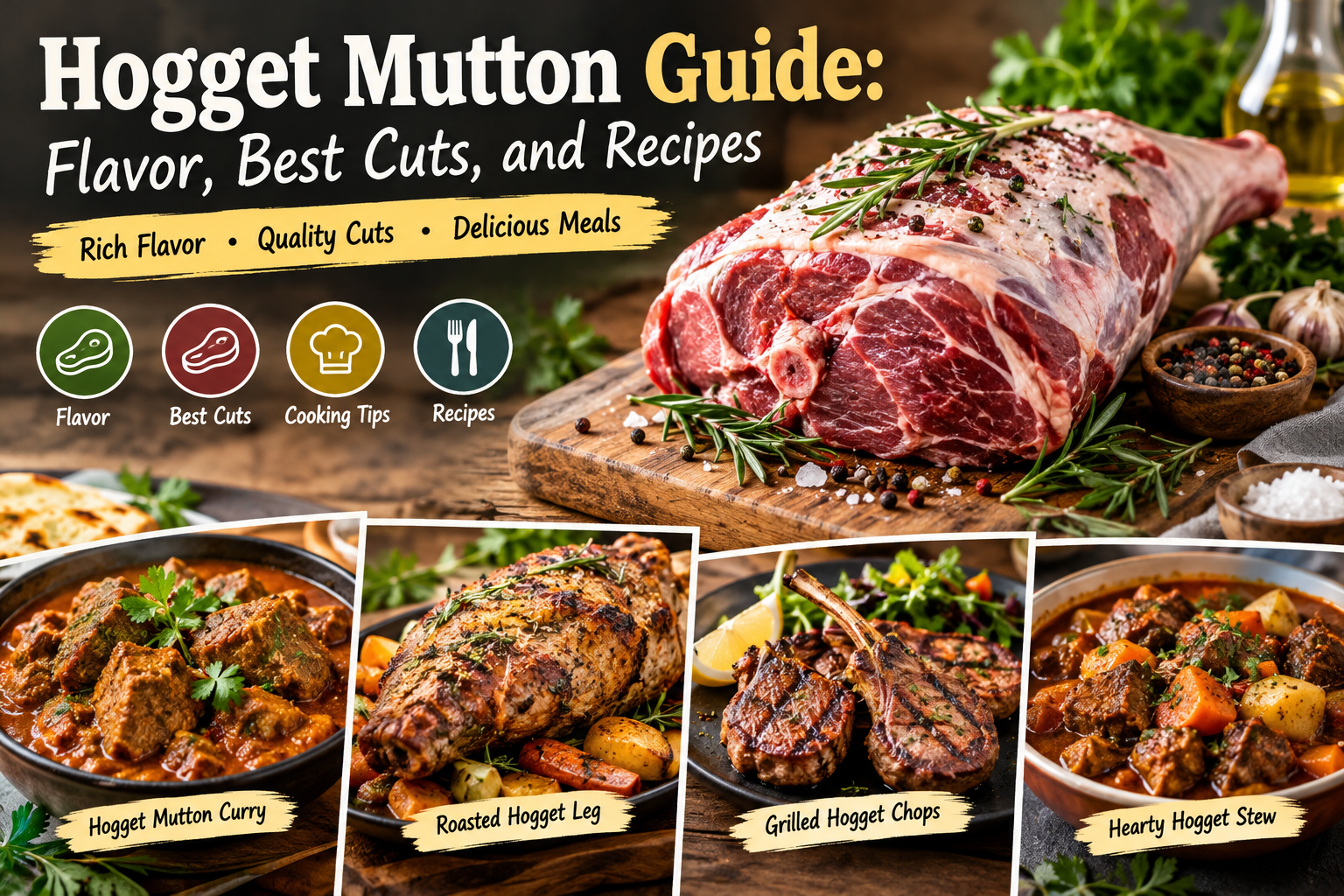
Hogget mutton is the name many cooks search for when they want meat with more character than lamb but less punch than full mutton. To be exact, hogget is its own category, and it sits between the two. It has a deeper flavor than young lamb and stays tender enough for roasts, curries and the grill.
Whether you want a slow-cooked curry, a juicy Sunday roast or a quick grilled dinner, knowing how to pick the right cut and cooking method makes all the difference. This guide covers flavor, cuts, recipes, nutrition and storage so you can cook it with confidence.
What Makes Hogget Different?
Hogget is meat from a sheep that is roughly one to two years old, though the exact rules vary by country and labeling. Lamb comes from younger animals, and mutton comes from older ones.
Because hogget is older than lamb, the flavor is deeper and more pronounced. Handled well, the meat still stays pleasantly tender. It is common in the UK, New Zealand and Australia, and harder to find in the US, so ask a butcher if you cannot spot it on the shelf.
Hogget vs. Lamb vs. Mutton
The three differ in age, flavor, texture and the way they cook best.
- Lamb: Mild, delicate and tender. It suits quick grilling and roasting.
- Hogget: Richer and more developed in flavor, with a satisfying bite. It works in roasts, stews, curries and on the grill.
- Mutton: Stronger in flavor and firmer in texture. Slow cooking works best, especially for tougher cuts.
That middle position is why hogget appeals to people who want more flavor than lamb without going all the way to mutton.
How Does Hogget Taste?
Hogget has a rich, savory flavor with earthy, slightly sweet notes. It tastes stronger than lamb but milder than meat from older sheep. The exact taste depends on the animal’s breed, its diet, how much fat the cut has and how you cook it.
The fat matters a lot. As it renders in the oven or pan, it browns the outside, keeps the meat juicy and adds depth to stews and curries.
Best Seasonings for Hogget
Hogget stands up well to bold herbs and spices. Try these combinations:
- Classic herbs: Rosemary, thyme, garlic and black pepper.
- Indian-style spices: Cumin, coriander, turmeric, garam masala and chili.
- Mediterranean flavors: Lemon, oregano, olive oil and fresh parsley.
- Slow-cooked comfort: Onion, ginger, garlic, bay leaves and stock.
A simple rub of garlic, rosemary, olive oil, salt and pepper brings out the natural flavor without covering it up.
Best Cuts of Hogget
The right cut decides how the meal turns out. Some cuts suit quick cooking, while others need hours of gentle heat.
Leg
The leg is the classic roasting cut. It gives you plenty of meat, looks good on the table and has a nice balance of lean meat and fat.
Season it with garlic, rosemary, olive oil and lemon. Roast it, then let it rest before carving, and slice against the grain for the most tender bite.
Shoulder
Shoulder has connective tissue and fat that turn soft and rich with slow cooking. It is great for pulled meat, curries and braises.
Cook it covered with onions, garlic, stock and spices until the meat falls apart. It goes well with rice, potatoes or flatbread.
Chops and Loin
Chops and loin cuts are the quick option. Grill them, pan-sear them or roast them, depending on thickness.
Do not overcook them, because lean meat dries out fast. Use a meat thermometer instead of judging by color alone.
Neck
Hogget neck is flavorful and often budget-friendly. Its connective tissue softens during long, moist cooking.
Use it in stews, soups and traditional curries. Slow cooking makes the meat tender and enriches the sauce.
Shanks
Shanks are made for braising. Over time the connective tissue breaks down, leaving tender meat in a silky sauce.
Braise them with tomatoes, onions, herbs and stock for a special-feeling dinner that needs no complicated technique.
Hogget Cooking Methods
Choose the method based on the cut, its thickness and how much connective tissue it has.
Slow Cooking and Braising
Slow cooking is best for shoulder, neck and shanks. Brown the meat first to build flavor, then add liquid and aromatics, cover and cook gently until tender.
Keep the liquid at a gentle simmer instead of a hard boil. That cooks the meat evenly and gives the sauce time to deepen.
Roasting
Roasting suits the leg and other large cuts. Season generously, start with a preheated oven and watch the internal temperature.
Let the meat rest after cooking so the juices spread back through it. Every slice stays moist that way.
Grilling and Pan-Searing
Chops and loin cuts like high heat. Pat the meat dry, season it and sear it in a hot pan or on the grill.
Do not overcrowd the pan. If the meat is thick, finish it over lower heat so the outside does not burn before the middle is ready.
Three Hogget Recipes to Try
These recipes show three different ways to enjoy hogget at home, from a warming curry to a quick grilled dinner.
Slow-Cooked Hogget Curry
Ingredients:
- 700 g hogget shoulder, cut into chunks
- 2 onions, finely sliced
- 2 tomatoes, chopped
- 1 tablespoon ginger-garlic paste
- 2 tablespoons cooking oil
- 1 teaspoon cumin
- 1 teaspoon ground coriander
- ½ teaspoon turmeric
- 1 teaspoon garam masala
- Salt, chili and water as needed
Method:
- Heat the oil in a heavy pot and brown the meat in batches.
- Add the onions and cook until golden.
- Stir in the ginger-garlic paste, tomatoes and spices.
- Return the meat to the pot and add enough water to make a thick sauce.
- Cover and simmer gently for about 1½ to 2 hours, until the meat is tender, adding a splash of water if it gets dry.
- Finish with garam masala and fresh coriander.
Serve with basmati rice, naan or roti.
Garlic and Rosemary Hogget Roast
Ingredients:
- 1.5 kg hogget leg
- 4 garlic cloves, crushed
- 2 tablespoons olive oil
- 2 teaspoons chopped rosemary
- Salt and black pepper
- 1 lemon, optional
Method:
- Heat the oven to 180°C (350°F).
- Mix the garlic, olive oil, rosemary, salt and pepper.
- Rub the mixture over the meat.
- Roast the leg in a pan. As a rough guide, allow about 1½ hours for a 1.5 kg leg, but let a meat thermometer decide. A common safe guideline for whole cuts is 63°C (145°F), followed by a three-minute rest.
- Rest the roast before carving and serve with roasted vegetables.
Time depends on the shape of the cut and how well done you like it, so check a reliable food-safety guide.
Grilled Hogget Chops
Ingredients:
- 6 hogget chops
- 2 tablespoons olive oil
- 2 garlic cloves, minced
- 1 teaspoon dried oregano
- Lemon juice, salt and pepper
Method:
- Combine the olive oil, garlic, oregano, lemon juice, salt and pepper.
- Coat the chops and marinate in the refrigerator for 30 minutes to two hours.
- Heat a grill or heavy skillet.
- Cook the chops, turning as needed, until they reach a safe internal temperature (63°C / 145°F).
- Rest briefly and serve with salad, potatoes or grilled vegetables.
A quick dinner with bold, fresh flavors.
Hogget Cuts at a Glance
| Cut | Best Cooking Method | Flavor and Texture | Ideal Dish |
| Leg | Roasting | Rich and moderately tender | Sunday roast |
| Shoulder | Slow cooking | Juicy and soft | Curry or pulled meat |
| Chops | Grilling or searing | Meaty and satisfying | Quick dinner |
| Neck | Braising | Deep flavor, tender when cooked slowly | Stew |
| Shanks | Slow braising | Soft and rich | Tomato-based braise |
| Rack | Roasting | Tender with a rich flavor | Special-occasion roast |
| Breast | Slow roasting | Fatty and full of flavor | Rolled and slow-roasted |
| Mince | Frying or simmering | Rich and juicy | Shepherd’s pie or kofta |
Is Hogget Nutritious?
Hogget gives you high-quality protein, which supports your muscles and normal body functions. It also supplies vitamin B12, iron, zinc and other B vitamins.
The exact nutrition depends on the cut, the fat content, the portion and the way you cook it. Leaner cuts have less fat than marbled ones, and trimming visible fat lowers the total.
For a balanced plate, serve hogget with vegetables, beans, whole grains or a fresh salad, and keep portions sensible.
Tips for Buying and Storing Hogget
Good ingredients make a clear difference in the finished dish.
Choosing Fresh Meat
Look for meat that smells fresh and has a color that suits the cut. Skip anything with an off smell, damaged packaging or a lot of liquid in the tray.
Ask your butcher to confirm it is hogget, since labels and naming rules differ between markets. Choose the cut that fits your recipe instead of going by price alone.
Safe Storage
Refrigerate raw hogget right away at 4°C (40°F) or below and keep it apart from ready-to-eat food. Follow the use-by date on the pack.
Freeze meat you will not use within the recommended time. Thaw it in the refrigerator, not on the counter, and wash utensils and surfaces after handling raw meat.
Final Thoughts
Hogget gives you rich flavor, a good texture and plenty of range in the kitchen. A slow-cooked shoulder curry, a roasted leg or a pair of grilled chops can all turn simple ingredients into a meal people remember.
The secret is to match the cooking method to the cut. Use slow, gentle heat for cuts with lots of connective tissue, and quick cooking for chops and loin. With good seasoning, safe storage and careful temperature checks, hogget can become a regular on your table.
Pick one recipe, play with your favorite herbs and spices, and see which preparation brings out the best in it.
Frequently Asked Questions About Hogget
Is hogget the same as lamb?
No. Hogget generally comes from sheep between one and two years old, while lamb comes from younger animals.
Does hogget taste stronger than lamb?
Yes. It usually has a deeper, richer flavor than lamb.
Which hogget cut is best for curry?
Shoulder and neck. Slow cooking makes both tender.
Can hogget be grilled?
Yes. Chops and loin cuts work well on a grill or in a hot skillet.
How should hogget be stored?
Keep it in the refrigerator at 4°C (40°F) or below, follow the package instructions and freeze it for longer storage.